
Germany Blames Russia for Leipzig Drone Attack, Announces Sanctions and Consulate Closure
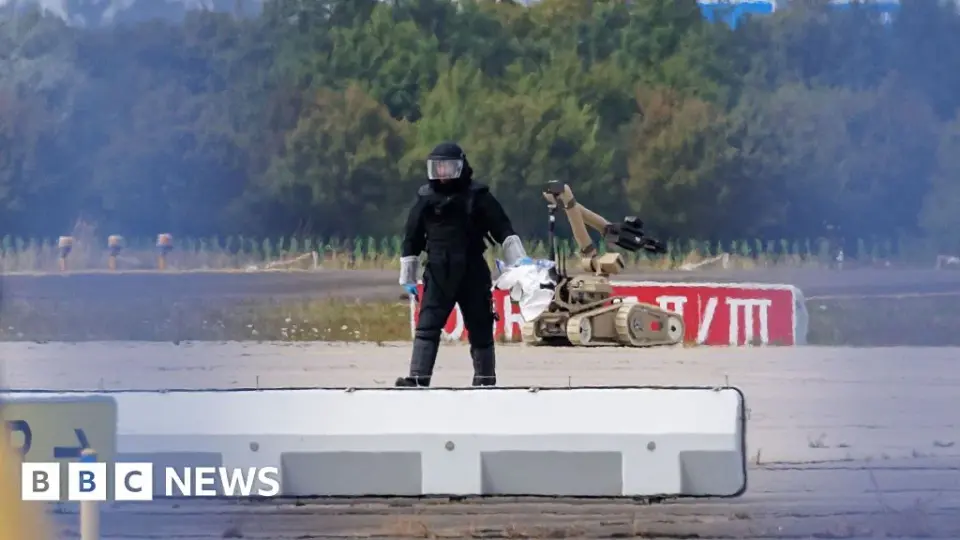
Germany officially attributed the August 4 drone attack at Leipzig/Halle Airport to Russia, marking a significant escalation in Berlin-Moscow relations. The incident involved a drone with a faulty explosive device found near a Ukrainian Antonov cargo plane, which failed to detonate. A second drone collided with a DHL aircraft, and a third was discovered days later containing hexogen residues. In response, Germany announced the closure of the Russian consulate in Bonn and the termination of the Russian House in Berlin. Chancellor Friedrich Merz indicated that new sanctions targeting Russian entities and shadow fleet operations would be coordinated with the EU. NATO Secretary General Mark Rutte expressed full solidarity with Germany, while Moscow continued to deny involvement in the sabotage.
Key points
- German Interior Minister Alexander Dobrindt stated the attack followed a 'well-established pattern of Russian hybrid operations' and warned of further targets.
- The initial drone’s detonator was faulty, preventing an explosion near a kerosene-filled Ukrainian cargo aircraft; a second drone caused a DHL plane to abort landing.
- A third drone found 10 days later contained residues of hexogen, suggesting a larger attack plan than initially reported.
- Germany will close the Russian consulate in Bonn and terminate the contract for the Russian House in Berlin, which observers link to espionage.
- Chancellor Merz confirmed that Germany would coordinate a response with EU and NATO partners, including potential new sanctions and increased arms deliveries to Ukraine.
- The announcement coincides with EU foreign ministers’ meetings in Wicklow, Ireland, where 1,600 new sanctions listings are being reviewed.
Background
This development follows months of speculation regarding Russian involvement in the Leipzig incident. Previous archive coverage noted that US intelligence linked the explosives to Russia’s GRU, while German authorities had previously stopped short of official attribution. The current announcement represents a shift from speculation to formal state attribution, described by some officials as a 'Zeitenwende 2.0' in defense policy. It also occurs amid a series of other hybrid incidents in Europe, including drone discoveries in Romania and arson attacks in Estonia, heightening security concerns across NATO.
How outlets are covering it
BBC reported the official German attribution and the immediate diplomatic consequences, such as the consulate closure. The Guardian emphasized the political timing, noting the upcoming elections in eastern German states where the pro-Russia AfD is leading, and highlighted Merz’s warning that attackers would 'pay for this.' Politico focused on the economic dimension, detailing the coordination with Brussels for extensive sanctions against Russian entities and the shadow fleet, while noting that Berlin is preparing for a sharp counter-reaction from Moscow. All sources agree on the factual details of the drone incidents but differ in emphasis: BBC on the official stance, Guardian on domestic political implications, and Politico on the broader EU sanctions strategy.
Why it matters
The official attribution by Germany signals a hardening of Western posture toward Russia, moving beyond diplomatic protests to concrete punitive measures. The closure of the Russian House and consulate marks a significant deterioration in bilateral relations. Furthermore, the coordination with the EU for new sanctions indicates a unified approach to countering hybrid warfare, potentially impacting Russian financial stability and oil exports. The timing, coinciding with elections in key German states, adds a layer of domestic political complexity to the foreign policy response.
What to watch
Germany is expected to implement the announced sanctions and diplomatic closures in the coming days. The EU is preparing to adopt a new sanctions package in mid-October, potentially involving frozen Russian assets. Berlin anticipates retaliatory measures from Moscow, including the closure of the Goethe Institute in Russia. Security experts warn of further hybrid operations in Europe, with Germany enhancing anti-drone defenses and expanding powers for security services to respond to threats.
- Germany says Russia behind Leipzig airport drone attack BBC
- Germany set to blame Russia for attempted airport drone attack Reuters
- Germany to Blame Russia for Failed Leipzig Airport Drone Attack Bloomberg.com
- Germany poised to identify suspect in Leipzig drone attack on Ukrainian plane The Guardian
- Germany plans to blame Russia for Leipzig attack as tensions with Putin escalate politico.eu
Want the full story? Read the original reporting
Read on BBC