
Iran Lifts Missile Range Cap as US Midterms Fuel War Debate
Iran’s Revolutionary Guard announced the removal of a self-imposed 2,000-kilometer limit on ballistic missile range, signaling potential expansion of strike capabilities. This move coincides with satellite evidence of major construction at Iranian missile bases and intense debate in Tehran over nuclear doctrine. Meanwhile, US midterm elections, which Democrats won partly due to war fatigue, have not ended military tensions; analysts warn President Trump may launch new strikes before the new Congress takes office in January.
Key points
- Iran’s Revolutionary Guard spokesman Gen. Hossein Mohebbi confirmed the lifting of a 2,000-kilometer range limit on ballistic missiles, though he did not confirm current capabilities exceed this threshold.
- Satellite imagery from MAIAR and Janes shows significant excavation and new underground facilities at the Garmdareh base in Karaj and the Shahroud base, suggesting efforts to protect infrastructure from future strikes.
- US Central Command maintains a blockade on Iranian ports in the Strait of Hormuz, having redirected 144 commercial vessels, while announcing a new task force to monitor land and Caspian Sea transport routes.
- Airstrikes near Yemen’s capital Sanaa killed at least 27 people, according to Houthi officials, escalating conflict between Iranian-backed Houthis and Saudi-backed forces.
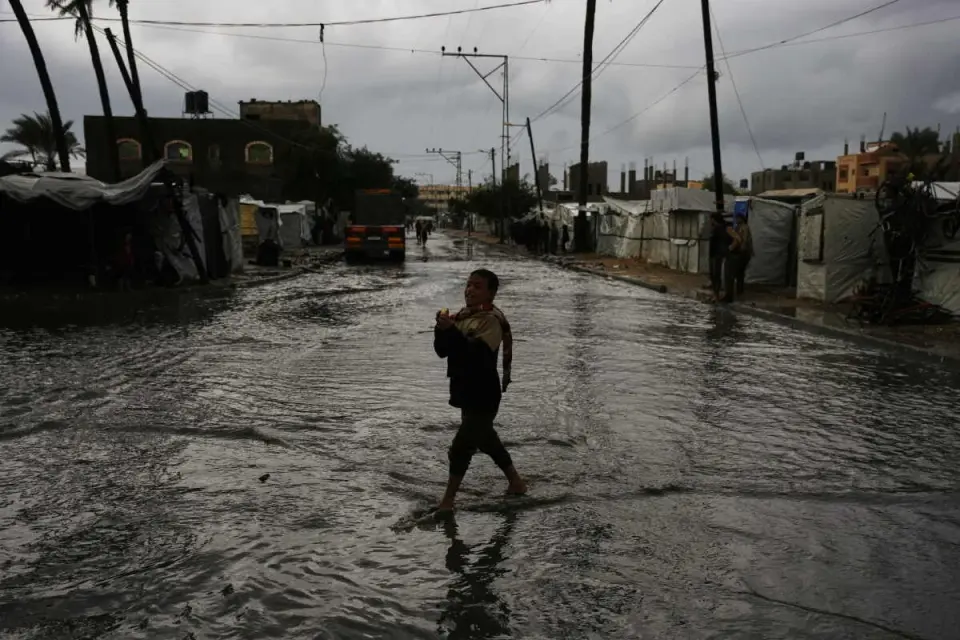
- Heavy rains in Gaza flooded shelters for over 1.6 million displaced Palestinians, with the UN reporting that only 18% of families needing shelter assistance will receive partial support due to funding and approval delays.
Background
This development follows a period of intense US-Israeli air strikes on Iranian military infrastructure, which the Pentagon claimed destroyed up to 90% of Iran’s drone and missile industrial base. Recent diplomatic efforts, including Iran’s offer to reopen the Strait of Hormuz in exchange for sanctions relief, have stalled amid continued military posturing. The current escalation occurs against the backdrop of rising oil prices, with Goldman Sachs forecasting Brent crude at $105 per barrel due to persistent supply risks in the region.
How outlets are covering it
AP News focuses on the official announcement of the range limit removal and the immediate military implications, including the tanker incident in the Strait of Hormuz. BBC Verify emphasizes the physical evidence of rebuilding, highlighting satellite images of new underground facilities at key missile sites, which contradicts US claims of total destruction. Iran International provides a broader strategic analysis, noting that Iranian state media is debating nuclear doctrine and potential targets in Europe, while US analysts warn that the Democratic victory in the midterms may actually incentivize President Trump to launch a major offensive before the new Congress assumes power in January. While AP and BBC report on current military actions and infrastructure, Iran International highlights the internal political debate in Tehran regarding deterrence and the potential for a wider regional conflict.
Why it matters
The lifting of the missile range limit and the visible reconstruction of underground facilities suggest Iran is preparing for a prolonged confrontation rather than seeking immediate de-escalation. The US blockade and new task force indicate Washington is maintaining pressure despite the change in congressional leadership. The potential for a pre-January US offensive, as suggested by some analysts, could significantly alter the geopolitical landscape in the Middle East, affecting global energy markets and regional stability. The humanitarian crisis in Gaza and Yemen remains acute, with limited international support reaching affected populations.
What to watch
Analysts expect President Trump to potentially launch a major military operation against Iran before the new Congress takes office in January, aiming to secure a decisive outcome before facing increased legislative oversight. Iran may continue to expand its underground military infrastructure and potentially adjust its nuclear posture, including discussions on the Nuclear Non-Proliferation Treaty. The US blockade on Iranian ports is likely to continue, with the new task force monitoring alternative transport routes. In Yemen, the conflict between Houthis and Saudi-backed forces is expected to persist, with further airstrikes likely. In Gaza, the humanitarian situation will worsen as winter rains continue, with limited shelter assistance available until mid-winter.
- Iran says it has lifted its self-imposed limit on missile ranges, and other Mideast news AP News
- Iran’s IRGC says building underground sites for weapons production, storage Al Jazeera
- Major construction ongoing near Iran missile bases, satellite images suggest BBC
- Iran presses ahead with military, nuclear rebuilding despite economic woes Iran International
- IRGC claims a self-imposed limit on ballistic missile range ‘has been lifted’ The Times of Israel
Want the full story? Read the original reporting
Read on AP News