
Iran offers to resume June ceasefire as US intensifies economic and military pressure
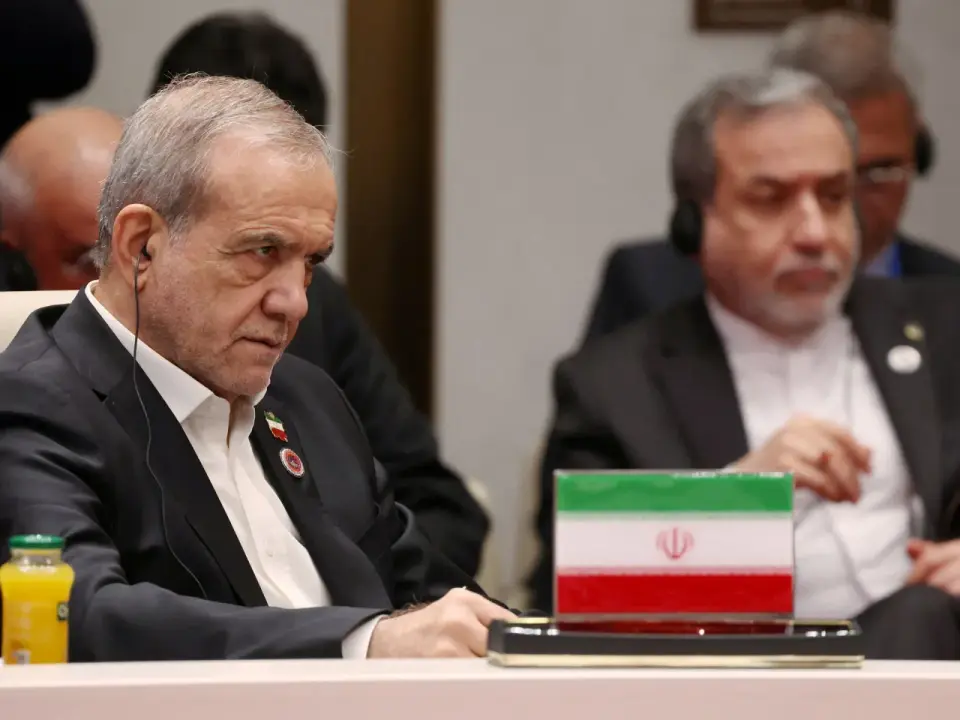
Iranian President Masoud Pezeshkian stated that Tehran is ready to return to the June ceasefire agreement if Washington does the same, despite ongoing US military strikes and a severe economic blockade. While Pezeshkian and Foreign Minister Abbas Araghchi advocate for diplomacy, the Islamic Revolutionary Guard Corps (IRGC) continues to pursue military confrontation. The US has intensified sanctions, which Tehran calls 'Economic D-Day,' causing the rial to hit a record low and fueling domestic unrest. Pezeshkian warned that further economic pressure could trigger social instability, while the US insists its goal is to force Iran to the negotiating table.
Key points
- Pezeshkian stated at the Shanghai Cooperation Organization summit that Iran will reciprocate if the US returns to the June memorandum of understanding, which included a 60-day negotiation period and an end to the naval blockade.
- The US launched fresh strikes on Larak Island and Kharg Island, while Iran retaliated against US bases in Jordan and the UAE, marking a significant escalation after a month-long lull.
- Iran’s currency fell to a record low of 2.25 million rials per US dollar, and the government is preparing to raise petrol prices and reduce quotas to manage energy shortages and inflation.
- US Treasury Secretary Scott Bessent stated that the goal of the sanctions is to 'economically asphyxiate' the regime to force it into negotiations, while Iran’s IRGC has rejected the ceasefire terms, demanding control of the Strait of Hormuz and financial compensation.
- Iranian authorities have intensified security measures, including the imprisonment of businessman Sadegh Saedinia for supporting January protests, and warned that the 'fourth battlefield' is the street, citing potential unrest from economic hardship.
Background
This development follows a series of escalating tensions since the US and Israeli attacks on February 28, 2026, which triggered a broader conflict. Previous coverage highlighted that the US naval blockade had reduced Iran’s crude exports by over 80% and that Pezeshkian had acknowledged a 'war-time economy' with inflation nearing 66%. The June ceasefire, brokered by the US, collapsed shortly after signing due to mutual accusations of violations, leading to the current stalemate where both sides are engaged in intermittent military strikes while diplomatic channels remain open but stalled.
How outlets are covering it
Al Jazeera emphasizes the internal political tension in Iran, noting Pezeshkian’s warnings about social unrest and the government’s crackdown on dissent, while framing the US sanctions as an attempt to create division. Time Magazine highlights the divergence between Pezeshkian’s diplomatic stance and the IRGC’s hardline approach, noting that the IRGC has not reached its 'final objective' and is pressing for greater concessions. Euronews focuses on the technical details of the June agreement and the current military exchanges, while France 24 reports on the skepticism among Iranian leaders regarding Trump’s statements and the immediate impact of the strikes on oil prices and regional stability. The outlets agree on the core facts of the ceasefire offer and the economic pressure but differ in their emphasis on the internal power struggles within Iran and the likelihood of a negotiated resolution.
Why it matters
The situation has significant implications for global energy markets, as the Strait of Hormuz is a critical chokepoint for oil exports. The US economic strategy aims to force Iran into a negotiated settlement without further military escalation, but the risk of a wider conflict remains high. The domestic instability in Iran, driven by inflation and fuel shortages, could lead to further unrest, which the US and its allies are attempting to exploit. The outcome of this standoff will determine the future of the US-Iran relationship and the stability of the Middle East.
What to watch
The next steps will likely involve continued military exchanges and economic pressure, with the US maintaining its blockade and sanctions while Iran retaliates against US targets. Diplomatic efforts may resume if the US returns to the June agreement, but the IRGC’s demands for control of the Strait of Hormuz and financial compensation make a resolution unlikely in the short term. The situation could escalate further if the US targets key infrastructure like Kharg Island, or if Iran closes the Strait of Hormuz completely. The domestic situation in Iran will also be a key factor, with the government monitoring for potential unrest and adjusting its economic policies accordingly.
- Iran President Pezeshkian calls for unity as US ramps up economic pressure Al Jazeera
- Iran's president says Tehran will reciprocate if US honours interim deal commitments Reuters
- Iran’s President Signals Willingness to Resume Peace Talks. What Stands in the Way? Time Magazine
- Iran says it will return to June ceasefire deal if US does the same Euronews.com
- Iran says continuing war ‘not in our interest’ after fighting flares France 24
Want the full story? Read the original reporting
Read on Al Jazeera