
UK vows to cut ties with settlement-linked firms as Israel threatens retaliation
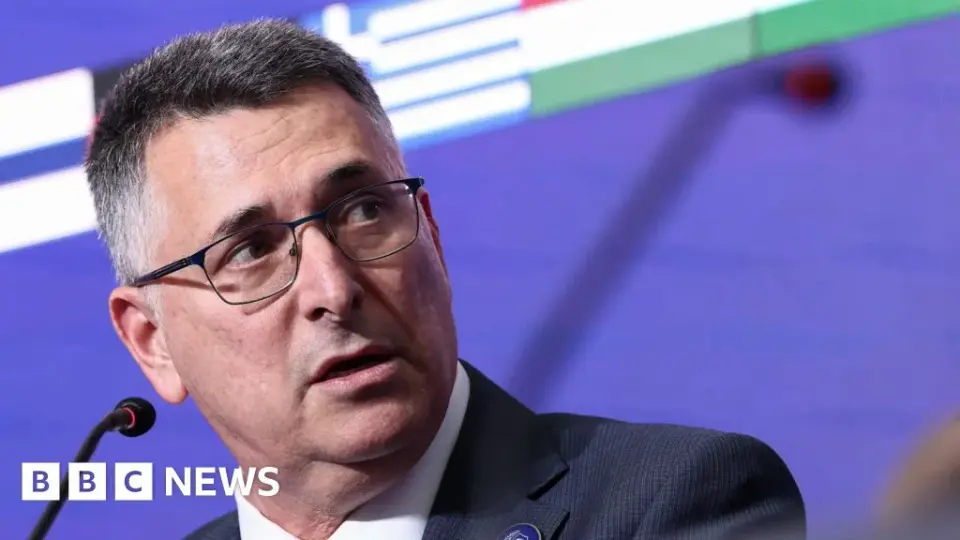
UK Foreign Secretary Ed Miliband announced a 'comprehensive reset' of British policy toward Israel, focusing on halting UK corporate involvement in West Bank settlements. Israel’s Foreign Minister Gideon Saar warned that any UK sanctions would trigger immediate retaliation. The dispute centers on Israel’s recent tenders for 1,200 homes in the E1 area, which critics argue would split the West Bank and undermine a future Palestinian state. While the UK joined a 20-nation condemnation of the plan, internal pressure is mounting to ban trade with settlement-linked entities, a move complicated by existing public-sector contracts worth over 2.1 billion pounds.
Key points
- Ed Miliband stated the UK will examine measures to stop companies from financing, constructing, or advertising new settlements, calling the E1 plan a 'red line' that risks the two-state solution.
- Gideon Saar declared that if Britain acts against Israel, Israel will respond in kind, warning that such actions would be a 'big mistake' and citing available tools for retaliation.
- Israel issued tenders last month for approximately 1,200 homes in the E1 area, a strategic zone east of Jerusalem that critics say would divide the West Bank and isolate East Jerusalem.
- Milband described the E1 expansion as illegal under international law and emphasized that the government will not acquiesce in the destruction of the two-state solution.
- The UK joined a joint statement with 20 other countries, including the EU, France, Germany, and Italy, condemning the E1 project as unacceptable and harmful to Palestinian territorial contiguity.
Background
This escalation follows a period of heightened scrutiny regarding Western economic ties to occupied territories. In August 2026, reports highlighted how global trade disputes and sanctions regimes, such as those involving Canada and the US, were reshaping international alliances. Additionally, earlier analyses noted that while the International Court of Justice ruled in July 2024 that Israel’s presence in occupied territories was unlawful, many Western nations continued commercial relationships with entities linked to settlements. The current UK debate mirrors broader European tensions, where Germany’s Chancellor Friedrich Merz recently called the E1 plan a 'big mistake,' signaling a shift in traditional diplomatic support for Israel among Western allies.
How outlets are covering it
The BBC and The Guardian present a consistent view of the diplomatic standoff, highlighting Miliband’s commitment to a policy reset and Saar’s threat of retaliation. The Guardian adds detail on the political pressure within the UK, noting that over 140 Labour MPs are calling for a trade ban, while Foreign Office ministers have indicated such measures are under consideration. Al Jazeera provides a distinct economic perspective, revealing that 17 companies linked to illegal settlements hold UK public-sector contracts worth over 2.1 billion pounds, primarily through Motorola Solutions and Heidelberg Materials. This investigation suggests the UK may be in breach of international obligations by continuing these contracts, a point emphasized by legal experts and former Labour leader Jeremy Corbyn. In contrast, the Israeli embassy and Saar’s comments frame the issue as a matter of national sovereignty and security, rejecting external interference. The Telegraph source was inaccessible due to a security block, so its perspective could not be synthesized.
Why it matters
The potential imposition of UK sanctions marks a significant shift in British foreign policy, moving from diplomatic condemnation to economic leverage. If implemented, these measures could set a precedent for other Western nations to decouple from settlement-linked industries, potentially impacting Israel’s construction and infrastructure sectors. Conversely, Israeli retaliation could strain UK-Israel relations and affect broader European security dynamics. The revelation of substantial UK public-sector contracts with settlement-linked firms also raises legal and ethical questions about the UK’s compliance with international law, potentially influencing future procurement policies and international trade agreements.
What to watch
Ed Miliband is expected to outline specific measures in the coming weeks to prevent UK corporate involvement in settlement construction. The UK government is likely to review existing contracts with companies identified by the UN as involved in illegal settlements, potentially leading to exclusions or new sanctions. Israel may respond with retaliatory measures if the UK proceeds with sanctions, potentially affecting trade or diplomatic relations. The outcome of this dispute will also influence the stance of other European nations, particularly Germany and France, who have already condemned the E1 plan but have not yet indicated similar economic measures.
- Israel warns it will retaliate if UK imposes sanctions BBC
- Burnham poised to sanction Israeli settlements The Telegraph
- Ed Miliband promises ‘comprehensive reset’ of UK policy toward Israel The Guardian
- Sa’ar threatens retaliation if UK imposes West Bank settlement sanctions The Times of Israel
- UK has billions in contracts with firms tied to illegal Israeli settlements aljazeera.com
Want the full story? Read the original reporting
Read on BBC