
Mecca Pact Links Saudi, Turkey, and Pakistan in Collective Defense Bloc
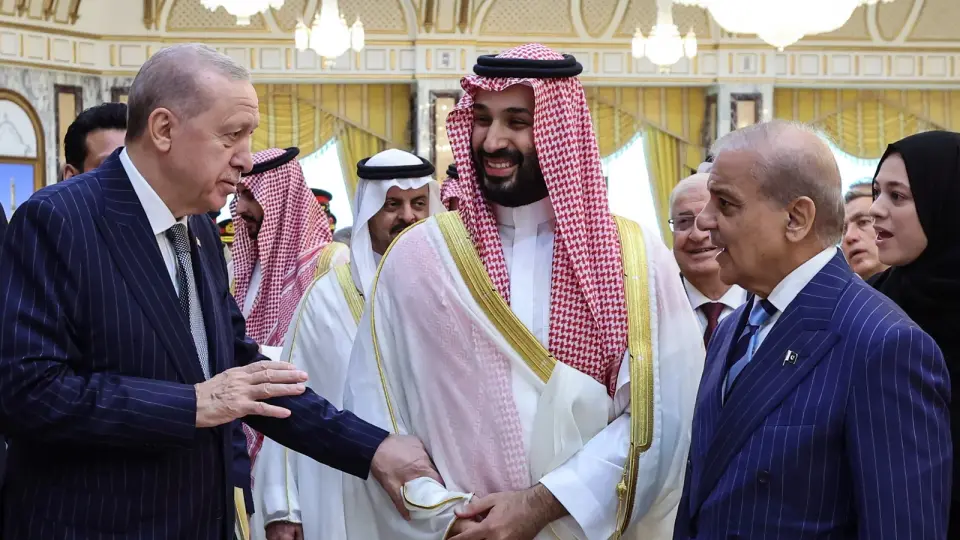
Saudi Arabia, Turkey, and Pakistan signed the Mecca Joint Defence Agreement, a collective defense pact stating that an attack on one member is an attack on all. The deal, signed by Crown Prince Mohammed bin Salman, President Recep Tayyip Erdogan, and Prime Minister Shehbaz Sharif, aims to diversify regional security away from the US amid ongoing Iran-related conflicts. While it strengthens deterrence, it risks entangling Pakistan in Middle Eastern disputes and complicates its relations with Iran and India.
Key points
- The agreement, signed in Mecca, mirrors NATO’s Article 5, requiring mutual defense against aggression.
- It consolidates existing ties, including a 2025 Saudi-Pakistan pact involving 8,000 troops and Turkish defense technology.
- Pakistan’s nuclear status and military experience are seen as critical assets for the alliance.
- The pact is driven by economic and security interests, particularly regarding Strait of Hormuz disruptions and Iranian threats.
- Iran has dismissed the agreement as ineffective, while India has expressed concern over its strategic implications.
Background
This pact follows a 2025 bilateral defense agreement between Saudi Arabia and Pakistan, which included significant troop deployments. Earlier in 2026, regional tensions escalated due to US-Iran conflicts, Houthi attacks in Yemen, and disruptions in the Red Sea and Strait of Hormuz. The Mecca pact is part of a broader trend of Middle Eastern nations seeking to reduce reliance on US security guarantees.
How outlets are covering it
Middle East Eye and CNN emphasize the pact’s role in reshaping regional security and reducing dependence on the US, highlighting Pakistan’s shift from a neutral mediator to a security guarantor. Al Jazeera focuses on the challenges and questions surrounding the pact’s effectiveness as an alternative to US security. AP News provides a factual overview, noting the lack of specific military commitments in the agreement. Iranian officials, as reported by Middle East Eye and CNN, dismiss the pact as a 'paper agreement' that will not ensure security. Indian analysts, cited by Middle East Eye, view the pact negatively, suggesting it strengthens Pakistan’s strategic position against India.
Why it matters
The Mecca Joint Defence Agreement signals a significant shift in Middle Eastern security dynamics, potentially reducing reliance on the US and creating a new axis of power. It could influence regional conflicts, including those involving Iran, and has implications for global energy markets and shipping routes. For Pakistan, it offers economic benefits but risks entanglement in foreign conflicts. For India, it poses a strategic challenge, potentially altering the balance of power in the region.
What to watch
The pact’s effectiveness will be tested by future regional conflicts, particularly involving Iran. There are discussions about expanding the alliance to include other Muslim-majority nations. India may seek to strengthen its own strategic partnerships in response. The US may view the pact favorably as it encourages burden-sharing among allies. The agreement’s long-term impact will depend on its ability to deter aggression and manage internal and external challenges.
- What Pakistan's defence pact with Saudi Arabia and Turkey means for the Middle East Middle East Eye
- Saudi Arabia turns to Muslim military heavyweights in landmark defense pact as Iran war closes in CNN
- Turkey, Pakistan, Saudi Arabia defence pact technically same as NATO's Article 5, Turkish minister says Reuters
- Saudi Arabia, Turkey and Pakistan have signed a key defense agreement AP News
- What are the challenges facing the Mecca agreement? Al Jazeera
Want the full story? Read the original reporting
Read on Middle East Eye