
Mecca Pact: Ankara and Riyadh Frame New Alliance as Neutral, CNN Warns of Iran Escalation
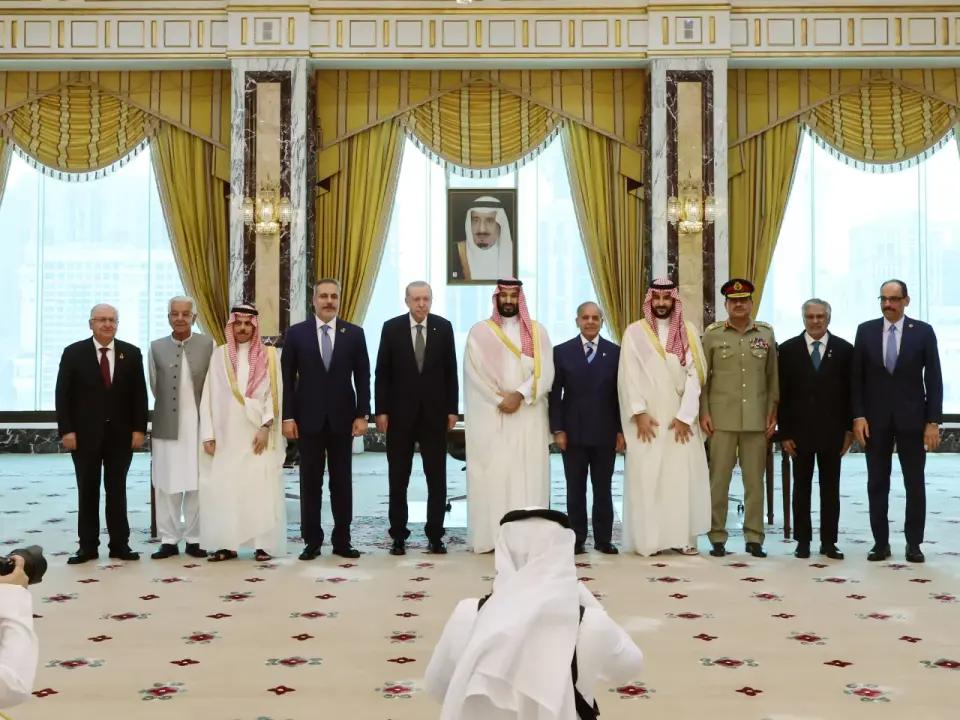
Türkiye, Saudi Arabia, and Pakistan signed a trilateral mutual defence agreement in Mecca on August 7, 2026. The pact includes an Article 5-style clause stating that an attack on one signatory is an attack on all. While Turkish officials insist the alliance is not aimed at Iran, CNN analysis suggests it serves as a deterrent against Iranian aggression and reduces reliance on the US.
Key points
- The agreement was signed by Turkish President Recep Tayyip Erdogan, Saudi Crown Prince Mohammed bin Salman, and Pakistani Prime Minister Shehbaz Sharif.
- Foreign Minister Hakan Fidan stated the pact does not name any specific country as a threat, though it mirrors NATO’s collective defence principles.
- The alliance will establish political and military committees, a secretariat in Saudi Arabia, and focus on joint training and defence-industry cooperation.
- Preparations for the pact took nearly two years and eight months, suggesting it was not a reactive measure to current tensions.
- Egypt is expected to join the alliance once technical issues are resolved, according to Fidan.
Background
This development follows earlier reports that the pact signals a shift toward regional security autonomy in the Middle East. Previous coverage noted that the agreement combines Pakistan’s military capabilities, Saudi financial resources, and Turkish defence industry expertise. It was also reported that the pact could complicate US strategy and Arab-Israeli normalization, though it is framed as a supplement to existing alliances rather than a replacement for them.
How outlets are covering it
Al Jazeera emphasizes the Turkish government’s official stance that the pact is not directed at Iran, highlighting Fidan’s assertion that no common threat is written into the agreement. In contrast, CNN frames the pact as a direct response to the looming 'Iran war,' arguing that it provides Saudi Arabia with a new layer of protection beyond its US partnership. CNN notes that while the Saudi foreign ministry denied the pact represents a sectarian bloc, the alliance consolidates Sunni-led military power against Iranian threats. Both outlets agree that the pact’s practical implementation remains unclear, with questions over how military coordination would function in a crisis.
Why it matters
The pact represents a significant shift in Middle Eastern security architecture, potentially reducing reliance on US guarantees and introducing a new collective defence mechanism. It could deter Iranian aggression by threatening to draw in powerful military allies like Türkiye and Pakistan, but it also risks escalating regional conflicts. The expansion of the alliance to include Egypt and other nations could further reshape geopolitical dynamics in the region.
What to watch
The next steps involve the establishment of political and military committees to coordinate defence cooperation. Türkiye expects Egypt to join the pact once technical issues are resolved. The practical details of military coordination and interoperability will be developed over time, with the alliance potentially expanding to include other regional countries.
- Turkiye says Mecca defence pact not aimed at Iran Al Jazeera
- Saudi Arabia turns to Muslim military heavyweights in landmark defense pact as Iran war closes in CNN
- Turkey, Pakistan, Saudi Arabia defence pact technically same as NATO's Article 5, Turkish minister says Reuters
- Turkey says Iran not target of pact with Saudi Arabia, Pakistan The Hill
- Saudi Arabia, Turkey and Pakistan Sign Joint Defense Pact The New York Times
Want the full story? Read the original reporting
Read on Al Jazeera