
Midterm Losses Undermine US Leverage in Iran Blockade, Analyst Warns
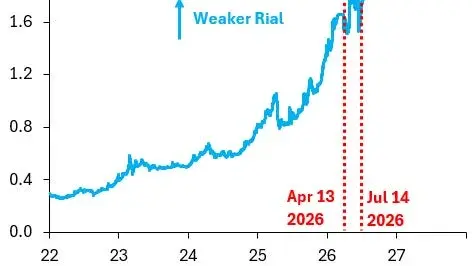
Robin J Brooks argues that the US blockade of Iran has lost its psychological 'fear factor' following Republican losses in the November 2026 midterms. Iran now believes it can survive until the new Congress takes office in January, rendering further military escalation ineffective. Brooks suggests the US may opt for performative strikes or allow Gulf states to broker a deal, as the window for decisive action has closed.
Key points
- The Iranian Rial rebounded significantly on November 4, 2026, following the midterm election results, signaling a reduction in capital flight and a loss of psychological pressure on the Iranian regime.
- Brooks identifies three potential US paths: massive military escalation (deemed too late), performative strikes to declare 'mission accomplished,' or withdrawal allowing Gulf nations to pacify the Strait of Hormuz.
- The blockade, reimposed on July 14, 2026, previously caused sharp currency depreciation through capital flight, but this pressure has dissipated as Iran anticipates a change in US political leadership.
- Brooks acknowledges the blockade was a strategic mistake but credits President Trump for the courage to impose it, noting that oil prices did not spike uncontrollably and Western economies managed the shock well.
- The author argues that the window for military escalation to convince Iran it cannot hold out until January has closed, leaving the US with limited options to resolve the conflict.
Background
This analysis follows a period of heightened tensions, including Iran's November 3 offer to reopen the Strait of Hormuz within two days if US sanctions are lifted. Earlier in October, the USS Abraham Lincoln returned from a 322-day deployment involving combat operations against Iran, highlighting the sustained military presence in the region. The US also concluded its anti-ISIS campaign in Iraq on September 30, shifting focus to broader regional stability concerns.
Why it matters
The erosion of the blockade's psychological impact suggests the US may struggle to achieve its strategic objectives without significant political or military costs. If the US opts for performative strikes or withdrawal, it could embolden Iran and shift the burden of regional security to Gulf states, potentially altering the balance of power in the Persian Gulf.
What to watch
Watch for US decisions on military strikes or diplomatic engagement with Gulf states. Monitor the Iranian Rial's stability and any further offers from Tehran regarding the Strait of Hormuz. The January 2027 swearing-in of the new Congress will be a critical date for potential shifts in US foreign policy.
Want the full story? Read the original reporting
Read on Robin J Brooks | Substack