
NATO Chief Urges Calm as Denmark Warns of Potential Russian Strikes
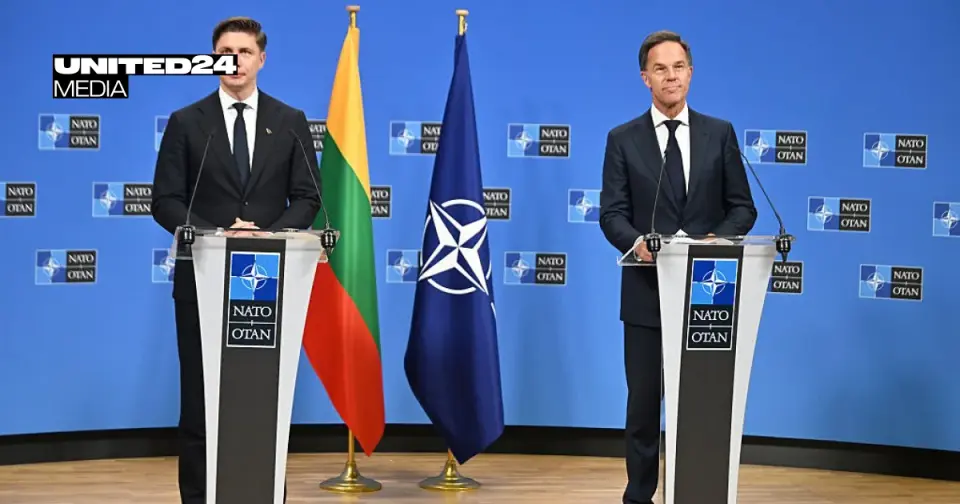
NATO Secretary General Mark Rutte stated on September 29 that the alliance possesses sufficient tools to counter Russian hybrid threats, urging members to maintain calm and continue supporting Ukraine. While Rutte acknowledged that sabotage incidents are having an impact, he emphasized that NATO remains stronger than Russia. This stance contrasts with recent Danish intelligence warnings of a growing risk for limited Russian military strikes in the coming months. The debate intensified after Estonia officially attributed an arson attack on defense firm Milrem Robotics to Russian special services, prompting widespread solidarity from European leaders and a denial from the Kremlin.
Key points
- Rutte stated NATO has visible and covert response options for Russian sabotage, urging allies not to overreact while maintaining defense investments.
- Danish intelligence assessed a 'low but growing risk' of limited Russian strikes on critical infrastructure or troop deployments in the coming months.
- Estonia accused Russian special services of ordering an August arson attack on Milrem Robotics, leading to the apprehension of suspects and a summons of the Russian ambassador.
- Lithuanian PM Mindaugas Sinkevicius argued that while risks exist, there is no proof of imminent large-scale escalation, advising against exaggerating the threat.
- The Kremlin dismissed Estonia's accusations as baseless, while European leaders including Macron and Kristersson expressed full solidarity with Tallinn.
Background
This development follows a surge in hybrid incidents across Europe, including drone discoveries in Germany and airspace breaches in Finland. In late September, the EU drafted an emergency protocol to coordinate responses to sub-threshold attacks, aiming to fill gaps in current defense structures. Previous NATO warnings highlighted Moscow's increasing recklessness, while European nations have ramped up defense spending to counter perceived threats along the eastern flank.
How outlets are covering it
Outlets highlight a divergence in threat assessment. UNITED24 Media and Euronews focus on Rutte's call for calm and the strategic value of continued Ukraine support, framing Russian actions as failing to break Western unity. CNBC, however, emphasizes the Danish intelligence warning of a potential limited military attack within months, suggesting a higher immediate risk. While Rutte admitted hybrid attacks have an impact, he and Lithuanian leaders downplayed the likelihood of conventional war, whereas Danish officials warned of escalating sabotage with high casualty risks. The Kremlin maintains its denial of involvement, contrasting with the firm attribution by Estonia and support from France, Sweden, and the EU.
Why it matters
The incident tests NATO's cohesion and the effectiveness of its response mechanisms to sub-conventional threats. A successful attribution by Estonia sets a precedent for collective action against hybrid warfare, potentially influencing the EU's new emergency protocol. It also highlights the tension between maintaining calm to avoid escalation and the need for robust deterrence as Russia continues to probe Western resolve.
What to watch
NATO members are expected to continue monitoring for further hybrid incidents while implementing the EU's proposed emergency security protocol. Defense investments will likely accelerate as allies seek to strengthen their positions over the next two to five years. Diplomatic tensions may rise as the Kremlin rejects attribution, while European governments prepare for potential further sabotage or cyberattacks targeting critical infrastructure.
- NATO Chief Says Not All Responses to Russian Hybrid Attacks Will Be Public united24media.com
- Europe on edge from threats of Russia's growing escalation. Can NATO defend itself? : Sources & Methods NPR
- Russia could attack a NATO country within months, Danish intelligence warns CNBC
- Top NATO commander urges states to condemn Russian acts of sabotage Reuters
- NATO says Russian hybrid campaign not stopping support for Ukraine Euronews.com
Want the full story? Read the original reporting
Read on united24media.com