
NATO's Deterrence Cracks as Russia's Hybrid Attacks Escalate Without Alliance Response
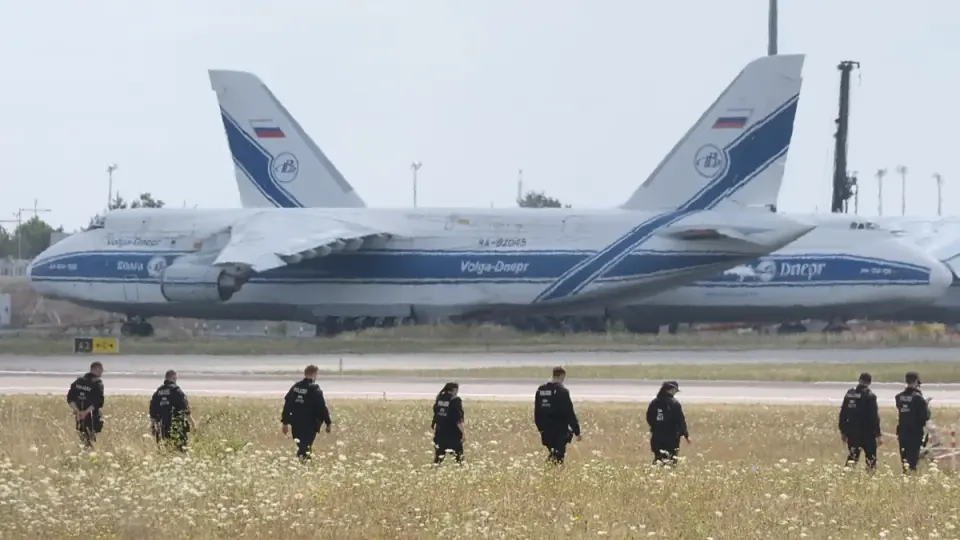
Russian hybrid attacks on NATO territory, including a drone incident at Leipzig airport and a near-miss with Ukrainian President Zelenskyy's plane, have intensified without a unified alliance response. Critics argue this inaction undermines deterrence, while US officials show ambiguity in support, leading to fears of further escalation.
Key points
- Germany formally blamed Russia for an explosive-laden drone at Leipzig airport in August, leading to the closure of the Russian consulate in Bonn and termination of the Russian House cultural centre in Berlin.
- A Russian drone nearly hit a plane carrying Ukrainian President Volodymyr Zelenskyy during his travel to King Harald's funeral in Oslo on September 7.
- NATO has not triggered a collective response (Article 5) or formal consultation (Article 4) for these incidents, despite Poland invoking Article 4 after a previous drone incursion.
- US intelligence assessments suggest Putin could test NATO's resolve with a limited assault within a few years, but uncertainty over US commitment under the current administration fuels Russian risk-taking.
- Kremlin spokesperson Dmitry Peskov threatened to target Lithuania with nuclear weapons if Vilnius allows nuclear arms on its territory, marking a significant escalation in rhetoric.
Background
Recent months have seen a rise in Russian hybrid warfare, including cyberattacks, arson, and sabotage across Europe. Poland has been strengthening its deterrence posture, with defense spending around 5% of GDP, while the US urged NATO to sharpen readiness for a possible Russian strike. The Leipzig drone incident in August was a calculated hybrid-warfare signal, testing European unity without triggering a full-scale war.
How outlets are covering it
Euronews highlights the lack of a powerful deterrent response, with experts like Ed Arnold and Kurt Volker arguing that inaction chips away at NATO's deterrence value and exposes disunity. The Atlantic's Andrew Ryvkin suggests Russia's hybrid campaign is its preferred strategy, aiming to persuade Europe to stop supporting Ukraine without a conventional war. The Dispatch's analysis, while not detailed in the provided text, likely aligns with concerns over US commitment and the need for a stronger European-led response, as noted by Laura Galante.
Why it matters
The failure to respond to Russian hybrid attacks risks emboldening Moscow to escalate, potentially leading to a direct confrontation. The ambiguity in US support and the lack of a unified NATO response undermine the alliance's credibility and could have significant implications for European security and the ongoing war in Ukraine.
What to watch
NATO may need to reconsider its response mechanisms, potentially leading to a more unified stance or a European-led security posture. The Kremlin's nuclear threats against Lithuania and the ongoing hybrid attacks suggest continued escalation, with potential for further incidents that could test NATO's resolve.
- NATO's deterrence 'weakened' by lack of response to Russian attacks Euronews.com
- Russia’s Real Strategy in Europe theatlantic.com
- Russia’s Threats to Europe Extend Beyond Ukraine thedispatch.com
- Russian drone ‘tactics’ in Ukraine branded ‘desperate’ by NATO’s Mark Rutte Channel 4
- Europe Struggles to Counter Russian Attacks Falling Short of War bloomberg.com
Want the full story? Read the original reporting
Read on Euronews.com