
Pyongyang fires two missiles after rejecting U.S. diplomatic overtures
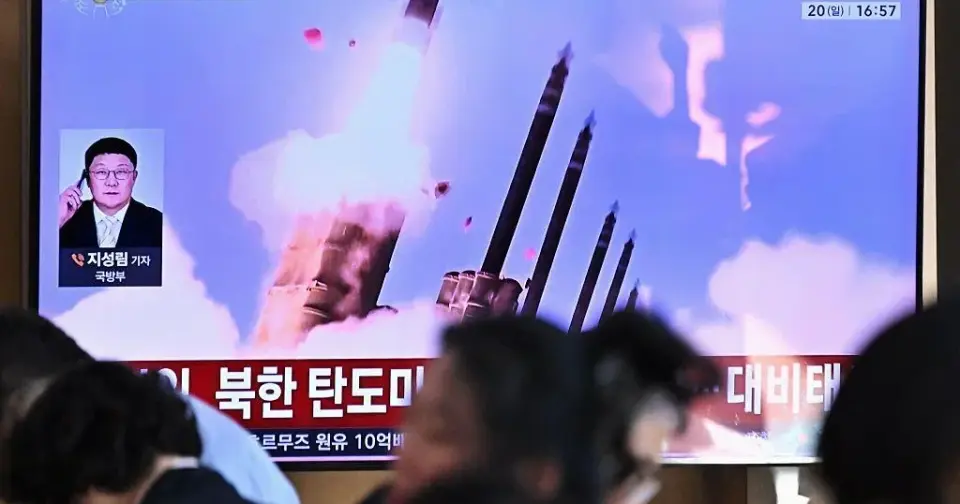
North Korea launched two short-range ballistic missiles toward the sea on September 20, 2026, from the Wonsan area. The first traveled approximately 280 miles, while the second covered over 370 miles. These launches follow recent threats by Pyongyang to bolster its nuclear deterrent in response to U.S. military activities. South Korea and the U.S. are analyzing the weapons' specifications, while Seoul has urged Pyongyang to halt launches banned by U.N. resolutions. This escalation occurs despite President Trump’s recent decision to scale back joint military exercises with South Korea, a move Pyongyang dismissed as insufficient to change the 'provocative' nature of U.S. policy.
Key points
- Two short-range ballistic missiles were launched from North Korea's eastern coast on September 20, 2026.
- The first missile traveled about 280 miles, and the second traveled more than 370 miles, both landing in the sea.
- South Korea’s military has boosted surveillance and is exchanging information with the U.S. and Japan.
- Pyongyang rejected U.S. diplomatic efforts, including the scaling back of the Ulchi Freedom Shield exercise.
- Kim Yo Jong stated that U.S. military drills remain 'provocative' and that North Korea will intensify its nuclear deterrence.
Background
This latest missile activity follows a series of recent escalations, including the commissioning of the nuclear-capable Kang Kon destroyer in early September 2026. North Korea had previously fired approximately 10 short-range missiles in response to shortened U.S.-South Korea drills. The current launches occur amid a broader pattern of weapons demonstrations and naval expansion, reflecting Pyongyang's strategy of leveraging its advancing nuclear arsenal and closer ties with Russia and China to pressure the U.S. into negotiations, despite diplomatic stalls since 2019.
How outlets are covering it
CBS News and AP News emphasize the direct link between the missile launches and North Korea's rejection of U.S. diplomatic overtures, highlighting the failure of Trump's attempt to revive diplomacy through reduced military exercises. Politico focuses on the immediate military response, noting South Korea's emergency national security council meeting and the boosted surveillance posture. The Japan Times confirms the launches but provides less detail on the diplomatic context, focusing primarily on the event itself. All sources agree that the launches are a response to U.S.-led military activities, including the 'Pacific Vanguard' exercise, which Kim Yo Jong criticized as a 'frantic military move.'
Why it matters
The missile launches signal a continued breakdown in U.S.-North Korea diplomacy and an escalation in regional tensions. They demonstrate Pyongyang's willingness to use military demonstrations to counter perceived U.S. provocations, despite diplomatic overtures. This could lead to further instability in the Asia-Pacific region and complicate efforts to manage North Korea's nuclear program through dialogue.
What to watch
South Korea and the U.S. are conducting detailed analyses of the missile specifications. South Korea has urged North Korea to halt ballistic missile launches, and the region is likely to see continued military posturing and diplomatic friction. The U.S. and its allies may respond with further sanctions or military exercises, while North Korea may continue to test weapons to assert its nuclear status.
- North Korea launches missiles as it dials up pressure against U.S. CBS News
- North Korea fires two ballistic missiles off east coast in three hours Reuters
- South Korea says North Korea launched a ballistic missile and another projectile toward the sea Politico
- North Korea launches 2 ballistic missiles toward the sea and dials up pressure on the US AP News
- North Korea fires off two ballistic missiles The Japan Times
Want the full story? Read the original reporting
Read on CBS News