
SCO Summit in Bishkek: Putin, Xi, and Modi Navigate Geopolitical Fractures
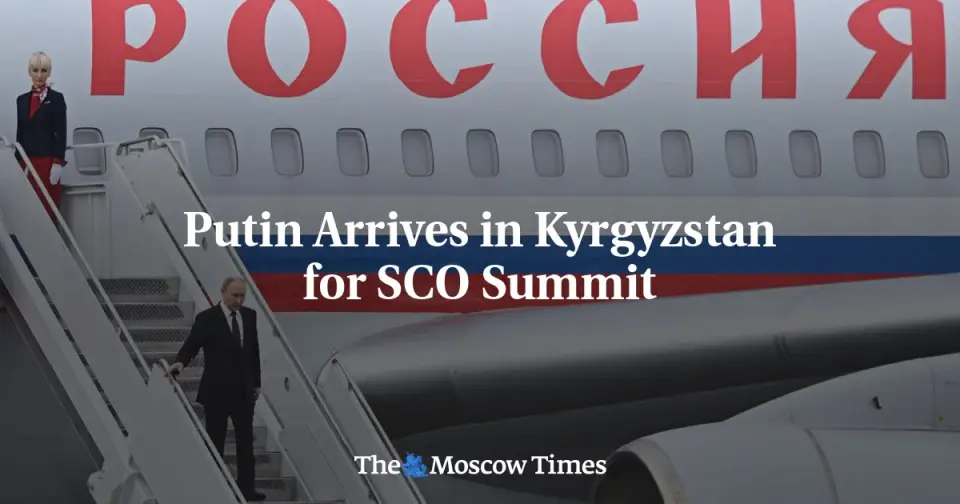
Russian President Vladimir Putin arrived in Bishkek, Kyrgyzstan, for the 25th-anniversary summit of the Shanghai Cooperation Organization (SCO). The two-day gathering brings together leaders from ten member states, including China, India, and Iran, to discuss security and economic cooperation. Key bilateral meetings focus on the Power of Siberia 2 pipeline, Black Sea security, and the Russia-Ukraine war. The summit occurs amid ongoing conflicts in Ukraine and the Middle East, with leaders seeking to assert a multipolar world order against Western influence.
Key points
- Putin held nine bilateral talks, including with Xi Jinping, Narendra Modi, and Masoud Pezeshkian, focusing on energy, security, and regional stability.
- The SCO, founded in 2001, now includes 10 members and 15 dialogue partners, representing 43% of the world's population.
- Discussions centered on the Power of Siberia 2 pipeline, the Northern Sea Route, and the potential SCO Development Bank.
- The summit addressed the US-Israel war on Iran and the Russia-Ukraine conflict, with mixed reactions from member states.
- Putin traveled with a compact seven-member delegation, including Foreign Minister Sergei Lavrov and Kremlin spokesman Dmitry Peskov.
Background
The SCO was established in 2001 by Russia and China to counter Western influence in Eurasia. It has expanded to include India, Pakistan, Iran, and Belarus, along with four Central Asian republics. The bloc has increasingly focused on economic integration and security, with recent summits emphasizing a multipolar world order. The 2026 summit marks its 25th anniversary, coinciding with heightened geopolitical tensions and US unilateral policies.
How outlets are covering it
The Moscow Times highlights the logistical and diplomatic details of Putin’s visit, including his compact delegation and the heavy security presence in Bishkek. Al Jazeera emphasizes the strategic significance of the summit for China and India, noting the potential for economic integration and the SCO Development Bank. France 24 focuses on the SCO as a counterbalance to US influence, highlighting the deepening ties between Russia and China, and the economic challenges faced by Iran. Analysts note that while the SCO promotes a multipolar world, internal disagreements, particularly between India and China, limit its cohesion.
Why it matters
The SCO summit underscores the growing influence of non-Western powers in shaping global security and economic policies. The discussions on energy pipelines, trade routes, and financial institutions signal a shift toward alternative architectures that reduce dependence on Western institutions. The summit also highlights the complexities of balancing strategic autonomy, as seen in India’s dual engagement with both the SCO and the Quad.
What to watch
Following the SCO summit, Putin is scheduled to attend the Eastern Economic Forum in Vladivostok. The SCO is expected to continue discussions on the SCO Development Bank and new trade corridors, such as the International North-South Transport Corridor. Ongoing conflicts in Ukraine and the Middle East will likely remain central to future SCO deliberations, with member states navigating their divergent interests.
- Putin Arrives in Kyrgyzstan for SCO Summit The Moscow Times
- India's Modi tells Russia's Putin that the war in Ukraine must end for humanity's sake Reuters
- Leaders of China, Russia, India among world leaders meeting at summit to counter U.S. influence PBS
- Xi, Modi and Putin attend SCO summit: What’s on the agenda? Al Jazeera
- Putin and Xi rally allies at Kyrgyzstan summit to counter US influence France 24
Want the full story? Read the original reporting
Read on The Moscow Times