
Xi’s Military Purges Expose a Paradox: Enhanced Political Control, Weakened Operational Readiness
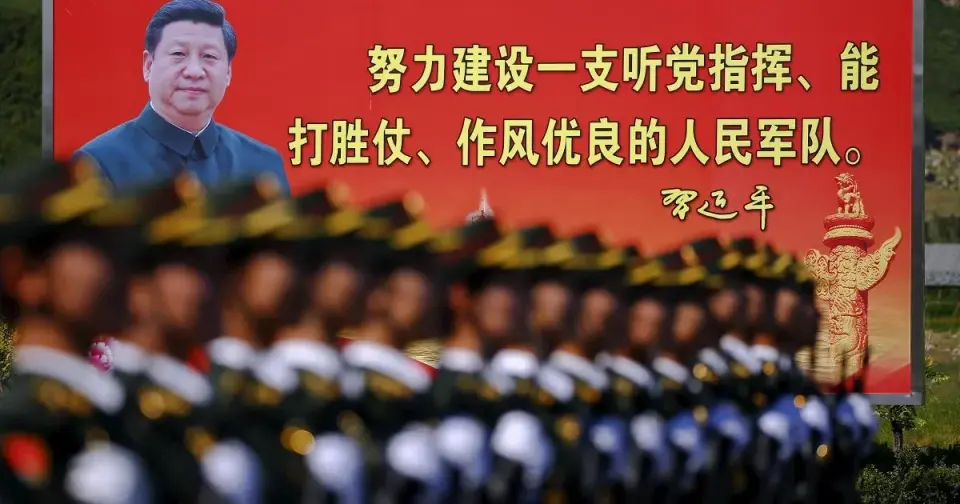
Xi Jinping’s decade-long purge of the People’s Liberation Army (PLA) has dismantled senior command structures, leaving only one of seven 2022 Central Military Commission members intact. While analysts debate whether this signals fragility or a durable 'rectification' strategy, the removal of Xi’s 20-year personal secretary, Zhong Shaojun, on August 28, 2026, marks a breach into his innermost circle. The resulting command vacuum has forced Beijing into a 'strategic stability' truce with the US to cover military rebuilding, raising concerns that political loyalty now outweighs operational effectiveness.
Key points
- On August 28, 2026, the National People’s Congress Standing Committee removed Generals Zhang Youxia and Liu Zhenli, along with Zhong Shaojun, Xi’s personal secretary since 2002.
- Since 2022, the CCP has purged or sidelined approximately 34 generals and lieutenant generals, with only 14 officially expelled from the party as of February 2026.
- The purge has left the PLA command structure hollowed out; of 27 full general/admiral posts, only six have confirmed occupants, with 20 lieutenant generals serving in acting capacities.
- Xi’s 'self-revolution' strategy aims to enforce obedience through permanent rectification and dossier-building, rather than mass elimination, distinguishing it from historical Soviet purges.
- The US-China 'strategic stability' framework, agreed in May 2026, provides Beijing a multi-year window to rebuild military leadership and address procurement corruption without external pressure.
Background
Historically, the CCP’s durability was attributed to post-Mao institutions like term limits and collective leadership. Xi abolished these in 2018, replacing them with a 'rectification' model rooted in 1942’s Yan’an campaigns. This process, described by Foreign Affairs as 'cure the sickness, save the patient,' retains cadres in the party while documenting their failures in permanent personnel files. Unlike Stalin’s violent purges, this method aims to create internalized discipline through fear and conditional loyalty, though it fails to address succession planning.
How outlets are covering it
Foreign Affairs argues the purges are a successful 'rectification' tool that strengthens party control by creating a permanent information system on cadres, though it weakens military effectiveness. War on the Rocks emphasizes the operational damage, noting the PLA is in a 'mid-rebuild' phase and using the US truce as cover to avoid exposing its disarray. The Jamestown Foundation highlights the political significance of Zhong Shaojun’s removal, suggesting Xi now relies solely on fear as material incentives for loyalty have dwindled. Tripura Chronicle reports on the broader scope, noting over 40 Central Committee members face expulsion, indicating the purge’s expansion beyond the military.
Why it matters
The purge creates a critical vulnerability: a militarily weakened but politically hardened regime. The 'strategic stability' truce with the US may harden into a norm, limiting future American leverage. If Xi’s succession remains unresolved, the system’s inability to produce a credible successor could trigger instability, despite the apparent strength of its disciplinary mechanisms.
What to watch
Beijing will continue 'strategic stability' with the US for at least three years to cover military rebuilding. The PLA will focus on filling vacant command posts and addressing procurement corruption in the Rocket Force. Xi will likely maintain the purge to sustain fear, but the lack of a clear succession plan remains the system’s greatest long-term risk.
- China’s Purges Are Working as Designed Foreign Affairs
- Strategic Stability and the Rebuilding of Xi’s Military War on the Rocks
- Zhong Shaojun’s Removal Breaches Xi’s Innermost Circle The Jamestown Foundation
- Chinese President Xi’s political purge deepens, over 40 Central Committee members face expulsion tripurachronicle.in
- The Paradox of China’s Military Purges geopoliticalfutures.com
Want the full story? Read the original reporting
Read on Foreign Affairs