
Lee Jae Myung Proposes Peace Talks to End Korean War, Ignoring North’s Rejection
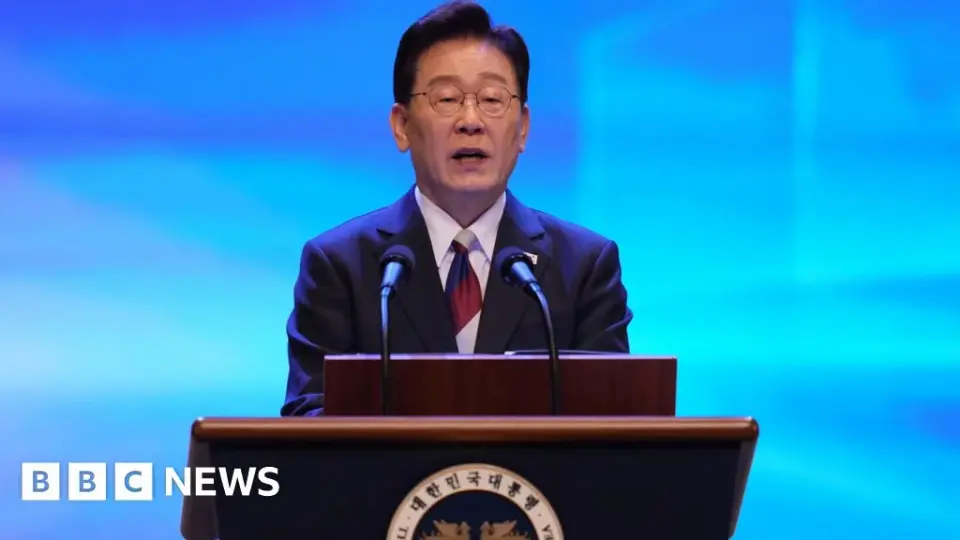
South Korean President Lee Jae Myung has called for formal negotiations to replace the 1953 armistice with a peace treaty, aiming to halt North Korea’s nuclear expansion. While Seoul proposes a 'multi-layered security system' and unconditional dialogue, Pyongyang has rejected engagement, labeling South Korea its most hostile state and deepening military ties with Russia. The initiative coincides with annual US-South Korean military drills, which North Korea condemns as provocative, and follows a period of heightened tensions including recent ballistic missile tests.
Key points
- Lee Jae Myung urged both Koreas to end the technical state of war and establish a peace regime during Liberation Day ceremonies.
- Seoul offered to discuss measures to stop the advancement of North Korea’s nuclear capabilities without preconditions.
- North Korea has rejected previous engagement offers, describing South Korea as its most hostile state and ordering stronger frontline defenses.
- Pyongyang is receiving financial, energy, and military support from Russia in exchange for troops and ammunition for the war in Ukraine.
- US-South Korean military exercises are scheduled to begin shortly, which North Korea has condemned as a provocation.
Background
This diplomatic push follows a period of escalating tensions in 2026. Earlier reports indicated North Korea was supplying significant artillery and missiles to Russia, while Seoul expanded defense links with the US and NATO. In August 2026, Pyongyang warned of stronger deterrence measures ahead of joint US-South Korean drills, which it viewed as invasion rehearsals. The current proposal by Lee represents a shift from the previous administration’s approach, seeking to thaw relations with North Korea and China after they soured under former President Yoon Suk Yeol.
How outlets are covering it
BBC and The Times of India highlight Lee’s conciliatory approach, emphasizing his offer to discuss nuclear issues and replace the armistice with a peace treaty. The Times of India notes that Lee’s outreach faces significant hurdles, as North Korea has abandoned reunification policies and deepened its military alliance with Russia. Chosun Ilbo adds a legislative dimension, reporting that National Assembly Speaker Cho Jeong-sik also urged North Korea to accept inter-Korean parliamentary talks, stressing the need to address historical grievances with Japan while pursuing peace. All sources agree that North Korea remains hostile and unresponsive to Seoul’s overtures, with Pyongyang continuing to assert its status as an irreversible nuclear state.
Why it matters
The proposal signals a potential shift in South Korean foreign policy toward direct engagement with Pyongyang, aiming to reduce regional instability. However, the lack of response from North Korea and the ongoing military cooperation with Russia suggest that diplomatic breakthroughs may be difficult. The outcome of these talks could influence regional security dynamics, particularly regarding nuclear proliferation and the balance of power in Northeast Asia.
What to watch
Analysts will monitor whether North Korea responds to Lee’s proposal or continues to reject dialogue. The upcoming US-South Korean military exercises may further strain relations, potentially triggering additional missile tests from Pyongyang. Additionally, the success of Lee’s outreach to Japan and China will be crucial in determining the broader geopolitical implications of this diplomatic initiative.
- South Korea proposes talks to officially end war with North BBC
- South Korea's Lee urges talks with North Korea to replace armistice with peace Reuters
- South Korea’s Lee Proposes Talks With North in Pursuit of Peace Bloomberg
- 'Begin discussions': South Korea's Lee Jae Myung calls for talks with North Korea The Times of India
- National Assembly Speaker Cho Proposes Inter-Korean Parliamentary Talks with North 조선일보
Want the full story? Read the original reporting
Read on BBC