
Serbia’s New Student Government Faces Slow Foreign Policy Shift Amid Domestic Cleanup
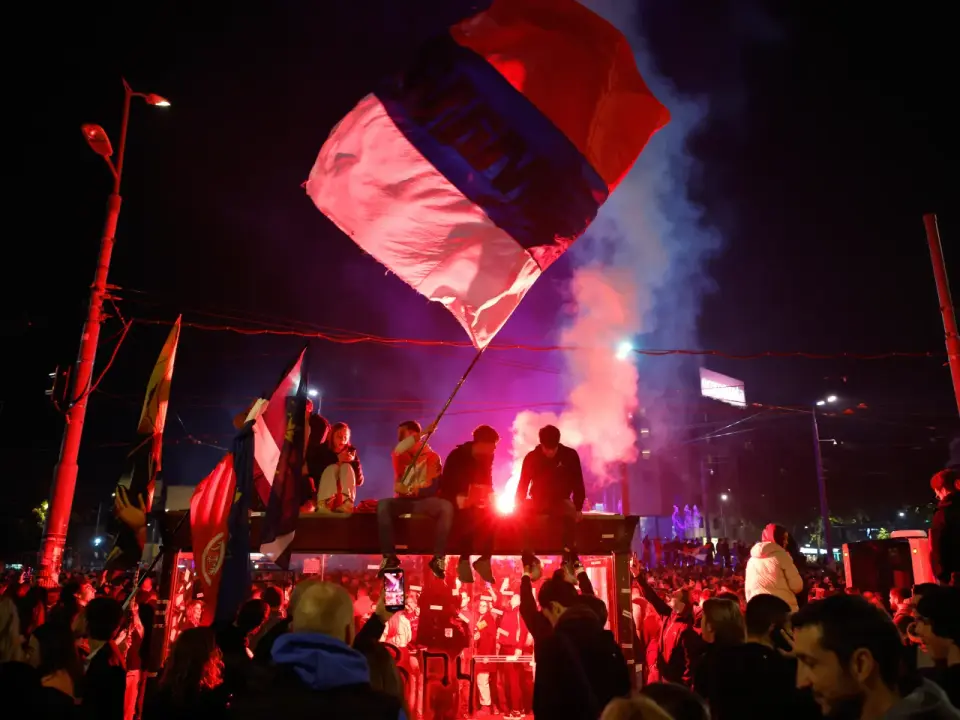
Serbia’s Student List movement has ended Aleksandar Vucic’s 14-year rule, but experts warn that foreign policy changes will be gradual. Domestic institutional repair takes priority over regional resets. Relations with Russia, Israel, and neighbors will evolve slowly, not pivot abruptly.
Key points
- The Student List won a historic victory in the October 25 parliamentary election, defeating Vucic’s Serbian Progressive Party after 14 years of authoritarian rule.
- Analysts predict foreign policy will change slowly, as the new government prioritizes fixing captured democratic institutions, judiciary, and media over immediate regional diplomacy.
- Serbia will likely maintain ties with Russia for gas and Kosovo issues, but may reduce intelligence cooperation and uncritical media glorification of Moscow.
- Relations with Israel will continue but face scrutiny, particularly regarding arms deals and surveillance equipment contracts signed under Vucic.
- Regional tensions with Croatia, Bosnia, and Montenegro remain unresolved, with experts noting that 'tidying up at home' must precede 'solving problems with neighbors'.
Background
This follows the October 25, 2026, election where the Student List secured an estimated 135-140 seats in the 250-seat parliament, ending Vucic’s rule that began in 2012. The movement emerged from protests sparked by a fatal train station collapse in Novi Sad in November 2024. Previous coverage noted the election’s record turnout and the EU’s readiness to support reforms.
How outlets are covering it
Al Jazeera emphasizes the gradual nature of foreign policy change, citing experts like Aleksandar Popov and Vuk Vuksanovic who stress domestic consolidation first. CNN highlights the student movement’s disciplined, leaderless structure and its parallels to Hungary’s Orban defeat, noting challenges in transitioning from protest to governance. NPR focuses on the celebratory atmosphere and the lack of political experience among the new MPs, warning of potential fissures in the broad coalition. All sources agree that while Vucic’s departure is historic, immediate geopolitical realignment is unlikely.
Why it matters
Serbia’s shift signals a potential realignment in the Western Balkans, affecting EU integration, regional stability, and global power dynamics. The outcome impacts Israel’s strategic alliances and Russia’s influence in Europe, while setting a precedent for youth-led democratic movements in authoritarian contexts.
What to watch
The new government will focus on institutional reforms, including judiciary and media independence. Presidential elections are scheduled for December. Foreign policy adjustments, particularly regarding Russia and Israel, will unfold gradually as domestic stability is established. Regional relations may improve slowly, but immediate tensions with Croatia and Bosnia are expected to persist.
- What Vucic’s defeat means for Serbia’s foreign policy Al Jazeera
- In Serbia, a very different student movement just ousted another European strongman CNN
- Student-led movement ousts Serbia's right-wing ruler in historic election PBS
- Aleksandar Vucic, Serbia’s autocrat, loses to a bunch of students The Economist
- 'The smell of freedom': Serbia's student movement celebrates election triumph NPR
Want the full story? Read the original reporting
Read on Al Jazeera