
China-India Border Talks Signal Shift as US Influence Wanes
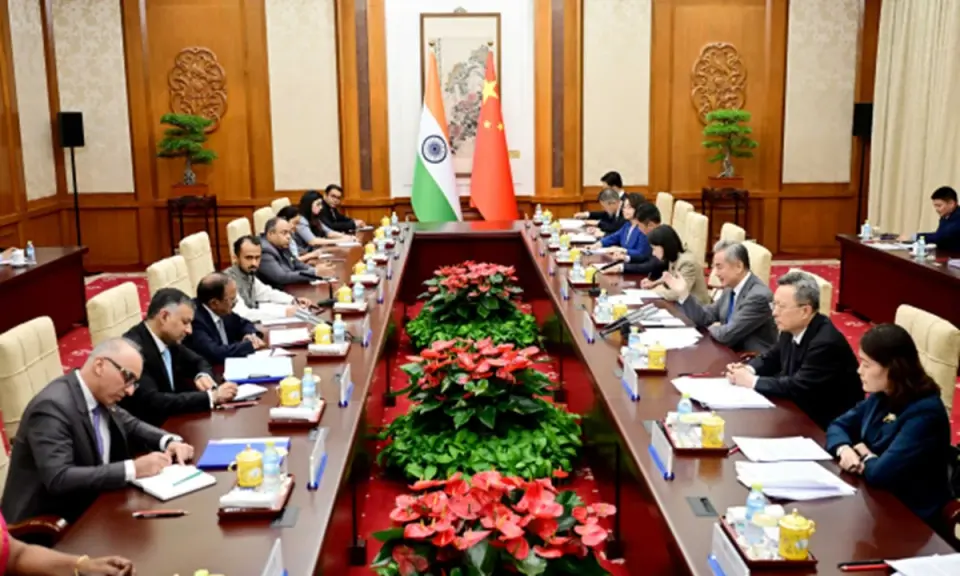
The 25th round of special representative talks between China and India on boundary issues in Beijing marks a subtle but significant shift in the bilateral relationship. While the core territorial disputes remain unresolved, the atmosphere is defined by a reduced reliance on US influence. This change stems from India’s growing disillusionment with American transactional foreign policy, allowing both nations to engage more directly despite persistent structural tensions.
Key points
- Wang Yi and Ajit Doval held the 25th round of special representative talks on the China-India boundary question in Beijing on August 25, 2026.
- The talks continued discussions on unresolved border issues, but the broader context reflects a weakening of the 'American factor' that previously dominated the relationship.
- India has grown cautious about US reliability due to recent shifts in American foreign policy, including protectionism and transactional approaches to alliances.
- Parallel developments, such as the resumption of direct flights, eased visa restrictions, and reopened border trade, indicate a more stable bilateral environment.
- Structural contradictions, including territorial disputes and geopolitical competition, remain and are expected to cause ongoing friction.
Background
Recent months have seen fluctuating tensions in the region, including India’s criticism of Pakistan’s actions in Jammu and Kashmir and diplomatic efforts to stabilize China-India ties ahead of the BRICS summit. Additionally, Japan has sought to mend its diplomatic rift with Beijing, highlighting a broader regional recalibration of alliances. These events underscore the complex web of relationships in Asia, where traditional US-led frameworks are being reevaluated by key partners.
Why it matters
The diminishing influence of the US in China-India relations signals a potential realignment in Asian geopolitics. As India becomes less dependent on Washington for strategic validation, Beijing and New Delhi may pursue more independent diplomatic and economic paths. This shift could reduce external pressures on their bilateral ties, allowing for more consistent dialogue on contentious issues like border demarcation, while also highlighting the enduring challenges of mutual suspicion and territorial disputes that cannot be resolved by external changes alone.
What to watch
Future rounds of talks will likely continue to focus on border management and dispute resolution, but within a framework less influenced by US policy. India may further diversify its strategic partnerships, while China could leverage this opening to strengthen economic and diplomatic ties. However, structural tensions will persist, requiring ongoing diplomatic engagement to prevent flare-ups.
- A quite shift behind the China-India border talks: How US influence is fading in China-India relations Global Times
- China, India reaffirm border peace, expand communication channels Reuters
- China's Xi likely to visit India with big delegation for first time in seven years Yahoo
- Drawing lines: On the India-China 25th Special Representatives’ talks The Hindu
- Before Xi’s India visit, China and India confirm 8 steps to ease border tensions South China Morning Post
Want the full story? Read the original reporting
Read on Global Times