
Tehran Summit: Mecca Pact Allies Test Final Diplomatic Option Before Military Escalation
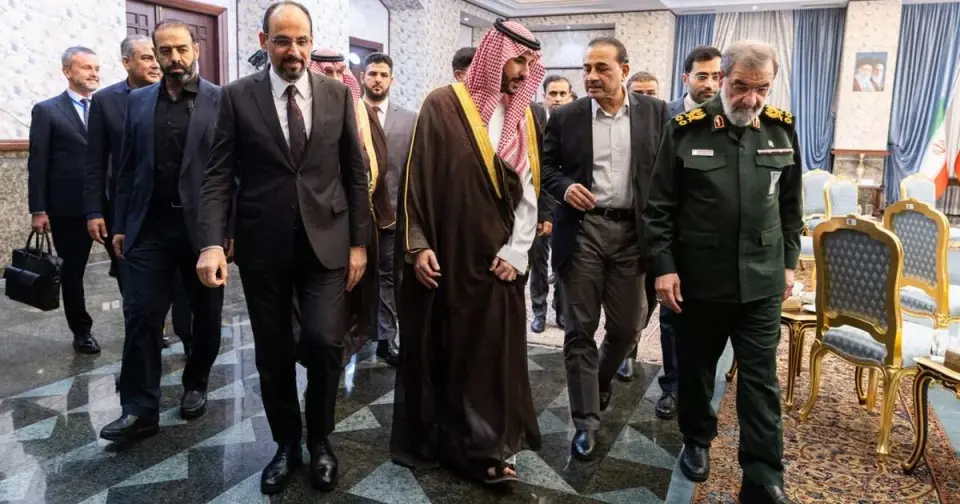
Senior officials from Saudi Arabia, Pakistan, and Turkey met with Iranian leaders in Tehran on October 26 to discuss regional security, marking the first high-level contact since Houthi attacks escalated. Analysts describe the visit as a final diplomatic opportunity before potential collective military action, though no agreement to halt Houthi strikes was reached. The talks occur amid a US-Iran standoff and internal Iranian debate over whether to leverage economic pressure or pursue a deal.
Key points
- Saudi Defense Minister Khalid bin Salman, Pakistani army chief Asim Munir, and Turkish intelligence chief Ibrahim Kalin met Iranian President Masoud Pezeshkian and National Security Council Secretary Mohsen Rezaei in Tehran.
- Analyst Mohamed Fahmy characterized the visit as 'coercive diplomacy,' suggesting it is the last chance before a collective military response to Houthi attacks on Saudi infrastructure.
- Iranian state television reported the four nations agreed to continue discussions on regional peace, but no specific agreement to stop Houthi attacks was announced.
- The Mecca Joint Defense Agreement, signed in August 2026 by Saudi Arabia, Turkey, and Pakistan, faces scrutiny as its first major test against Houthi strikes.
- Israeli media reported Saudi Arabia is discussing a potential $1 billion payment to the Houthis via Iran for a ceasefire, a claim Iran International could not independently verify.
Background
The Mecca Pact was signed in August 2026 and activated in October following Houthi strikes on Saudi airports. Turkey submitted the pact to its parliament for ratification on October 21, while Iran criticized Pakistan's shift from mediator to military ally on October 9. Recent oil price surges above $116 per barrel have intensified internal Iranian debates between hardliners and moderates regarding the effectiveness of maritime pressure versus the need for a US deal.
Why it matters
The outcome of these talks determines whether the Mecca Pact can prevent a broader regional war or if military confrontation will escalate. A failure to halt Houthi attacks could trigger collective military action by the pact members, while a diplomatic breakthrough might ease tensions but risk leaving Iran with an entrenched hostile neighbor in Yemen.
What to watch
Iranian technical negotiators are examining US counterproposals on lifting the naval blockade, with Tehran insisting on a seven-day window for restoring shipping in the Strait of Hormuz contingent on access to $24 billion in foreign reserves. Hardline Iranian factions are opposing compromise, while moderates warn of economic ruin if the confrontation continues.
- Iran talks with Mecca pact states may be ‘last chance’ before military action Iran International
- Flurry of Diplomacy in Iran as Regional Countries Try to Stave Off War The New York Times
- Is Iran moving toward war or peace after Mecca alliance meeting in Tehran? DW.com
- Saudi Arabia, Turkey and Pakistan send envoys to Iran in push to end war The Washington Post
- Inside story: Will rare gathering in Tehran help avert Iran-US war? Amwaj.media
Want the full story? Read the original reporting
Read on Iran International