
US Halts Joint Drills with Seoul to Court Pyongyang, Raising Alliances Concerns
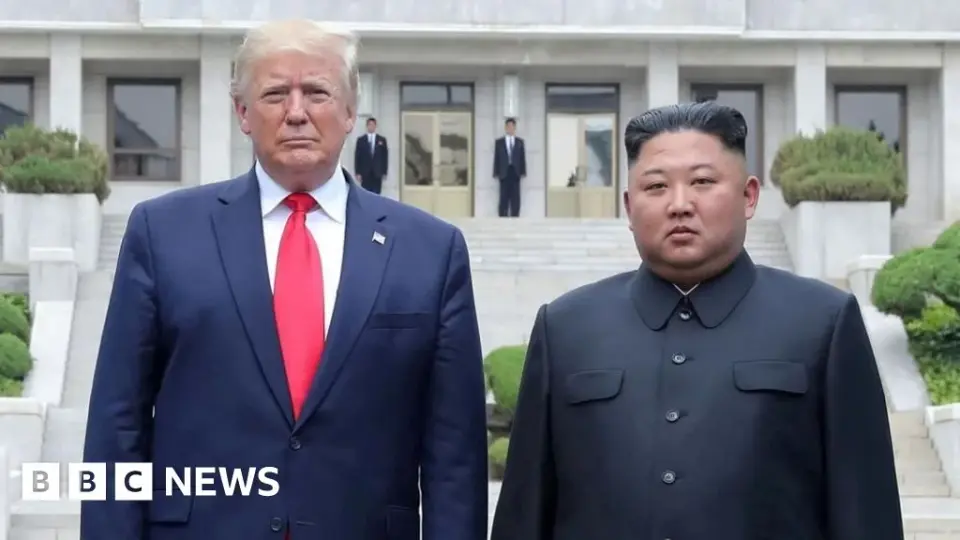
The US abruptly halted joint military drills with South Korea to appease North Korea, causing alarm in Seoul and raising questions about US commitment to regional allies.
Key points
- The US ended the Ulchi Freedom Shield exercise early, involving 18,000 South Korean troops and 11 other nations, after President Trump ordered a 'substantial reduction' in participation.
- Trump cited the drills as 'inappropriate and hostile' toward North Korea and costly, while also criticizing South Korea for refusing to join US actions against Iran.
- South Korean officials were not informed in advance of the decision, shaking confidence in the US alliance, though President Lee Jae Myung publicly praised the move as a step toward peace.
- North Korea dismissed the drill reduction as irrelevant, with Kim Yo Jong stating it does not change their 'hostile and offensive' stance, and reaffirmed its refusal to abandon nuclear weapons.
- The move raises concerns in Japan and Taiwan about US security guarantees, while some South Korean experts call for developing independent nuclear deterrence.
Background
This follows Trump’s earlier criticism of South Korea’s refusal to join the US in the Iran conflict and ongoing trade disputes. Previous archive coverage noted Trump’s uncertainty about the Iran war’s outcome and his tendency to make capricious diplomatic moves, such as the 2018-2019 summits with Kim Jong Un, which ultimately failed to yield denuclearization.
How outlets are covering it
BBC and The Atlantic both highlight the abruptness of the drill halt and its impact on US allies, but The Atlantic frames it as a punitive measure against South Korea for its stance on Iran. AP News focuses on North Korea’s dismissive response, emphasizing Pyongyang’s unchanged hostility. BBC notes South Korea’s internal debate over nuclear deterrence, while The Atlantic stresses the risk to US credibility in the region.
Why it matters
The unilateral halt of joint drills undermines the US-South Korea alliance, potentially emboldening North Korea and weakening US security commitments in Asia. It also signals a shift in US policy where trade and security issues are conflated, affecting regional stability and allies’ trust in Washington.
What to watch
Trump expects to meet Kim Jong Un later this year, but experts doubt a summit will occur unless the US accepts North Korea as a nuclear state. South Korea may increase defense spending and explore independent deterrence, while Japan and Taiwan may reassess their reliance on US security guarantees.
- Trump wants to be friends with Kim - but South Korea could pay the price BBC
- Trump’s Order to Cut Military Exercises With South Korea Carries Risks, Experts Say The New York Times
- North Korea shrugs off Trump's scaled-back drills with South Korea, saying it changes nothing AP News
- Trump Will Make South Korea Pay for His Iran Humiliation The Atlantic
- South Korea military drills / Pivot to Asia? / USS Lincoln : Sources & Methods NPR
Want the full story? Read the original reporting
Read on BBC