
Ukraine-Russia Talks Set for November Amid Deepening US-Ukraine Rift
Ukraine and Russia have agreed to resume U.S.-brokered peace talks, likely in Abu Dhabi in mid-November, following a local ceasefire for humanitarian aid in Kherson. However, fundamental disagreements over territory and security guarantees persist, with Russia demanding full control of annexed regions and Ukraine insisting on robust Western-backed security assurances. The diplomatic push is complicated by a severe deterioration in relations between Washington and Kyiv, as President Trump has imposed restrictions on intelligence sharing and drone support while pressuring Ukraine to compromise on its sovereignty.
Key points
- A new round of trilateral negotiations is expected in Abu Dhabi around mid-November, brokered by U.S. envoy Steve Witkoff after meetings in Oslo and St. Petersburg.
- Russia and Ukraine agreed to a local ceasefire in Kherson to allow humanitarian aid, a move initiated by U.S. First Lady Melania Trump, though broader hostilities continue.
- Russia demands full control of four annexed regions and Crimea, along with Ukrainian withdrawal from these areas, renunciation of NATO membership, and military reductions.
- Ukraine insists on security guarantees, potentially including NATO membership or Article 5-like assurances from the U.S. and European allies, to prevent future invasion.
- President Trump has restricted Starlink technology and intelligence sharing with Ukraine, while also announcing an energy ceasefire and a diesel deal with Russia, actions that have angered Kyiv.
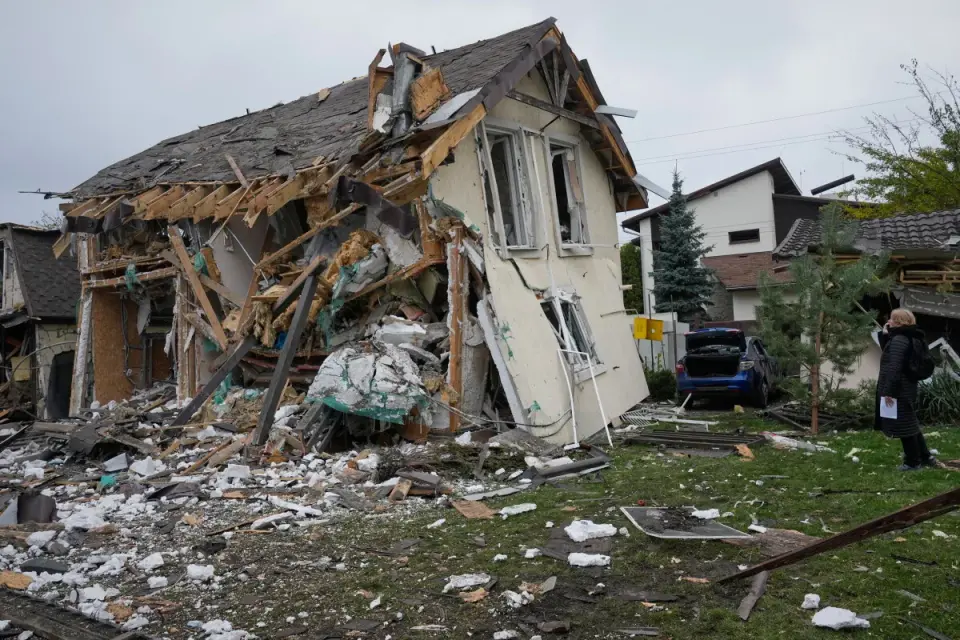
- Recent Russian missile and drone strikes on Kyiv occurred hours after Putin agreed in principle to restart talks, highlighting the gap between diplomatic rhetoric and battlefield reality.
Background
This development follows months of stalled negotiations and a significant deterioration in U.S.-Ukraine relations. In September 2026, Ukraine faced a $27 billion budget gap and severe air defense shortages as European allies conditioned aid on reforms. Recent weeks have seen intense Russian strikes on Ukrainian energy infrastructure and civilian areas, including cluster munitions attacks on Kyiv. The current diplomatic push is part of a broader U.S. effort to secure a deal before the November midterm elections, though Kyiv fears being marginalized in the process.
How outlets are covering it
AP News emphasizes the fundamental impasse, noting that while both sides agree to talks, their core positions on territory and security remain unchanged. The outlet highlights the contradiction of Russian strikes occurring immediately after Putin’s agreement to negotiate. The Atlantic focuses on the political motivations behind U.S. actions, suggesting Trump is furious at Ukraine for potentially undermining Republican chances in the midterms and is using pressure to force a deal that excludes Kyiv from key decision-making, such as a potential summit in China. CNN portrays the situation as a dual impasse, where U.S. efforts to appease Russia through concessions like the diesel deal and intelligence restrictions are counterproductive, while Ukraine struggles to maintain its defensive line in the Donbas. The outlet notes that even U.S. officials like Marco Rubio view peace as a long shot, acknowledging that Russia’s goal is victory, not compromise. The Telegraph source was inaccessible due to a security block, so no perspective could be extracted from it.
Why it matters
The outcome of these negotiations will determine the future of Ukraine’s sovereignty and the stability of European security. The deepening rift between the U.S. and Ukraine could lead to a shift in Western support, with Europe taking on a larger role in funding and arming Ukraine. If the talks fail, the war may continue with increased intensity, particularly as winter approaches and Russia uses energy infrastructure as a weapon. The U.S. actions also signal a potential shift in American foreign policy priorities, prioritizing domestic political goals over international alliances.
What to watch
The next round of talks is expected in Abu Dhabi in mid-November. In the interim, the U.S. may continue to adjust its support for Ukraine, including intelligence sharing and drone technology, based on political calculations. Russia is likely to continue its military campaign, using strikes on energy infrastructure to pressure Ukraine. European allies are expected to increase their financial and military support to fill the gap left by U.S. restrictions. The outcome of the U.S. midterm elections in November will also influence the trajectory of U.S. policy toward Ukraine and Russia.
- Ukraine and Russia eye new peace talks — and Melania Trump's mission — but steep obstacles remain AP News
- Why Trump Is Furious at Ukraine The Atlantic
- At the negotiating table and on the battlefield, Russia and Ukraine are at an impasse CNN
- Opinion | The world will soon know who is stalling the Ukraine peace talks The Washington Post
- The Ukraine peace talks are important, but not for the reason you think The Telegraph
Want the full story? Read the original reporting
Read on AP News