
US cancels joint amphibious drills with South Korea due to Iran war resource constraints
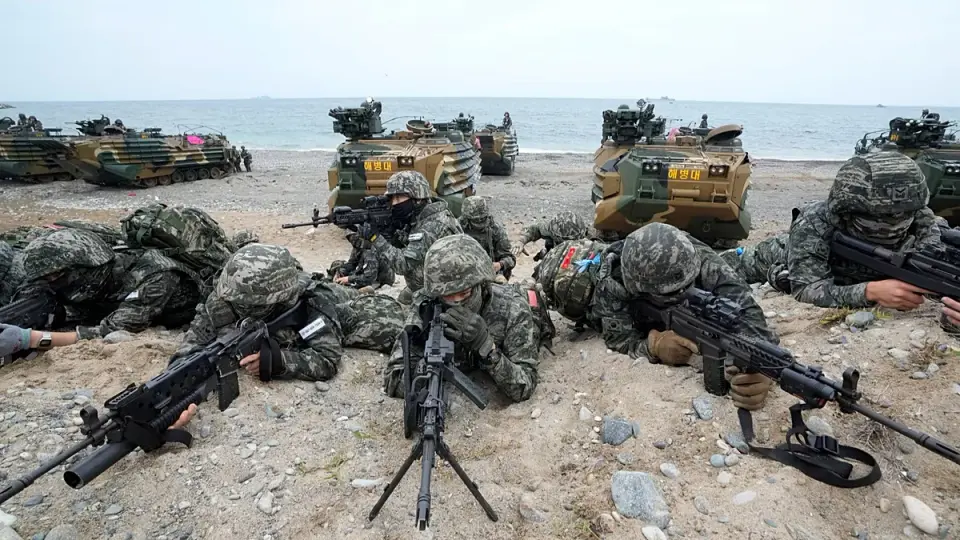
The United States has cancelled the biennial Ssangyong amphibious landing exercises with South Korea, citing force availability constraints caused by the ongoing war in Iran. This decision follows President Trump's recent order to significantly scale back the annual Ulchi Freedom Shield drills, which he criticized as costly and hostile to North Korea. While Seoul and Washington are consulting on resuming the cancelled exercise, the move signals a shift in US military posture in the region, prioritizing resources for the Middle East conflict over alliance readiness in East Asia.
Key points
- US Marine Corps formally notified South Korean forces in June that deployment for the Ssangyong exercise would be constrained due to the Middle East situation.
- The cancellation of the Ssangyong drills follows Trump's order to cut the annual Ulchi Freedom Shield exercises from 11 days to five.
- Trump cited high costs and the drills' 'inappropriate and hostile' signal to North Korea as reasons for scaling back Ulchi Freedom Shield.
- South Korean and US officials are currently consulting on the possibility of resuming the cancelled amphibious exercise, though no timeline has been provided.
- The Pentagon did not immediately respond to requests for comment regarding Seoul's announcement of the cancellation.
Background
This development follows a series of recent tensions regarding US-South Korea military cooperation. In mid-August 2026, President Trump ordered a substantial reduction of the Ulchi Freedom Shield exercises, citing financial costs and his desire to maintain a diplomatic relationship with North Korean leader Kim Jong-un. South Korean leaders had previously pledged to maintain the alliance despite these cuts, while analysts warned that reduced drills could weaken regional deterrence and provide North Korea with a strategic advantage. The current cancellation of the Ssangyong drills represents a further escalation in the scaling back of joint military activities, driven by resource demands from the Iran conflict.
How outlets are covering it
Euronews and Al Jazeera both report the cancellation of the Ssangyong drills as a direct result of force constraints from the Iran war, citing a June notification from the US Marine Corps. However, Al Jazeera explicitly links the broader context of drill reductions to Trump's stance on the Iran conflict, noting his criticism of Seoul's refusal to join the war. Both outlets highlight Trump's simultaneous efforts to improve relations with North Korea, including his comments on Kim Jong-un's nuclear arsenal and his previous summits. Euronews notes that Seoul estimates North Korea has 80 to 120 nuclear weapons, contrasting with Trump's claim of 57, while Al Jazeera emphasizes North Korea's recent missile launches and denunciation of the drills as 'open threats' to regional security.
Why it matters
The cancellation of major joint military exercises between the US and South Korea signals a potential shift in US strategic priorities, prioritizing the Iran conflict over alliance readiness in East Asia. This could weaken deterrence against North Korea and strain the US-South Korea alliance, as South Korea has consistently emphasized the importance of these drills for regional security. The move also reflects the broader impact of the Iran war on global military resource allocation, potentially affecting other US alliances and security commitments worldwide.
What to watch
Seoul and Washington are expected to continue consultations on resuming the Ssangyong exercise, though no specific timeline has been announced. The US may further adjust its military posture in East Asia depending on the duration and intensity of the Iran conflict. North Korea may continue to leverage the reduced US presence for its own strategic gains, potentially accelerating its nuclear and missile programs. The US-South Korea alliance will likely face continued scrutiny as both nations navigate the balance between alliance commitments and competing global security challenges.
- South Korea says US cancelled joint marine drills over Iran war Euronews.com
- U.S. Marines Cancel Drill With South Korea, Citing Iran War Demands The New York Times
- Trump's Kim gambit deepens doubts over US reliability at a key moment for Asia Reuters
- U.S. Cancels Marines Drills With South Korea WSJ
- South Korea says US cancelled upcoming joint marine exercises over Iran war Al Jazeera
Want the full story? Read the original reporting
Read on Euronews.com