
Xi Declares Taiwan Reunification Inevitable Amidst Military Patrols and Diplomatic Tensions
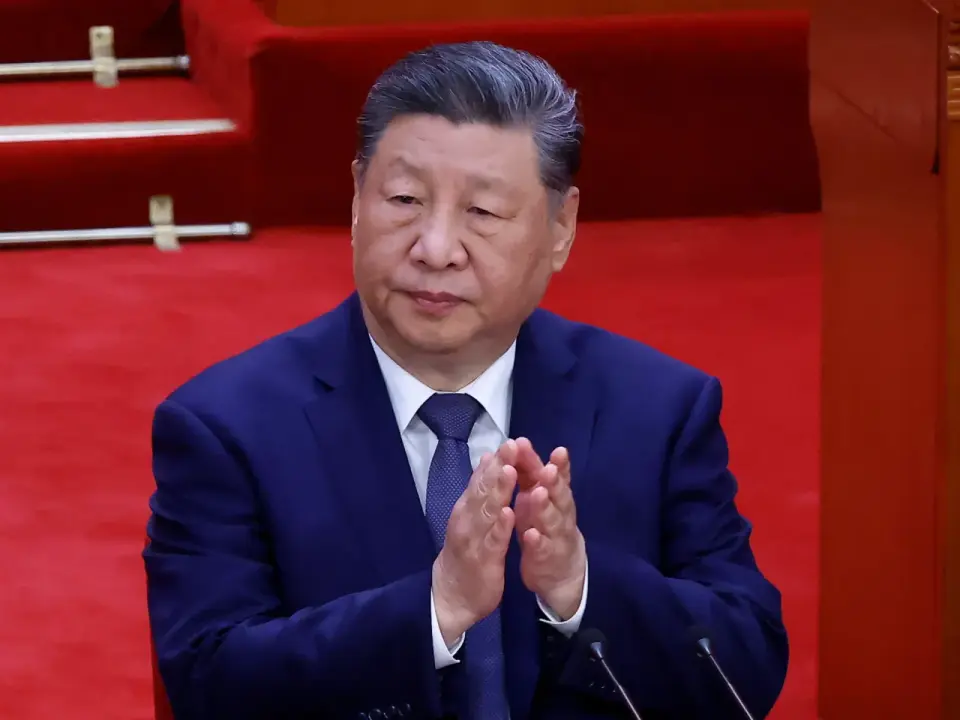
Chinese President Xi Jinping stated that the 'complete reunification' of Taiwan with China is an unavoidable historical mission, asserting that the 'tide of history cannot be stopped.' Speaking at a ceremony in Beijing marking the 160th anniversary of Sun Yat-sen’s birth, Xi reaffirmed Beijing’s commitment to 'peaceful reunification' under the 'one country, two systems' framework, while warning against 'separatist' forces. The remarks come as China’s military conducts daily patrols around the island and ahead of the APEC summit in Shenzhen, where Xi is expected to meet US President Donald Trump. Taiwan’s government rejected the proposal, arguing that the Republic of China (ROC) continues to exist and that its 23 million people should determine their own future through democratic means.
Key points
- Xi Jinping declared that the 'complete reunification' of the motherland must and will be realized, framing it as an 'unwavering historical mission' of the Chinese Communist Party.
- The speech was delivered at the Great Hall of the People in Beijing to commemorate the 160th birthday of Sun Yat-sen, whom Xi portrayed as a pioneer of China’s democratic revolution and a supporter of national unity.
- Xi reiterated Beijing’s adherence to the 'one country, two systems' model for Taiwan, stating China is willing to engage in dialogue with 'people of vision' while upholding the 'one China principle.'
- Taiwan’s Mainland Affairs Council (MAC) dismissed the remarks, stating that neither the government nor the people can accept 'one country, two systems,' which they view as submission to Communist Party rule.
- MAC spokesperson Liang Wen-chieh noted that Xi’s wording on unification is 'not much different from the past' and accused Beijing of distorting historical narratives to bolster its legitimacy.
- Taiwan’s defense ministry reported detecting 29 Chinese military aircraft, including J-16 fighter jets and drones, conducting a 'joint combat readiness patrol' around the island on Thursday.
Background
This development follows a period of significant internal consolidation within China’s leadership. In late October 2026, the Chinese Communist Party concluded its Fifth Plenary Session with record purges, expelling 33 senior officials, including 16 military officers. This decimated the Central Military Commission, leaving only two members, including Xi Jinping, and raised concerns about military effectiveness and the lack of trusted commanders for potential conflict. Simultaneously, Beijing intensified diplomatic pressure on ASEAN and Pakistan to undermine Taiwan’s international standing. The current rhetoric on reunification occurs against this backdrop of internal power consolidation and external diplomatic maneuvering, as Xi prepares for his expected fourth term in 2027.
How outlets are covering it
Al Jazeera and South China Morning Post (SCMP) highlight Xi’s dual approach of offering dialogue while maintaining a hard line against separatism. SCMP notes that Xi pledged to 'take full account of Taiwan’s realities' and engage with 'people of vision,' suggesting a strategic attempt to find moderate voices within Taiwan. Focus Taiwan, however, emphasizes the rejection of this framework, reporting that the MAC accused Beijing of distorting history and using Sun Yat-sen’s legacy to promote unification. While Al Jazeera focuses on the inevitability of reunification and the military posture, Focus Taiwan centers on the legal and democratic arguments made by Taiwan’s government, asserting that the ROC has never been overthrown and that the PRC has no right to impose unification. The outlets differ in emphasis: Al Jazeera and SCMP focus on the political and military implications of Xi’s speech, while Focus Taiwan focuses on the diplomatic and legal rebuttal from Taipei.
Why it matters
Xi’s explicit declaration that reunification is inevitable and will happen signals a shift in rhetoric from 'peaceful reunification' as a long-term goal to a more assertive stance on historical inevitability. This occurs amid heightened military activity, with 29 Chinese aircraft patrolling Taiwan, and diplomatic tensions, including the US pause on arms sales. The timing, just before the APEC summit and local elections in Taiwan, suggests an attempt to influence both international and domestic perceptions. The rejection by Taiwan’s government and the emphasis on the ROC’s continued existence highlight the deepening divide and the potential for increased friction in cross-strait relations.
What to watch
The immediate next step is the APEC summit in Shenzhen, where Xi is expected to meet US President Donald Trump. The outcome of these talks could influence the trajectory of US-China relations and the status of the paused $14 billion weapons sale to Taiwan. Additionally, local elections in Taiwan in two weeks may test the public’s response to Beijing’s rhetoric. China’s military will likely continue its daily patrols and expand its reach into the Pacific, while Taiwan’s government may further strengthen its diplomatic and military posture in response to the perceived threat.
- Xi Jinping says Taiwan’s ‘complete reunification’ with China will happen Al Jazeera
- China's Xi says Taiwan 'reunification' must happen as history cannot be stopped Reuters
- On Sun Yat-sen anniversary, Xi calls for dialogue on Taiwan with ‘people of vision’ South China Morning Post
- MAC urges Beijing to recognize ROC's existence after Xi's remarks Focus Taiwan
- China's Xi renews calls for 'reunification' with Taiwan DW.com
Want the full story? Read the original reporting
Read on Al Jazeera