
Hormuz Closure Cuts Global Shipping 95%, Reshaping Energy Trade
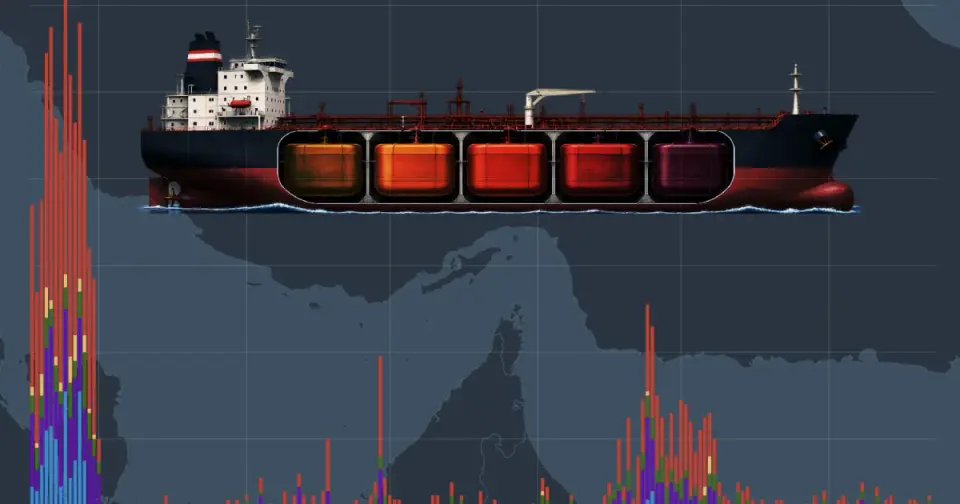
The US-Israel war on Iran has effectively closed the Strait of Hormuz, reducing daily vessel traffic from 100 to five. This 95% drop disrupts global oil and gas flows, forcing countries to seek alternative routes and raising energy costs worldwide.
Key points
- Traffic through the Strait of Hormuz has plummeted by 95%, falling from over 100 vessels daily to just five since the war began in February 2026.
- Crude oil exports from the Gulf have dropped by 47%, with direct shipments via the strait falling to an average of 2.2 million barrels per day.
- Global oil prices have risen by 20% compared to pre-war levels, though they have stabilized from April highs above $130 per barrel.
- Shipping routes have shifted toward the Red Sea and Southeast Asia, with Singapore and Malaysia becoming hubs for redirected energy flows.
- Iran faces internal debate over the strategic value of the strait, with officials warning that prolonged closure undermines its economic leverage.
Background
Previous coverage noted a temporary surge in traffic to 20% of pre-war levels in August 2026, followed by a decline as the US-Iran memorandum of understanding expired. Earlier reports highlighted US claims of 'total control' over the strait, which Iran contested, and ongoing negotiations with Oman for temporary civilian corridors.
How outlets are covering it
Al Jazeera emphasizes the severe disruption to global trade, noting that 80% of world trade moves by sea and that the Hormuz closure is a unique chokepoint with no alternative maritime route. The Guardian focuses on the strategic paradox for Iran, arguing that the strait’s value as a deterrent is eroding as Gulf states build alternative pipelines. While Al Jazeera highlights the immediate economic impact on consumers and supply chains, The Guardian points to long-term structural changes in energy infrastructure and Iran’s internal debate over whether to seek a deal or maintain its chokehold.
Why it matters
The closure of the Strait of Hormuz threatens global energy security and supply chains, affecting countries that rely heavily on Middle Eastern oil. The disruption has already raised oil prices and forced a restructuring of global shipping routes, with potential long-term implications for energy independence and geopolitical stability.
What to watch
Analysts warn that the next six months could be volatile as oil inventories dwindle. Gulf states are accelerating the construction of alternative pipelines to reduce reliance on the strait, with Saudi Arabia’s dependence expected to drop from 70% to 15% within three years. Iran’s leadership is debating whether to seek a deal to preserve economic stability or maintain its current strategy, while the US continues to pressure Iran through sanctions and naval blockades.
- How a 95 percent drop in Hormuz traffic changed global shipping Al Jazeera
- Iran faces strait of Hormuz paradox as strategic value of chokehold erodes The Guardian
- Kuwait and Qatar Add to Growing Oil Flows Getting Through Hormuz Bloomberg
- Fewer than 20 ships transit key Strait of Hormuz over weekend, data shows Reuters
- Shipping traffic through Strait of Hormuz rises slightly, data shows Reuters
Want the full story? Read the original reporting
Read on Al Jazeera