
El Niño Drought Forces Second-Ever Cut in Panama Canal Daily Ship Transits
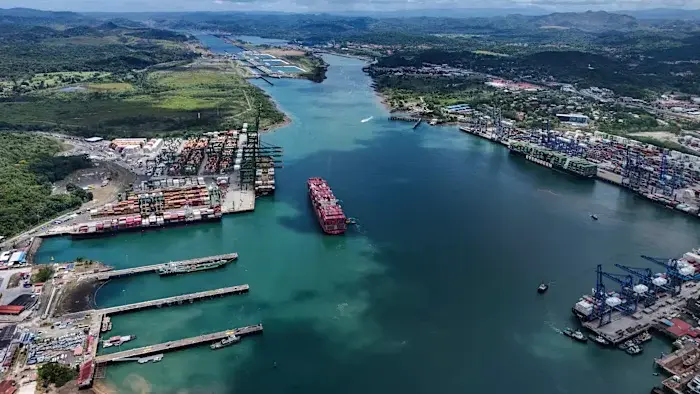
The Panama Canal Authority announced a reduction in daily vessel transits starting September 3, cutting capacity from 36 to 34 ships, and further to 32 by September 15. This is the second time in history the canal has limited daily passages, driven by severe drought from an intensifying El Niño. Rainfall in the canal’s watershed is down 34% from historical averages, forcing water-saving measures. While the canal carries 3-5% of global maritime trade, the restrictions risk increasing transit times and costs, with auction prices already hitting record highs due to concurrent geopolitical disruptions.
Key points
- Transit limits begin September 3 (34 ships/day) and September 15 (32 ships/day), down from 36.
- Rainfall in the canal’s watershed is 34% below historical averages for May-August.
- This is only the second time the canal has cut daily transits, the first being 2023-2024.
- Auction prices for transit slots hit record highs, averaging $1.1 million in August.
- Ocean carriers like MSC and CMA CGM have raised surcharges in response to draft restrictions.
Background
The canal suffered a historic drought in 2023-2024, leading to its first-ever transit cuts and significant queue backlogs. Recent archive reports show auction prices surging to $4 million per slot as shippers bypass queues due to Iran-related congestion and low water levels. Additionally, Panama recently seized canal port assets from CK Hutchison, with the company seeking $1.5 billion in damages, adding political complexity to the waterway’s operations.
How outlets are covering it
The Financial Times emphasizes the strategic allocation changes, noting the canal will divide auctions into four cargo categories to ensure equitable access and prioritize larger Neopanamax vessels. The Guardian highlights the broader regional impact, noting that Central America is in severe drought, with Honduras placing 80% of its territory on drought alert. Supply Chain Dive focuses on the commercial fallout, detailing how ocean carriers like MSC, CMA CGM, and Hapag-Lloyd have increased surcharges per TEU to offset the operational constraints. While all sources agree on the transit cuts, the FT and Guardian stress the climate driver (El Niño), whereas Supply Chain Dive frames it as a supply chain cost issue.
Why it matters
The Panama Canal is a critical artery for global trade, handling 3-5% of maritime traffic and 40% of US container traffic. Reduced capacity will likely increase transit times and costs, forcing shippers to reroute via the Suez Canal or Cape of Good Hope, which are longer and more expensive. The canal also generates nearly $3 billion in annual revenue for Panama, making the drought a significant economic threat for the nation. As El Niño intensifies, further restrictions are possible, potentially disrupting global supply chains for energy and consumer goods.
What to watch
The Panama Canal Authority will monitor rainfall closely and may announce further operational adjustments if conditions worsen. Shippers are advised to book transit slots in advance to avoid increased wait times. Ocean carriers will likely continue adjusting surcharges based on water levels and draft restrictions. The canal’s ability to maintain its revenue stream and global trade role will depend on the severity of the El Niño’s impact on rainfall in the coming months.
- Panama Canal to cut daily transits as El Niño grips region Financial Times
- Panama canal to reduce shipping as El Niño strikes vital route The Guardian
- Panama Canal to cut daily ship traffic as drought worsens from El Nino France 24
- Panama Canal to limit shipping ahead of extreme weather during El Nino Al Jazeera
- Ocean carriers up fees in response to ongoing Panama Canal draft restrictions Supply Chain Dive
Want the full story? Read the original reporting
Read on Financial Times