
Belfast coroner concludes 2,000-year-old bog woman was ritually decapitated
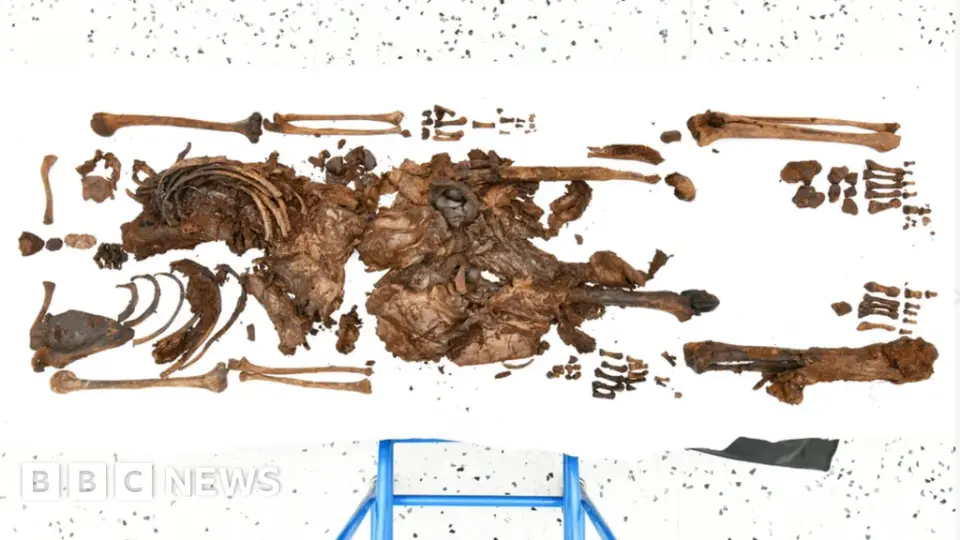
A coroner's investigation at the Ulster Museum determined that the Ballymacombs More Woman, an Iron Age female found in a Northern Ireland bog in 2023, was deliberately decapitated between the ages of 15 and 22. The inquiry, described as the first of its kind for ancient remains, concluded her death likely resulted from a ritualized sacrifice or killing, though the exact motive remains unknown.
Key points
- Coroner Joe McCrisken led an investigation at the Ulster Museum in Belfast to determine the cause of death for the Ballymacombs More Woman, whose remains were discovered in October 2023 near Bellaghy, County Londonderry.
- Scientific analysis, including micro-CT scanning and 3D imaging, revealed the woman was between 15 and 22 years old and suffered a deliberate decapitation from behind with a bladed weapon.
- No skull was recovered, but cut marks on the neck confirmed the intentional nature of the injury; the body dates to the period between 343 BC and 1 BC.
- The investigation was not a formal legal inquest but a unique public event designed to assess archaeological and forensic evidence, drawing on specialists from Irish, UK, and Danish universities.
- Local residents of Bellaghy have named the woman Aine, after a mythical goddess, and attended the investigation to advocate for her story.
- National Museums NI plans to create an exhibition using illustrations and poetry rather than displaying the physical remains, aiming to honor the individual without exhibiting her body.
Background
This case follows the discovery of the remains in October 2023 by workers from Bulrush Horticulture. The find was initially misidentified as male and referred to as the Bellaghy Boy before being confirmed as female. It is the first female bog body found in Northern Ireland, offering rare insights into Iron Age practices in the region, where pre-Christian society was divided among numerous tribes.
How outlets are covering it
BBC and CBS News emphasize the rarity of the find, noting that female bog bodies are exceptionally uncommon in Northern Ireland. The Guardian highlights the methodological innovation of the event, describing it as a framework to restore understanding of the victim's life rather than impose modern legal conclusions. People.com focuses on the museum's decision not to display the remains, instead using creative media to tell her story. All sources agree that while the decapitation was deliberate, the specific motive—whether related to sovereignty, agriculture, or weather—remains shrouded in mystery.
Why it matters
This investigation marks a significant shift in how museums and legal systems approach ancient deaths, establishing a precedent for using coroner's inquiries to interpret archaeological evidence. It provides crucial data on Iron Age rituals in Northern Ireland, a region with limited female bog body records, and demonstrates how modern forensic techniques can bridge the gap between ancient history and contemporary understanding.
What to watch
National Museums NI will develop an exhibition based on the research findings, utilizing illustrations and poetry to narrate the woman's life. Further academic collaboration between Irish, UK, and Danish institutions is expected to continue analyzing the artefacts and remains to refine the understanding of Iron Age sacrificial practices.
- Ulster Museum: Coroner investigates death of Iron Age woman found in bog BBC
- Body found in Derry bog decapitated more than 2,000 years ago, coroner finds The Guardian
- 2,000-year-old Northern Ireland bog woman was beheaded in possible ritual killing, researchers say CBS News
- Woman Who Died Over 2,000 Years Ago Was Decapitated in a Bog People.com
- Woman found in Derry bog was killed over 2,000 years ago RTE.ie
Want the full story? Read the original reporting
Read on BBC