
Laika's Fatal Orbit: How a Soviet Stray Dog Paved the Way for Human Spaceflight
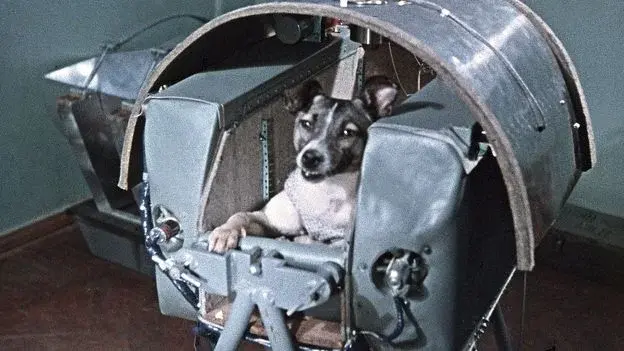
On November 3, 1957, the Soviet Union launched Laika, a stray Moscow mongrel, into Earth orbit, making her the first living creature to achieve this feat. The mission was a one-way trip, as Soviet scientists lacked the technology to return her safely. Laika died within hours due to overheating and stress, a fact the Soviets concealed for decades. Her sacrifice provided critical data on weightlessness, enabling future human spaceflights, though it sparked international outrage and ethical debates that persist today.
Key points
- Laika, a female stray dog, was selected for her resilience and small size (6-7kg) to fit into the Sputnik II capsule.
- The mission was rushed to coincide with the 40th anniversary of the Russian Revolution, with Premier Khrushchev demanding a new launch after Sputnik I's success.
- Soviet scientists knew Laika would not survive, as they lacked recovery technology; she died of overheating and stress within 5-7 hours of launch.
- The Soviets initially claimed Laika survived for days, but admitted in 2002 that she died shortly after reaching orbit.
- Laika's flight proved that living organisms could survive weightlessness, paving the way for human spaceflight, though it caused global outrage and led to improved animal welfare protocols in space programs.
- A 2008 monument in Moscow honors Laika, depicting a rocket transforming into a hand holding a dog.
Background
This story revisits the 1957 launch of Laika, a pivotal moment in the Cold War space race. While our archive covers recent orbital experiments, such as the 2028 'Space Puffin' whisky aging mission and the revival of the 1978 ISEE-3 probe, Laika's mission represents the earliest era of animal testing in space. The ethical and scientific lessons from Laika's flight, including the eventual success of Belka and Strelka in 1960, remain foundational to modern space exploration and animal welfare standards.
Why it matters
Laika's mission highlights the ethical tensions and scientific breakthroughs of the early space age. Her sacrifice provided crucial data on the effects of weightlessness on living organisms, enabling human spaceflight, but also sparked global outrage and led to improved animal welfare protocols. The story underscores the complex legacy of the Soviet space program, balancing scientific progress with ethical concerns, and remains relevant in discussions about animal testing in space and the history of human exploration.
What to watch
The article does not mention future developments related to Laika, as it is a historical retrospective. However, the ethical debates and scientific lessons from her mission continue to influence modern space programs and animal welfare standards.
Want the full story? Read the original reporting
Read on BBC