
Lincoln’s 1861 Decision to Release Confederate Envoys Prevented a Second War with Britain
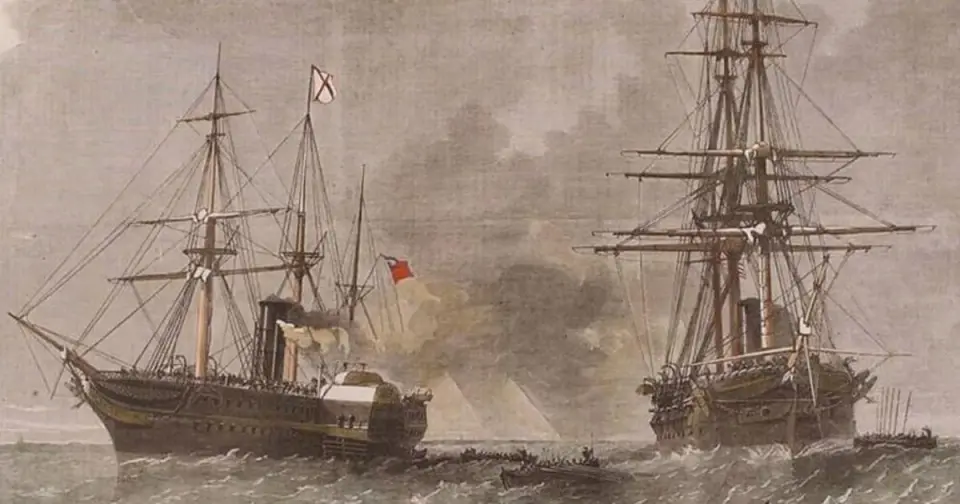
In November 1861, U.S. naval officer Charles Wilkes seized Confederate envoys James Mason and John Slidell from a British ship, sparking a crisis that nearly led to war with Britain. President Lincoln prioritized the Civil War over the dispute, releasing the envoys in December to avoid a two-front conflict.
Key points
- Confederate envoys Mason and Slidell were captured by Captain Charles Wilkes from the British mail steamer Trent on November 8, 1861, in the Bahamas.
- Wilkes acted without authorization from Washington, justifying the seizure by labeling the envoys as 'contraband,' a legal interpretation without precedent.
- Britain demanded the envoys' release and a formal apology, threatening to break relations and mobilizing troops in Canada and the Royal Navy.
- Lincoln decided to release the envoys on December 26, 1861, arguing that Wilkes failed to bring the ship to a prize court, thus invalidating the seizure.
- Secretary of State William Seward framed the release as a diplomatic victory, noting that Britain’s stance affirmed U.S. rights regarding neutral trade, a position Britain had previously resisted.
Background
The Trent Affair occurred during the American Civil War, when European nations granted the Confederacy belligerent status but withheld full diplomatic recognition. Lincoln’s strategy focused on defeating the Confederacy through industrial mobilization and naval blockade, avoiding additional foreign conflicts. This incident is distinct from recent 2026 events involving the modern USS Abraham Lincoln, which returned from a 322-day deployment in the Middle East in October 2026 amid welfare disputes and mental health crises.
Why it matters
The crisis demonstrated the risks of unilateral military actions in diplomatic disputes. Lincoln’s restraint prevented a war that could have diverted resources from the Civil War and allowed the Confederacy to trade cotton for weapons, highlighting the importance of prioritizing strategic conflicts.
What to watch
Mason and Slidell eventually reached Europe but failed to secure diplomatic recognition for the Confederacy. Lincoln continued to manage other foreign policy crises, including disputes with Britain and French intervention in Mexico, while focusing on the Civil War.
Want the full story? Read the original reporting
Read on Council on Foreign Relations