
Slovakia Unearths Irregular Roman Camp from Marcus Aurelius Era
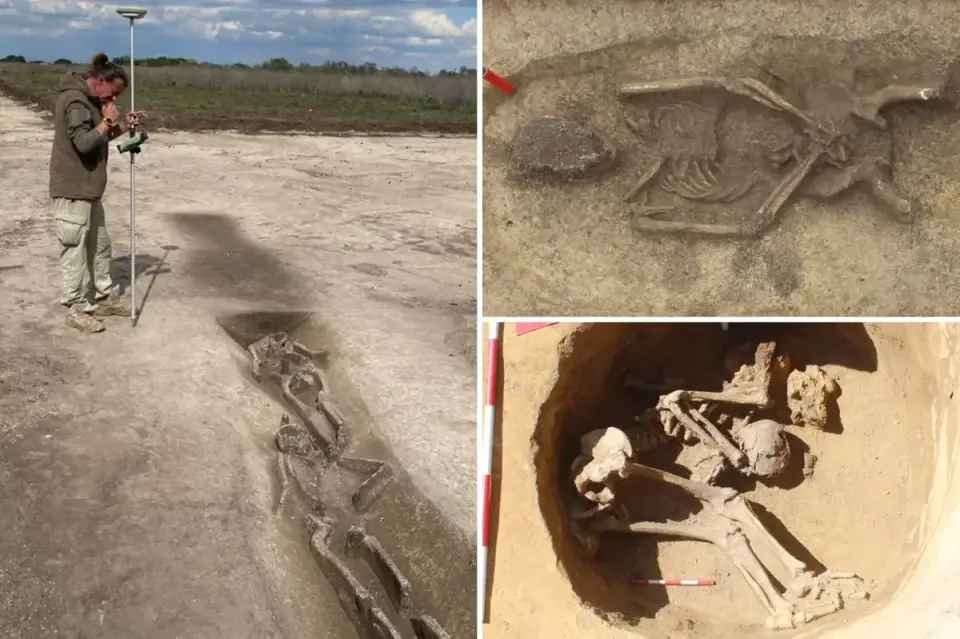
Archaeologists in Slovakia have uncovered a second-century A.D. Roman military camp near Šurany, featuring soldiers' remains, weapons, and an unusual layout. The site, linked to the Marcomannic Wars, is the first such discovery in the Nitra region and offers new insights into Roman frontier activities north of the Danube.
Key points
- The excavation, conducted ahead of industrial park construction, covered approximately 370 acres near Šurany in western Slovakia.
- The camp dates to the reign of Emperor Marcus Aurelius (161-180 A.D.) and is likely associated with the Marcomannic Wars against Germanic tribes.
- Unlike standard Roman camps, this site features an irregular layout but retains key defensive features, including five gates and a 'clavicula' gate design, which is the first of its kind identified in Slovakia.
- Artifacts recovered include spears, arrowheads, helmet fragments, scale armor, coins, and caligae sandals, alongside numerous human skeletal remains found in pits, wells, and graves.
- The discovery fills a gap in understanding Roman military presence north of the Danube during the late second century and is described as a long-term research project.
Background
This discovery follows other recent Roman finds in Central Europe, such as a mass grave in Vienna and a building in Switzerland. It also connects to earlier findings near Želiezovce, where Marcus Aurelius is believed to have written parts of his 'Meditations.'
Why it matters
The find provides rare physical evidence of Roman military strategy and daily life during the Marcomannic Wars, a critical period for the empire's northern frontier. The unique layout and defensive structures offer new data on how Roman camps adapted to local conditions, while the skeletal remains may eventually reveal details about casualties and the nature of conflicts in the region.
What to watch
Researchers will continue analyzing the skeletal remains and artifacts over the coming years to determine the identities of the dead and the specific circumstances of the camp's abandonment. The excavation is expected to be a multi-year scientific process.
Want the full story? Read the original reporting
Read on New York Post