
Skeleton 150: The First Documented Casualty of a Medieval Trebuchet
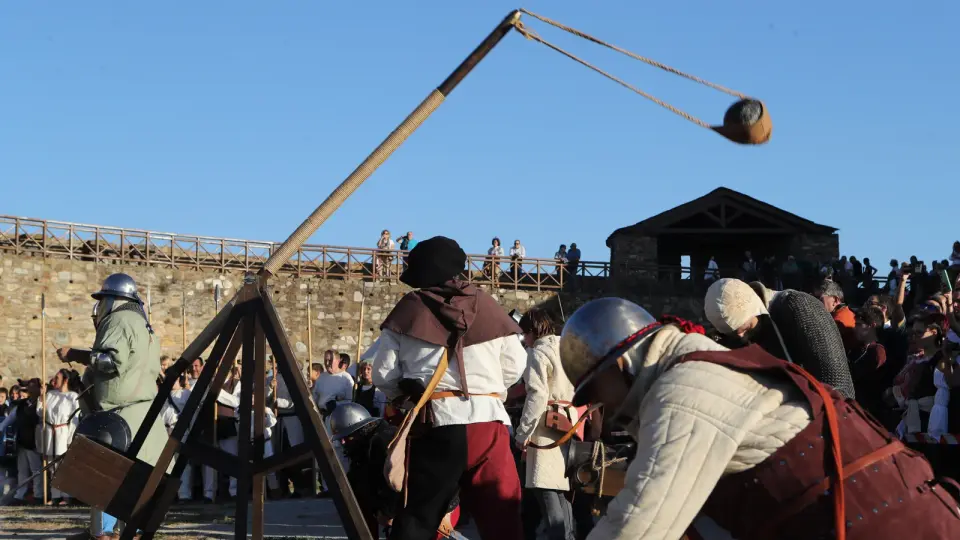
Researchers have identified a 14th-century skeleton found beneath Stirling Castle in Scotland as the first known victim of a trebuchet. The remains, labeled Skeleton 150, exhibit 167 fractures, including 61 to the skull and 57 to the ribs, consistent with a single high-velocity impact. While the individual likely died during Edward I's 1304 siege, experts doubt he was killed by the famous 'War Wolf' engine, which fired only once at the siege's end.
Key points
- Skeleton 150 was discovered in 1997 within the chapel of Stirling Castle, alongside seven other medieval burials.
- The skeleton shows 167 peri-mortem fractures, with damage concentrated on the upper body, specifically the right shoulder and back of the skull.
- Forensic analysis, including micro-CT scans, indicates the injuries resulted from a single, high-force impact, ruling out falls or trampling.
- The fractures exhibit a distinctive zigzag pattern, similar to those seen in modern road traffic accidents, which helped identify the cause.
- The individual is believed to have been a Scottish defender killed during the 1304 siege, though he was likely not struck by the massive 'War Wolf' trebuchet.
Background
This discovery builds on earlier reports from August 2026 regarding the identification of Skeleton 150 as a potential trebuchet victim. The skeleton was originally unearthed in 1997 during renovations at Stirling Castle, a site of significant strategic importance during the Wars of Scottish Independence (1296-1357). The castle changed hands five times between 1296 and 1304 alone, making it a focal point of Edward I's campaign to subdue Scotland.
How outlets are covering it
Live Science and Ars Technica both emphasize the uniqueness of the find, noting that while siege engines are well-documented, this is the first archaeological evidence of trebuchet trauma. Ars Technica provides a detailed analysis of the physics, suggesting the projectile hit at 200-300 km/h. Gizmodo highlights the scale of the 'War Wolf' trebuchet, built by 50 laborers, but notes the skepticism regarding its direct involvement. All sources agree that the zigzag fracture pattern is a key forensic clue. Buckberry, the lead researcher, cautions that the lack of comparable forensic cases limits certainty, but forensic osteologist Lukas Waltenberger described the findings as 'convincing.'
Why it matters
This discovery offers rare physical evidence of the lethality of medieval siege engines, which were primarily designed to destroy fortifications rather than target individuals. It provides a tangible link to the brutality of the Wars of Scottish Independence and helps refine our understanding of how projectile weapons affected human bodies in the 14th century.
What to watch
Researchers hope to compare this case with other instances of blunt-force trauma in medieval contexts to further validate the findings. Ongoing analysis may provide more details on the specific type of trebuchet used, although the 'War Wolf' is considered unlikely due to its single use at the end of the siege.
- Skeleton with 167 fractures discovered at Scottish castle may have been first victim of Edward I's 'War Wolf' trebuchet Live Science
- Skeleton with 167 fractures discovered at Scottish castle may have been first victim of Edward I's 'War Wol... Yahoo
- Meet the only known trebuchet casualty in history Ars Technica
- This Medieval Skeleton Had 160 Broken Bones, and Scientists Just Figured Out What Hit Him Gizmodo
- A Medieval Man's Injuries Reminded One Archaeologist of Modern-Day Car Crash Victims. They Turned Out to Be the Work of an English Trebuchet Smithsonian Magazine
Want the full story? Read the original reporting
Read on Live Science