
Rohingya Mark Ninth Anniversary of Genocide with Protests in Cox’s Bazar Amid Deepening Crisis
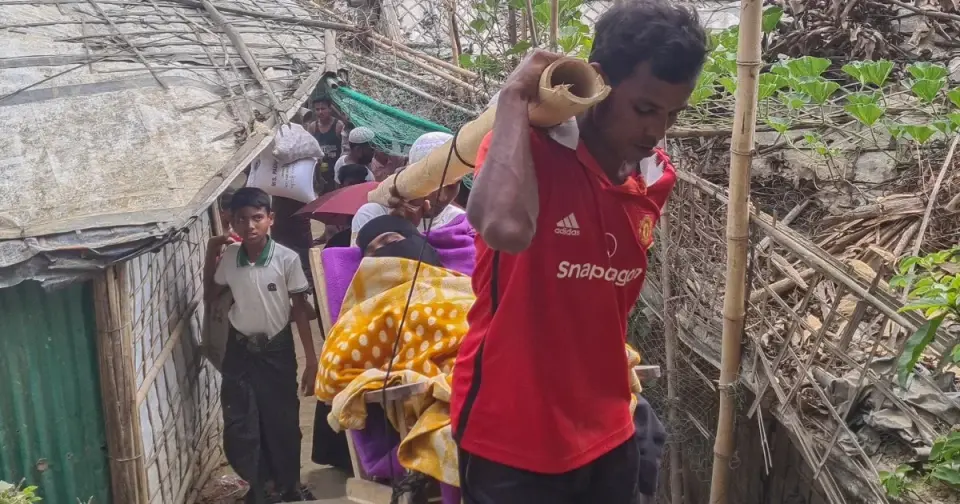
Hundreds of Rohingya refugees protested in Cox’s Bazar, Bangladesh, on the ninth anniversary of the 2017 military crackdown in Myanmar, demanding justice and safe repatriation. Over 1.2 million stateless Rohingya remain stranded in Bangladeshi camps as international aid declines, with the 2026 Joint Response Plan cut by 26 percent. Despite ongoing legal cases at the International Court of Justice and International Criminal Court, no final rulings or indictments have been issued, leaving the population without a durable solution.
Key points
- Protests in Cox’s Bazar marked the ninth anniversary of the 2017 Myanmar military crackdown, with demonstrators demanding the right to return home with dignity and safety.
- Approximately 1.2 million Rohingya refugees remain in Bangladesh, primarily in Kutupalong and Nayapara camps, where over 75 percent of the population are women and children.
- The 2026 Joint Response Plan reduced humanitarian funding by 26 percent to $710.5 million, forcing the World Food Programme to cut monthly food vouchers from $12.50 to $6 per person.
- Legal proceedings at the International Court of Justice and International Criminal Court remain stalled, with no final rulings or public indictments issued since 2019.
- Unsafe maritime journeys from Myanmar have resulted in 900 deaths in 2025, with one in seven Rohingya refugees reported missing or dead in the Andaman Sea and Bay of Bengal.
Background
The Rohingya crisis escalated dramatically in August 2017 when Myanmar’s military launched a violent crackdown in Rakhine state, forcing over 700,000 people to flee to Bangladesh. Prior to this, the Rohingya had faced decades of discrimination and denial of citizenship since 1982. Recent archive reports highlight the ongoing peril of maritime exoduses, including the disappearance of two boats carrying 530 people in June 2026, underscoring the desperation driven by deteriorating camp conditions and funding cuts.
Why it matters
The stagnation of international legal and diplomatic responses highlights a failure to address one of the world’s most severe statelessness crises. Declining aid and unsafe migration routes exacerbate humanitarian risks, while the lack of accountability for the 2017 genocide leaves survivors without justice or a clear path to repatriation.
What to watch
Activists are urging the international community to pressure Myanmar’s military and the Arakan Army to end violence and establish safe conditions for return. However, with funding cuts continuing and legal cases stalled, the immediate future for the 1.2 million refugees in Bangladesh remains uncertain, with many facing further displacement or perilous sea journeys.
- Why Rohingya refugees are protesting in Cox’s Bazar, 9 years after genocide Al Jazeera
- ‘Forget about going back’: 9 years on, Rohingya crisis enters dangerous phase NPR
- Why Rohingya refugees still can't return to Myanmar DW.com
- Rohingya refugees rally in Bangladesh camps to demand safe return to Myanmar WRAL
- Shama Obaed: UNGA presidency to offer Bangladesh greater diplomatic leverage Dhaka Tribune
Want the full story? Read the original reporting
Read on Al Jazeera