
81 years later, Nuremberg trials spark debate on accountability and US role in global law
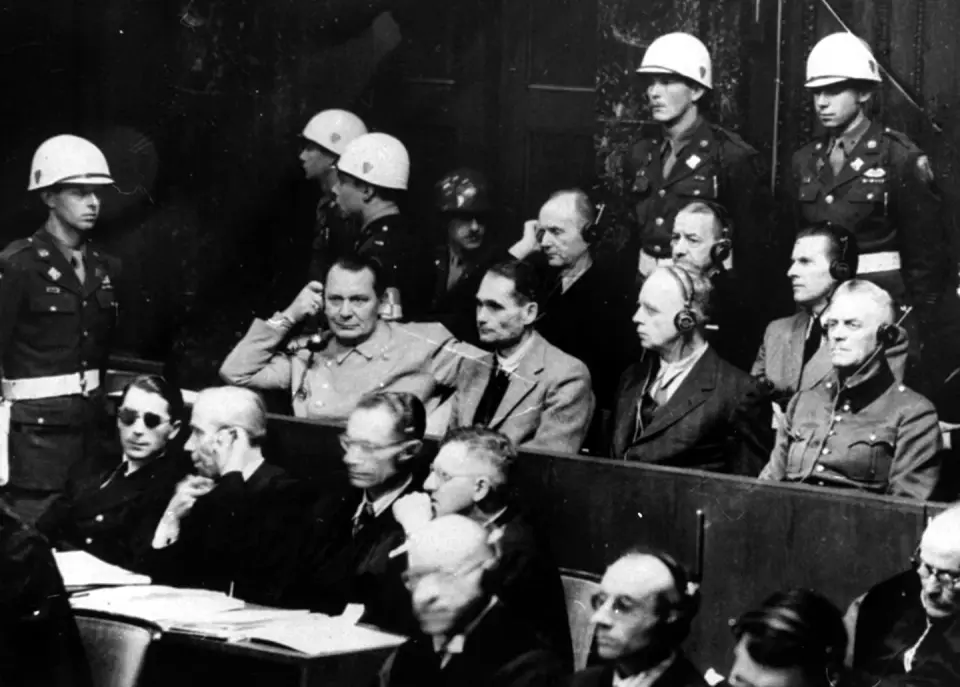
On the 81st anniversary of the Nuremberg Trials, experts and communities are revisiting the 1945 proceedings to debate the limits of international law, the danger of selective justice, and the need to combat rising hate crimes.
Key points
- The International Military Tribunal began on Nov. 20, 1945, in Nuremberg, Germany, with US Supreme Court Justice Robert H. Jackson serving as chief prosecutor for the Allies.
- Jackson warned that the law must condemn aggression by all nations, including the victors, to maintain its legitimacy, a principle now cited in debates over US actions abroad.
- A panel in Bethpage, Long Island, emphasized that the trials established that individuals, not just states, must be held accountable for atrocities, even if acting under government orders.
- Legal scholar Mark Simonoff argues the UN Charter’s ban on aggressive war is under strain, citing US actions in Iran, Venezuela, and threats regarding Greenland, and proposes a new UN body to address aggression.
- Community leaders in Long Island noted a rise in antisemitic incidents, with the Anti-Defamation League reporting roughly 16,000 incidents in 2024 and 2025, drawing parallels to the pre-Holocaust era.
Background
Recent archival discoveries regarding Danish centenarian Kirsten Schwalbe’s wartime Nazi party roles have renewed public interest in historical accountability. This follows earlier local incidents, such as a bias-motivated assault in Hopkins, Minnesota, highlighting ongoing concerns about hate crimes in the US.
How outlets are covering it
The Washington Post provides a historical overview of the 1945 proceedings, focusing on the visual and procedural details of the tribunal. The Toda Peace Institute offers a critical legal analysis, arguing that the US must accept the same rules it imposes on others to restore trust in the UN, citing specific US military actions as potential violations of the UN Charter. Newsday focuses on the contemporary social impact, using the anniversary to discuss the rise of antisemitism and the importance of individual accountability in preventing hate-driven atrocities. While the Post and Newsday emphasize historical record and community memory, the Toda Peace Institute focuses on the structural and legal implications for current US foreign policy.
Why it matters
The anniversary highlights the tension between international legal ideals and current geopolitical realities, particularly regarding the US role in the UN and the ongoing threat of hate crimes. It underscores the need for consistent application of legal standards to maintain global trust and domestic safety.
What to watch
Legal scholars are pushing for the establishment of a standing UN body to address aggression, while community organizations continue to monitor and report hate crimes to ensure historical lessons are applied to current societal challenges.
- When Nazis were held responsible for war crimes The Washington Post
- Jackson’s Warning and America’s Way Back to the UN Toda Peace Institute
- Bethpage panel looks to Nuremberg trials for lessons on hate Newsday
Want the full story? Read the original reporting
Read on The Washington Post