
BRICS 2026: New Delhi Declaration balances unity with diplomatic evasion
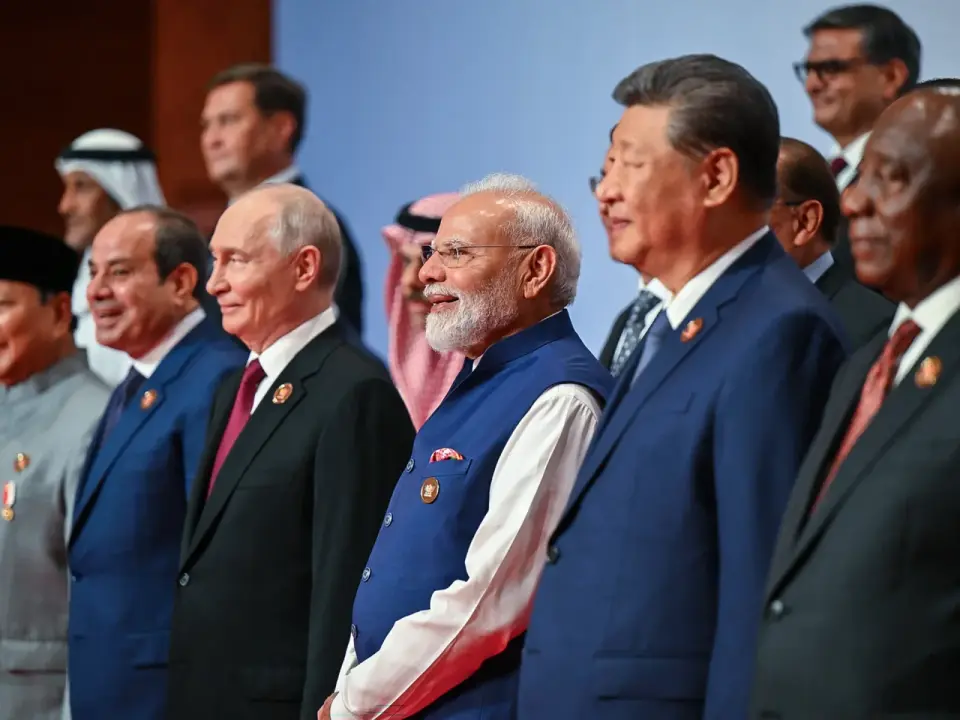
The 18th BRICS summit in New Delhi concluded with a unanimous joint declaration that prioritized broad principles over specific condemnations. While leaders from 11 nations agreed on calls for restraint in the Middle East and opposition to unilateral tariffs, the text avoided naming the United States, Israel, or Iran directly. The summit marked a 'coming of age' for the bloc, as described by Indian Prime Minister Narendra Modi, but exposed internal fractures regarding the ongoing wars in Iran and Ukraine. Key diplomatic breakthroughs included a high-level meeting between Iranian President Masoud Pezeshkian and UAE Crown Prince Khaled bin Mohamed bin Zayed Al Nahyan, signaling a potential thaw in relations between the two warring members. The declaration emphasized multipolarity and Global South interests, yet remained vague on assigning responsibility for regional conflicts, highlighting the bloc's limitations in managing divergent member interests.
Key points
- The New Delhi Declaration was adopted unanimously by all 11 BRICS members, despite significant internal divisions over the wars in Iran and Ukraine.
- The declaration called for 'maximum restraint' in the Middle East but did not explicitly name the US, Israel, Iran, or Gulf states, using generalized language to maintain consensus.
- Iran and the UAE, which are on opposite sides of the current conflict, both signed the joint statement, with their leaders meeting on the summit sidelines for the first time since the war began.
- The text criticized unilateral tariffs and sanctions not authorized by the UN Security Council, indirectly addressing US trade policies without naming Washington.
- Indian PM Modi framed the summit as a 'coming of age' moment, urging the Global South to become 'rule-shapers' rather than merely accepting rules set by Western powers.
- The declaration included explicit support for Palestinian statehood and a two-state solution based on 1967 borders, contrasting with its vagueness on other regional conflicts.
Background
BRICS, founded in 2006 and expanded to include Egypt, Ethiopia, Iran, the UAE, Saudi Arabia, and Indonesia, represents nearly half the world's population and 40% of global GDP. The bloc has historically sought to reform Western-dominated institutions like the World Bank and IMF. Recent archive coverage indicates that prior to this summit, BRICS foreign ministers failed to agree on a joint statement in May due to differences over the Iran war. The current summit follows a period of heightened geopolitical tension, including US-Israeli strikes on Iranian nuclear facilities in 2025 and ongoing trade disputes involving US tariffs on Indian and Chinese goods.
How outlets are covering it
Al Jazeera emphasizes the diplomatic success of India in securing a unanimous declaration despite 'sharp differences' between Iran and the UAE, noting that the bloc 'steered clear' of naming specific countries to preserve consensus. The Times of India highlights the symbolic and personal moments, such as Modi's interactions with Putin and Xi, framing the summit as a display of unity and warmth. CNBC focuses on the geopolitical significance of the Iran-UAE meeting, viewing it as a sign of diplomatic progress and a test of the bloc's ability to bridge divides. AP News, while largely obscured by technical code in the provided source, is referenced in the context of Modi's call to tackle geopolitical tensions and climate crises, aligning with the broader narrative of BRICS seeking to reshape global governance. All sources agree that the declaration was cautious and avoided direct confrontation with Western powers, but differ in their emphasis: Al Jazeera and CNBC focus on the diplomatic maneuvering, while The Times of India highlights the ceremonial aspects of the summit.
Why it matters
The 2026 BRICS summit demonstrates the bloc's evolving role as a platform for Global South nations to navigate a multipolar world. By achieving consensus on a joint declaration despite internal conflicts, BRICS has shown its capacity to maintain unity, even if its language remains non-confrontational. The summit's outcomes, particularly the Iran-UAE engagement and the critique of unilateral tariffs, signal a shift in global power dynamics, with emerging economies seeking greater influence in international institutions. However, the lack of specific condemnations or concrete actions highlights the limitations of BRICS in addressing immediate geopolitical crises, suggesting that while the bloc can foster dialogue, it may struggle to enforce collective action when member interests diverge sharply.
What to watch
The next BRICS summit will likely focus on translating the 'coming of age' rhetoric into concrete economic and political outcomes. Analysts expect continued efforts to expand non-Western cross-border payment channels and deepen trade cooperation among member states. The outcome of the Iran-UAE diplomatic engagement will be closely watched, as it could influence the trajectory of the Middle East conflict. Additionally, the bloc's stance on UN Security Council reforms and its ability to navigate US tariffs will be critical in determining its future influence in global governance. The next summit may also address the unresolved issues of the Ukraine war and the broader implications of multipolarity for international law and trade.
- BRICS summit 2026: What are the key takeaways? Al Jazeera
- 5 unmissable moments of Brics 2026 Summit The Times of India
- At BRICS, India's Modi warns geopolitical tensions and supply chain shocks threaten global stability AP News
- Iran and UAE back joint BRICS statement urging restraint in war CNBC
- BRICS adopts joint declaration, urges 'maximum restraint' in Mideast Reuters
Want the full story? Read the original reporting
Read on Al Jazeera