
U.S.-Saudi Nuclear Deal Sparks Proliferation Fears and Congressional Pushback
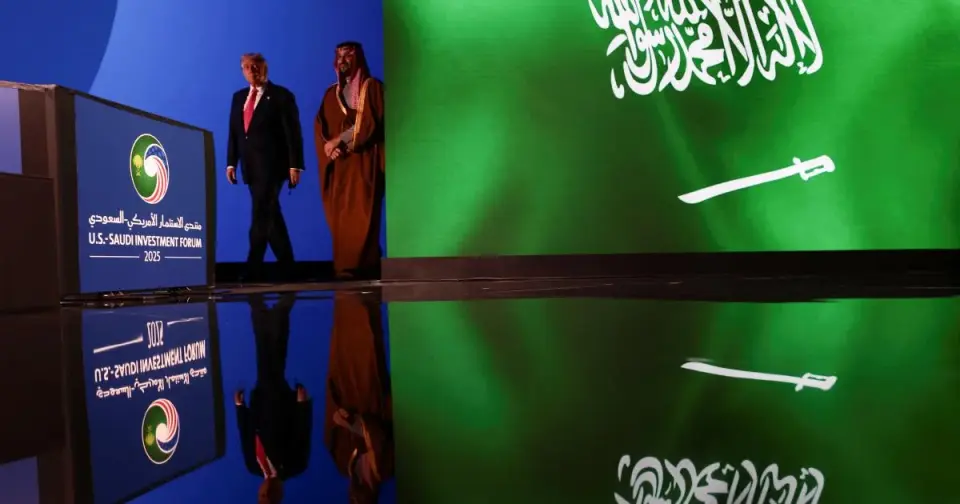
The July 2026 U.S.-Saudi nuclear agreement faces intense scrutiny for potentially allowing Saudi uranium enrichment without strict international inspections. Critics warn it could trigger a regional arms race, while the administration proposes a regional fuel bank as an alternative to sovereign enrichment.
Key points
- The 30-year deal, announced July 22, 2026, allows U.S. companies to develop Saudi nuclear infrastructure but leaves the question of domestic uranium enrichment unresolved.
- The agreement does not require Saudi Arabia to adopt the IAEA’s Additional Protocol, which grants expanded inspection powers, raising concerns about potential military diversion.
- President Trump declared the deal contingent on Saudi normalization with Israel, a condition not present in the initial announcement, and insisted there would be no enrichment, contradicting earlier statements.
- Foreign Affairs suggests a regional IAEA-supervised fuel bank on Saudi soil as a compromise to satisfy Saudi sovereignty demands while preventing proliferation.
- Congressional Democrats, including Senators Markey and Merkley, are urging rejection of the deal, arguing it abandons the 'gold standard' of nonproliferation and risks a Middle East arms race.
Background
The U.S. has historically insisted that nuclear partners forgo enrichment, as seen in the 2009 UAE agreement. Previous attempts to link Saudi nuclear cooperation with normalization with Israel stalled after the 2023 Hamas attacks. The current deal follows a period of heightened tensions, including a U.S.-Iran conflict and Saudi defense agreements with Pakistan, which have increased regional strategic uncertainty.
How outlets are covering it
Foreign Affairs argues the deal is a framework that risks a regional arms race but could be mitigated by a regional fuel bank, emphasizing the need for IAEA oversight. MS Now, citing Senators Markey and Merkley, condemns the deal as reckless and potentially corrupt, noting that Trump is giving Saudi Arabia enrichment capabilities without demanding the strongest safeguards, contradicting past U.S. policy. The Washington Post highlights the risk that Saudi Arabia may pivot to China if U.S. demands, such as normalization with Israel, are too onerous. War on the Rocks notes that while the deal’s concessions on inspections and enrichment are troubling, the administration’s approach to black-boxing technology and joint economic studies offers a potential path forward, though it warns of precedents for other nations like Iran and the UAE.
Why it matters
The deal sets a precedent for U.S. nonproliferation policy, potentially weakening the 'gold standard' and encouraging other Middle Eastern states, such as the UAE, Egypt, and Turkey, to pursue independent nuclear capabilities. It also complicates U.S. negotiations with Iran, as Tehran may demand similar concessions, and risks a regional nuclear arms race that could destabilize the Middle East further.
What to watch
Congress is expected to scrutinize the deal, potentially demanding stronger nonproliferation conditions, such as an explicit prohibition on enrichment or the adoption of the Additional Protocol. The Trump administration may seek to reframe the deal around a regional fuel bank, while Saudi Arabia may resist conditions that limit its sovereign control over the nuclear fuel cycle. The outcome will likely depend on whether Saudi Arabia agrees to normalize relations with Israel and whether the U.S. can secure robust safeguards.
- The Looming Nuclear Crisis in the Gulf Foreign Affairs
- Opinion | Trump’s Saudi nuclear deal is corrupt and dangerous. Just ask Marco Rubio. MS NOW
- Opinion | Trump added two demands to his Saudi deal. The kingdom might walk. The Washington Post
- Parsing Trump’s Decision to (Maybe) Give Uranium Enrichment to Saudi Arabia War on the Rocks
- Does Saudi Arabia want to develop nuclear weapons? Here’s what history can tell us The Conversation
Want the full story? Read the original reporting
Read on Foreign Affairs