
UK Court Convicts Two Iranians for IRGC-Linked Surveillance of Dissident Journalists
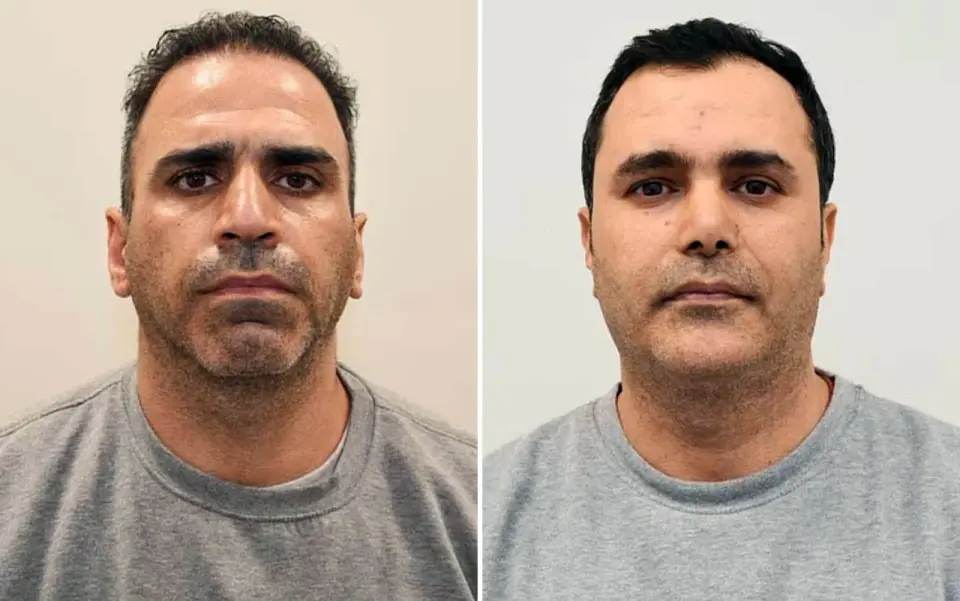
Mostafa Sepahvand and Farhad Javadi Manesh were found guilty at Woolwich Crown Court of assisting Iran’s Islamic Revolutionary Guard Corps by surveilling dissident journalists and a lawyer in the UK. Prosecutors allege the men used AI tools to gather intelligence on targets between August 2024 and March 2025, with Sepahvand allegedly planning violent attacks. A third defendant was acquitted. Sentencing is scheduled for December 17.
Key points
- Sepahvand and Manesh were convicted of assisting a foreign intelligence service under the UK’s National Security Act, marking the first such conviction for Iranian nationals.
- The surveillance targeted journalists Mojtaba Pourmohsen and Kambiz Hosseini of Iran International, as well as Jonathan Turner, a founding member of UK Lawyers for Israel.
- Police seized 534GB of data showing the defendants used ChatGPT to research targets, including home addresses and vehicle details.
- Sepahvand allegedly sought £150,000 to carry out a violent attack, claiming he would 'finish off' a target, while Manesh was acquitted of preparatory conduct charges.
- The defendants, who entered the UK illegally between 2016 and 2022, were described as asylum seekers with temporary leave to remain.
Background
This case follows a series of UK trials involving Iranian nationals accused of spying on Jewish sites and dissidents, as noted in October 2026. It also aligns with recent UK sanctions against Iranian officials linked to the RAF Fairford incident and charges against two men for plotting a chlorine bomb attack on Manchester’s Jewish community. British authorities have increasingly cited Iran as a threat, with the National Security Act introduced in 2023 to counter such foreign state activities.
How outlets are covering it
The Times of Israel and BBC emphasize the IRGC’s role in directing the surveillance, with police highlighting the case as evidence of rising Iranian threats. The Guardian focuses on the use of AI tools like ChatGPT in espionage, noting it was the first time such data was presented in a state threat case. All sources agree on the convictions but differ in emphasis: The Times of Israel and BBC stress the IRGC’s involvement, while The Guardian highlights the proxy nature of the operation and the defendants’ asylum status. Iranian officials, including Foreign Minister Abbas Araghchi, have denied involvement, calling the arrests 'disturbing.'
Why it matters
The convictions underscore the UK’s growing concern over Iranian intelligence activities targeting dissidents abroad. The use of AI tools in espionage signals a shift in foreign state tactics, while the case highlights the risks faced by journalists and activists critical of authoritarian regimes. It also reflects the broader trend of hostile states using proxies to conduct operations, as seen in recent Russian and Iranian-linked cases in the UK.
What to watch
Sentencing for Sepahvand and Manesh is scheduled for December 17 at the Old Bailey. The case may influence future UK counter-terrorism strategies, particularly regarding the use of AI in espionage and the handling of asylum seekers linked to foreign intelligence. Iranian officials are expected to continue denying involvement, potentially escalating diplomatic tensions between London and Tehran.
- Two Iranian men found guilty in UK of spying on dissident journalists on IRGC’s behalf The Times of Israel
- Two men guilty of spying for Iran over plan to target journalists and lawyer BBC
- Two Iranians convicted of spying for their country after entering Britain illegally Sky News
- London court finds 2 Iranian men guilty of spying for Iran AP News
- Two men found guilty of helping Iran try to ‘eliminate’ UK-based journalists The Guardian
Want the full story? Read the original reporting
Read on The Times of Israel