
Families of Chinese Workers in Nepal Demand Transparency Amid Slow Rescue Updates
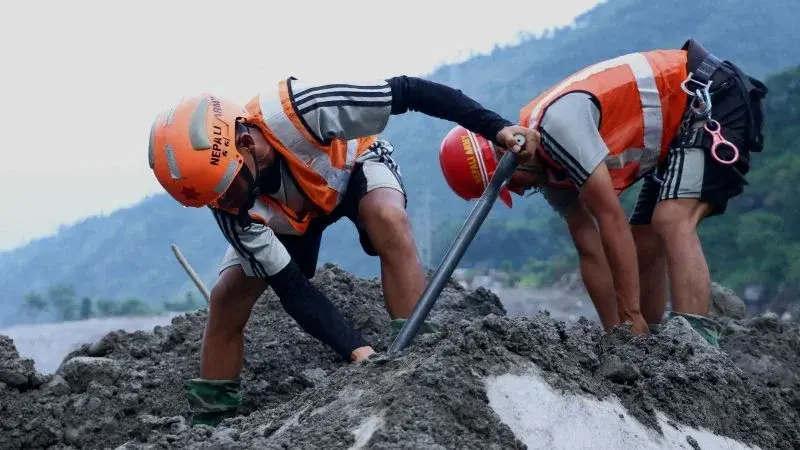
Chinese families of workers missing in Nepal are demanding faster rescue coordination and information transparency after a glacier collapse triggered deadly floods. While Beijing reports 16 dead and 546 missing in Tibet, relatives of workers on Belt and Road projects, including the Syabrubesi-Rasuwagadhi highway, report delays in cross-border rescue efforts. International figures show 261 foreigners missing in China, with the US disputing lower counts. China has deployed rescue experts and aid but faces criticism for limited media access and slow updates.
Key points
- A glacier collapse in Nepal on August 26 triggered flash floods that destroyed infrastructure and killed over 1,000 people, with thousands missing.
- Chinese families of workers on projects like the Syabrubesi-Rasuwagadhi highway and Upper Trishuli-1 Hydropower Project are urging authorities to coordinate cross-border rescue efforts.
- China reported 16 dead and 546 missing in Tibet, including 261 foreigners from 23 countries, but the US State Department claims at least 85 Americans are missing.
- Rescue efforts in Nepal are hindered by limited local resources and border restrictions, while Chinese media coverage remains tightly controlled.
- China has sent rescue experts, aid supplies, and satellite data to Nepal, but families report delays in receiving updates from companies and officials.
Background
The disaster followed a glacier collapse at 5,140 meters, sending debris into rivers and reaching Gyirong Port in seven minutes. Previous coverage noted barrier lakes formed by the mudslide and concerns about climate-driven floods threatening Nepal’s hydropower projects. The current crisis highlights ongoing challenges in cross-border disaster response and information transparency.
How outlets are covering it
CNN emphasizes the plight of Chinese families, highlighting delays in rescue coordination and information transparency, while noting China’s deployment of rescue experts and aid. The Guardian focuses on international missing persons, noting 15 Britons and 18 Americans missing in China, and disputes over US figures. The New York Times provides detailed counts of missing foreigners, including 104 Nepalis and 49 Indians, but does not delve into family concerns. All sources agree on the scale of the disaster but differ in emphasis: CNN on domestic transparency, Guardian on international impact, and NYT on statistical breakdowns.
Why it matters
The incident underscores challenges in cross-border disaster response and information transparency, particularly for Belt and Road projects. It highlights tensions between state-controlled media and public demand for updates, as well as the human cost of infrastructure development in vulnerable regions.
What to watch
China is expected to continue releasing updates on missing persons and rescue efforts, while international pressure may grow for greater transparency. Families may continue to advocate for direct cross-border rescue coordination, and authorities may face scrutiny over media restrictions and information flows.
- They were building infrastructure in Nepal. Their families in China want to know what happened to them CNN
- Chinese rescue work in Tibet flood disaster zone still trudging along days later Reuters
- China warns of ‘major’ glacier collapse risk as landslide death toll nears 1,000 South China Morning Post
- Fifteen Britons among 261 foreigners missing in China after floods The Guardian
- China Says 261 Foreigners From 23 Countries Are Missing in Tibet Flood The New York Times
Want the full story? Read the original reporting
Read on CNN