
Nordic Leaders Hold Rare 90-Minute Call with Putin Amid European Divisions
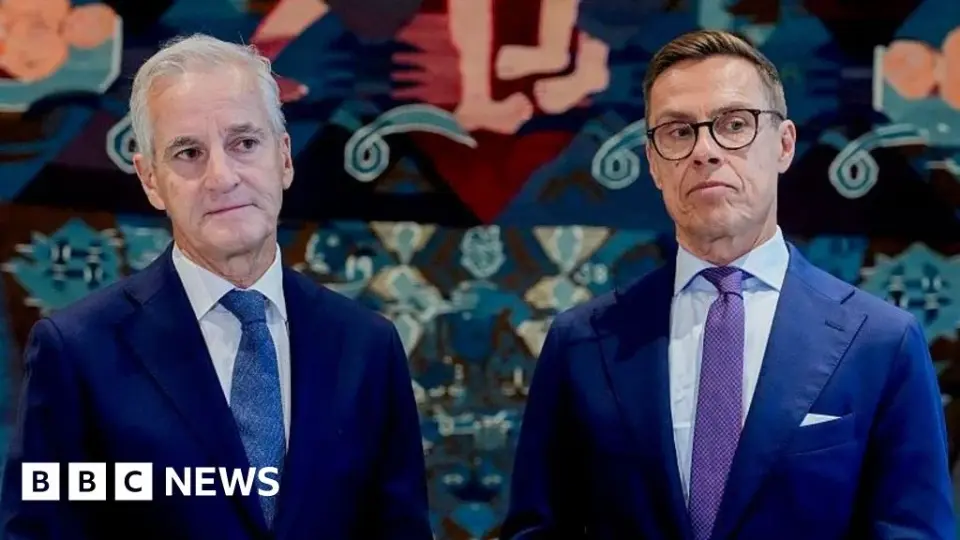
Finnish President Alexander Stubb and Norwegian Prime Minister Jonas Gahr Støre held a 90-minute phone call with Vladimir Putin to discuss ending the war in Ukraine. The leaders stated they acted only for their nations, not Europe as a whole. While they agreed to maintain direct communication, significant differences in views remain, and several European allies expressed skepticism about the initiative.
Key points
- Stubb and Støre spoke with Putin for 90 minutes, exceeding the initial 20-minute allocation, to discuss the war and potential peace negotiations.
- The leaders emphasized they were not acting on behalf of Europe as a whole, though they informed allies in advance.
- Putin blamed 'confrontational' EU and NATO policies for prolonging the conflict and insisted Russia's interests must be fully considered in any peace deal.
- Støre acknowledged 'significant differences' in positions but noted the call was 'frank and substantive' regarding energy infrastructure and Black Sea issues.
- The call preceded planned trilateral talks in Abu Dhabi in November, involving Russia, Ukraine, and the US.
- Zelensky spoke with the Nordic leaders afterward, expressing gratitude for their support and discussing formats for European engagement.
Background
This contact follows a period of strained relations between the US, Ukraine, and European allies, particularly after US President Donald Trump agreed to lift some sanctions on Russia to allow oil exports. In late September, Stubb and Zelensky signed a drone production pact and warned of high casualty rates in the Donbas. In early October, a Trump-Putin call resulted in a diesel supply deal but stalled peace talks, with Putin citing Ukrainian drone attacks as a reason for halting negotiations. The current call represents the first direct contact between European leaders and Putin since French President Emmanuel Macron spoke with him in July 2025.
How outlets are covering it
BBC reports that the call was a rare instance of direct European-Russia contact, highlighting Putin's blame on EU/NATO policies and the agreement to continue communication. The Guardian provides more detail on the reaction from other European leaders, noting that Støre defended the call against criticism from Denmark's Prime Minister Mette Frederiksen, who was 'very sceptical' and claimed it was not coordinated with others. The Guardian also highlights skepticism from Sweden's Prime Minister Ulf Kristersson, who insisted any peace must be on Ukraine's terms and not through appeasement, and German Chancellor Friedrich Merz, who warned that solutions cannot be found without Ukraine's involvement. Estonia's foreign minister argued that only increased pressure on Russia will make it take peace negotiations seriously, while Poland's Prime Minister Donald Tusk expressed 'very restrained optimism' about the upcoming Abu Dhabi talks but urged vigilance, noting that 'both sides maintained their positions' during the call.
Why it matters
The call signals a shift in European diplomatic strategy, with some leaders seeking direct channels with Moscow as US-Russia relations soften. It highlights deep divisions within Europe over how to engage with Russia, with some viewing direct contact as necessary for peace and others seeing it as appeasement that undermines support for Ukraine. The outcome of the November Abu Dhabi talks will be critical in determining whether these diplomatic efforts lead to a ceasefire or a lasting peace, or if they fail to address the core issues of the conflict.
What to watch
The next major step is the trilateral talks between Russia, Ukraine, and the US in Abu Dhabi in November. Stubb and Støre have agreed to continue direct phone communication with Putin. European leaders will likely continue to debate the effectiveness and appropriateness of direct engagement with Russia, with some urging increased pressure and others supporting diplomatic channels. The outcome of the Abu Dhabi talks will be a key indicator of whether the current diplomatic efforts are yielding results.
- Norway and Finland hold rare call with Putin to discuss ending war BBC
- Leaders of Norway and Finland call Putin in break with previous European stance Reuters
- Rare call with Putin on Ukraine was ‘substantive’ but ‘significant differences’ remain, say Finnish and Norwegian leaders – Europe live The Guardian
- Vladimir Putin speaks with Norwegian and Finnish leaders Financial Times
- Finland and Norway Hold ‘Frank’ Call With Putin on Ukraine Bloomberg.com
Want the full story? Read the original reporting
Read on BBC