
Poland Calls Russian Missile Crash 'Intentional Provocation' Amid NATO Exercises
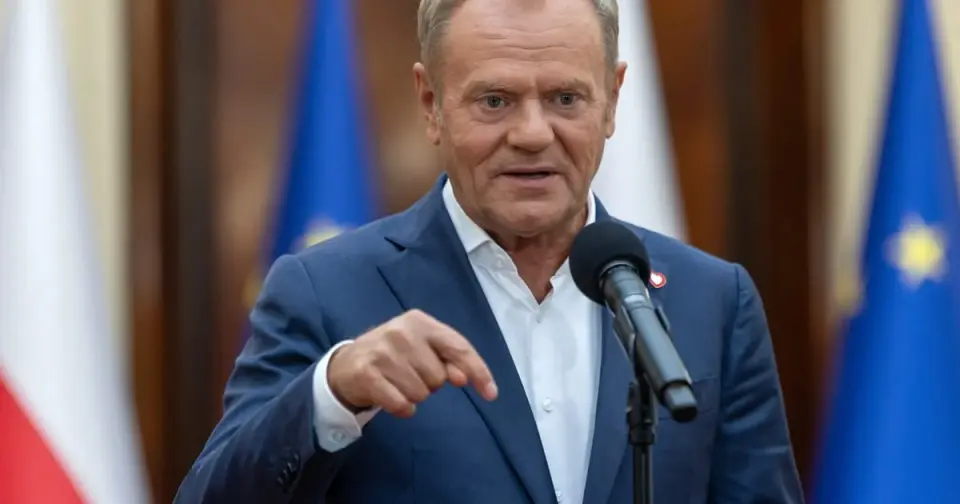
Polish Prime Minister Donald Tusk labeled the crash of a Russian Kh-101 cruise missile in southeastern Poland as an 'intentional provocation,' rejecting earlier U.S. characterizations of such incidents as accidents. The incident occurred during a massive Russian aerial assault on Ukraine, which killed at least eight people and damaged critical infrastructure in Kyiv. No injuries were reported in Poland, but the timing coincided with major military exercises by the 'coalition of the willing' near the border, raising fears of deliberate escalation.
Key points
- Three objects, including a Kh-101 cruise missile and a jet-powered drone, crashed in Nowy Lipowiec, Rudnik nad Sanem, and Mołodycz in southeastern Poland on November 20.
- Polish PM Donald Tusk stated the incident was not an accident, contrasting with President Trump’s earlier comments that Russian incursions were 'mistakes.'
- The crashes occurred during one of Russia’s largest attacks on Ukraine since 2022, which Zelenskyy said killed at least eight people and wounded nearly 30.
- NATO Secretary-General Mark Rutte condemned the 'grave violations' of Polish airspace and confirmed that NATO jets were scrambled in response.
- Poland is seeking additional NATO support and is discussing the incident with European leaders, with Rutte scheduled to visit Warsaw on Saturday.
Background
This incident follows a pattern of Russian weapons entering Polish airspace since the 2022 invasion, including a Kh-101 missile in July 2026 and over 20 drones in September 2025. Poland has previously warned of heightened risks, with Tusk stating in 2025 that the country was closer to military conflict than at any time since World War II. The current event occurs amid ongoing tensions over U.S. defense commitments and Poland’s push for a permanent U.S. military base.
How outlets are covering it
Polish officials, including PM Tusk and Defense Minister Władysław Kosiniak-Kamysz, firmly assert the incident was a deliberate provocation, especially given its timing with Western military exercises. In contrast, U.S. President Trump had previously characterized similar Russian incursions as 'mistakes,' a view Tusk explicitly rejected. NATO Secretary-General Mark Rutte condemned the acts as dangerous consequences of Russia’s war but stopped short of labeling them intentional, focusing instead on collective defense. Ukrainian President Zelenskyy framed the broader attack as 'terror' to compensate for Russian diplomatic failures, while Russian authorities have not commented on the Polish incursion.
Why it matters
The incident tests NATO’s Article 5 collective defense principles and the alliance’s resolve against Russian aggression. It highlights the fragility of the security situation in Europe, as Russian strikes on Ukraine increasingly spill over into NATO territory. The disagreement between U.S. and Polish assessments of intent could strain transatlantic relations and influence future defense commitments, particularly as Poland seeks a permanent U.S. military presence.
What to watch
NATO Secretary-General Mark Rutte is scheduled to visit Warsaw on Saturday to discuss the incident and potential responses. Poland is expected to request additional military support from NATO. The situation may escalate if further incidents occur, potentially triggering a broader NATO response. U.S. President Trump’s stance on the incident may influence future U.S. defense commitments to Europe.
- Tusk: Russian cruise missile incursion into Poland seems ‘intentional’ POLITICO.eu
- Russian missile hits Poland as Ukraine's allies hold military exercise, says Tusk BBC
- Poland accuses Russia of "intentional provocation" as missiles hit NATO soil, kill at least 8 in Ukraine CBS News
- Russian missiles and drone reportedly hit Poland during attacks on Ukraine The Guardian
- Poland condemns Russian 'provocation' after three airspace violations Reuters
Want the full story? Read the original reporting
Read on POLITICO.eu