
Board of Peace Criticizes Israel for Insufficient Aid Response to Gaza Floods
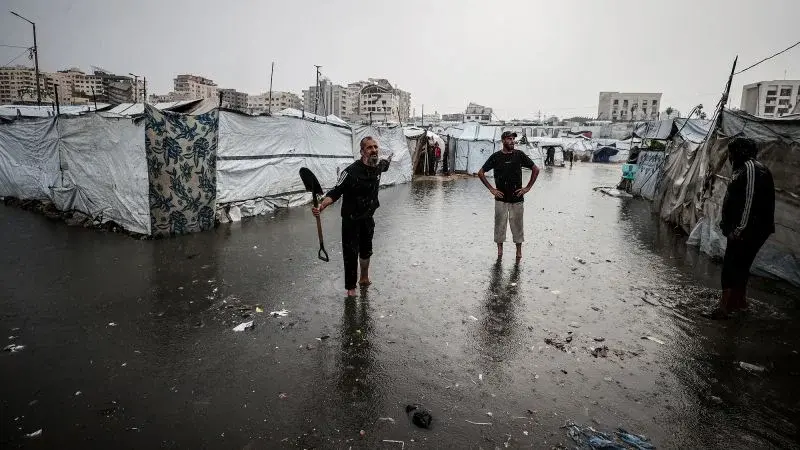
Heavy rains flooded tens of thousands of tents in Gaza, killing at least five people. The US-backed Board of Peace called Israel’s response 'insufficient,' demanding immediate entry of winterization supplies. Israel maintains that reconstruction cannot begin until Hamas disarms, while humanitarian agencies warn that essential stocks are exhausted and further delays could prove fatal.
Key points
- The Board of Peace urged Israel to authorize the entry of shelter, sanitation, and drainage supplies, stating that delays exacerbated a foreseeable humanitarian crisis.
- A sand embankment collapse in Deir al-Balah killed five people, including three children, after heavy weekend rains.
- Israel’s COGAT agency reported that over 91,000 tents and 8,200 trucks of winter supplies had entered Gaza, but it refused to allow heavy equipment for rubble removal, citing security concerns.
- UN officials stated that essential shelter and winter items inside Gaza have been exhausted, with over 150,000 tents waiting outside the territory.
- Hamas denied responsibility for the disaster, blaming Israeli restrictions on aid and accusing the Board of Peace of failing to address its own shortcomings.
Background
This crisis occurs one year after the October 2025 ceasefire, which was intended to end the war and begin reconstruction. Previous coverage noted that the Board of Peace had failed to halt violence or rebuild infrastructure, with over 1,400 people killed since the truce. Recent disputes over commercial goods and the blocking of a US-backed stabilization base have further stalled the reconstruction process, leaving the majority of Gaza’s population in temporary shelters.
How outlets are covering it
Outlets highlight differing narratives regarding the cause of the crisis. CNN and BBC emphasize the Board of Peace’s rare criticism of Israel, noting that the organization called its response 'insufficient' and urged immediate action. The Guardian focuses on the human toll, detailing witness accounts of the landslide and the struggle to rescue victims. Al Jazeera provides broader context, noting that Israel is blocking 60,000 mobile homes and 200,000 tents, while Hamas argues that Israeli restrictions are the primary cause of the disaster. Israel’s COGAT and foreign ministry maintain that reconstruction is contingent on Hamas disarming and accuse Hamas of hoarding aid, while UN officials warn that stocks are exhausted and time is running out.
Why it matters
The flooding highlights the fragility of Gaza’s humanitarian situation and the stalled implementation of the peace deal. The Board of Peace’s criticism marks a shift in tone, potentially influencing international pressure on Israel. However, the dispute over reconstruction conditions and aid access remains unresolved, with both sides blaming each other for the humanitarian crisis. The situation underscores the ongoing suffering of civilians in Gaza and the challenges of implementing a ceasefire in a war-torn region.
What to watch
The Board of Peace is expected to continue urging Israel to allow essential supplies into Gaza. Israel may maintain its stance on reconstruction conditions, while Hamas and humanitarian agencies will likely continue to press for immediate aid. The situation could escalate if further delays in aid entry lead to more casualties or if the Board of Peace takes further action to pressure Israel. The outcome of the Israeli elections and the formation of a new government may also influence the pace of reconstruction and aid access.
- Trump’s Board of Peace chides Israel for ‘insufficient’ response to Gaza flooding CNN
- Witnesses recount struggle to save people buried in ‘horrifying’ Gaza landslide The Guardian
- Board of Peace says Israel's aid response after Gaza floods 'insufficent' BBC
- Trump’s Board of Peace warns of ‘immediate humanitarian emergency’ in Gaza Financial Times
- Palestine Weekly: West Bank on fire – and Gaza’s tents under water Al Jazeera
Want the full story? Read the original reporting
Read on CNN