
Jordan-Syria Tensions Rise as Amman Acknowledges Civilian Deaths in Retaliatory Strikes
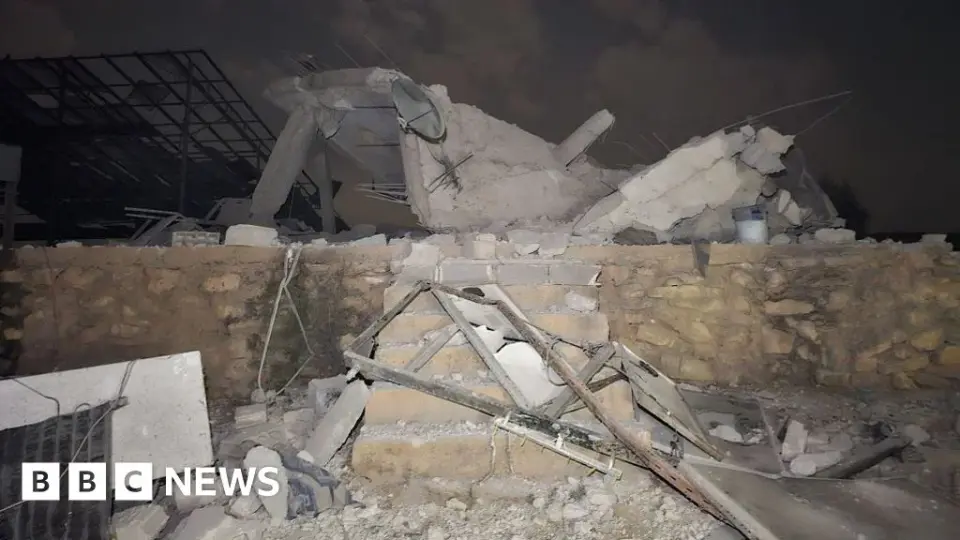
Jordan confirmed that its retaliatory airstrikes in southern Syria killed approximately 20 Islamic State militants but also resulted in civilian casualties. In response to a deadly attack on a Greek Orthodox church in Karak that killed nine people, Jordanian forces struck targets in Daraa and Sweida provinces. Syrian authorities reported seven civilian deaths, primarily women and children, and condemned the strikes as a violation of sovereignty. The two nations agreed to form a joint committee to investigate the incident and improve intelligence coordination to prevent future escalations.
Key points
- Jordanian officials stated that the airstrikes targeted confirmed threats and planned terrorist acts, killing around 20 Islamic State militants.
- Syrian civil defense reported seven civilian deaths in the strikes, including a family with three children and two elderly men in the border village of Al-Tuff.
- The strikes were launched in retaliation for an attack on a funeral at a Greek Orthodox church in Karak, which killed nine people on October 23.
- Jordan and Syria agreed to establish a joint committee to investigate the circumstances and develop mechanisms for field and intelligence coordination.
- Syrian authorities condemned the strikes as an unacceptable violation of airspace, noting that no prior coordination or notification was provided by Jordan.
Background
This incident follows a series of escalating tensions between Jordan and Syria since the change in Syrian leadership in December 2024. Previous archive coverage noted that Jordan had initially claimed coordination with Syrian authorities regarding the strikes, a claim Damascus denied. The Karak church attack had prompted King Abdullah II to vow a harsh response, describing citizen security as a red line. The current development marks a shift from initial denials of coordination to a formal agreement for joint investigation and security cooperation.
How outlets are covering it
BBC reported that Jordan described the targets as terrorists and emphasized the retaliatory nature of the strike. AP News provided more granular details, highlighting the discrepancy between Jordan’s claim of killing 20 militants and Syria’s report of seven civilian deaths. AP also noted the emotional impact on Syrian families, such as Masoud al-Salim, who lost multiple relatives. While both sources agree on the basic facts, AP focused more on the humanitarian toll and the diplomatic resolution, whereas BBC framed the event primarily through the lens of counter-terrorism and regional security dynamics.
Why it matters
The incident tests the fragile diplomatic relationship between Jordan and the new Syrian government under Ahmad al-Sharaa. The agreement to form a joint committee signals a willingness to manage crises through dialogue rather than unilateral action, which is critical for regional stability. However, the civilian casualties and the lack of prior coordination could strain bilateral ties and raise concerns about the safety of civilians in cross-border military operations.
What to watch
The joint committee will investigate the circumstances of the strikes and develop mechanisms for intelligence coordination. Both countries are expected to continue communication to prevent further escalations. The outcome of this investigation may influence future security cooperation between Amman and Damascus, particularly regarding the handling of terrorist threats along their shared border.
- Jordan says 'terrorists' killed in Syria in retaliatory strike over church attack BBC
- Jordan Says Its Deadly Strikes in Syria Targeted Islamic State The New York Times
- Church leaders offer sympathy after shooting in Jordan Church News
- Jordan and Syria form a joint probe after Jordanian strikes targeting IS kill civilians in Syria AP News
- Jordan acknowledges civilian casualties in Syria airstrike against 'Islamic State' DW.com
Want the full story? Read the original reporting
Read on BBC