
Jordanian authorities arrest three family members in deadly Karak church attack
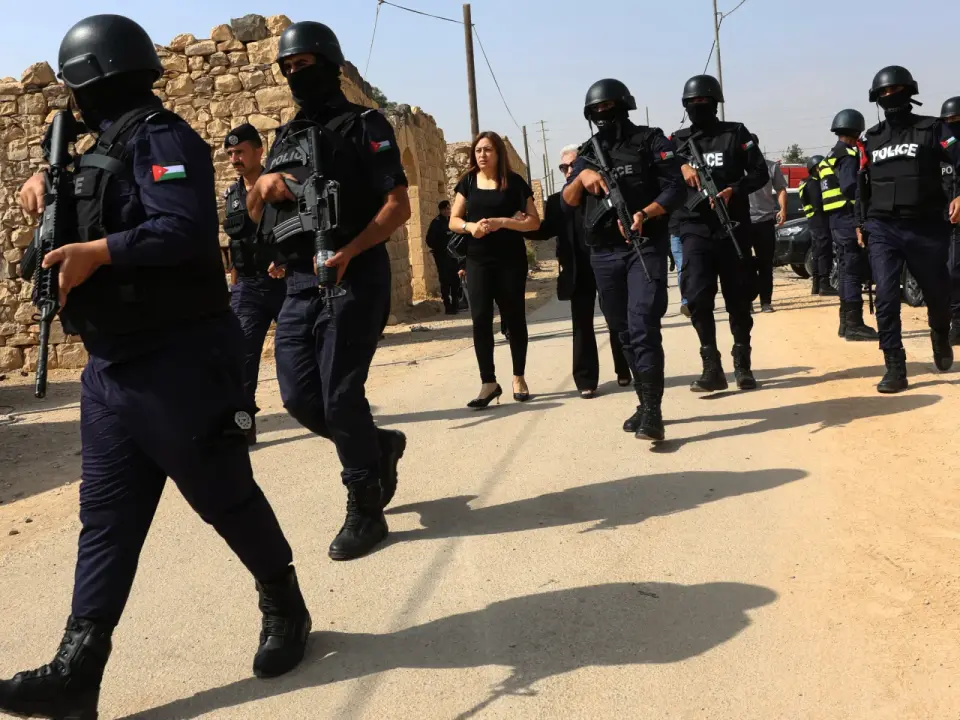
Jordanian security forces arrested three suspects on Monday in connection with a Friday attack on a Greek Orthodox church in Karak that killed nine people. The suspects, identified as members of one family, were located in an abandoned house and wounded during a three-hour standoff. Authorities described the incident as an act of extremist terrorism, while analysts debate whether it signals deeper societal radicalization or an isolated event.
Key points
- Interior Minister Mazin al-Farrayeh confirmed the arrest of three Jordanian suspects, including brothers Hazza and Mishal Zeidan Muhammad, and their relative Ahmed Sami Hussein.
- The suspects were hiding in an abandoned house in al-Jadeeda, Karak, and refused to surrender, leading to a three-hour exchange of fire that left all three wounded, one critically.
- The attack on St. George’s Church in Hamoud occurred during a funeral on October 23, killing nine people and wounding at least 34 others, with surveillance footage showing three gunmen and a driver.
- King Abdullah II ordered a comprehensive review of security and counter-extremism policies, declaring the safety of Jordanians a 'red line' and promising an 'iron fist' response.
- No group has claimed responsibility, though authorities label the act 'extremist terrorism,' and Interior Minister al-Farrayeh stated there is no evidence linking the suspects to other cells.
Background
This incident follows a 2016 series of attacks in Karak linked to ISIS, which killed ten people. While the current attack is described as unprecedented in its targeting of a Christian minority community, it has reignited concerns about the resilience of extremist networks in the region. Jordan, often viewed as a stable Middle Eastern state with a significant Christian population (2-3% of the total), has historically emphasized religious coexistence, with Christians holding reserved parliamentary seats and serving in government and military roles.
How outlets are covering it
Al Jazeera and ABC News focus on the tactical details of the arrest and the immediate government response, highlighting the three-hour shootout and the identification of the suspects as a single family unit. The Media Line provides a broader analytical perspective, contrasting two Jordanian commentators: Rami Bassem Haddad, who views the attack as an isolated extremist act that will not undermine social cohesion, and Amer Sabaileh, who argues that Jordan has ignored years of growing domestic radicalization and 'social salafism.' While Al Jazeera and ABC News emphasize the security operation's success, The Media Line highlights debates over whether the state's reliance on religious institutions rather than civic equality is failing to address the root causes of extremism. All sources agree that no external group has claimed responsibility, but they differ on whether the attack represents a symptom of deeper societal failures or a singular terrorist event.
Why it matters
The attack challenges Jordan's reputation for stability and religious moderation, potentially exposing vulnerabilities in its counter-extremism strategies. It raises questions about the safety of minority communities and the effectiveness of security measures in preventing small-scale, decentralized attacks. The government's response, including a comprehensive policy review, may set a precedent for how the kingdom addresses ideological radicalization in the future.
What to watch
Investigations into the attack are ongoing, with authorities promising to bring all involved to justice. King Abdullah II has ordered a review of counter-extremism policies and security preparedness. The public will await further details on the suspects' motives and any potential links to other extremist networks, as well as the outcomes of the policy review aimed at addressing the root causes of radicalization.
- Jordan arrests three suspects over church attack in dawn raid: What to know Al Jazeera
- Security forces arrest suspects of deadly church attack in Jordan after shootout DW.com
- Death toll rises to 9 after gunmen open fire on church in Jordan ABC News - Breaking News, Latest News and Videos
- Jordan Arrests 3 in Connection With Church Attack, State Media Reports The New York Times
- ‘Wake Up From the Illusion’: Jordanian Analyst Warns of Deepening Radicalization After Church Attack The Media Line
Want the full story? Read the original reporting
Read on Al Jazeera