
Three Years After Oct. 7: Grief, Political Division, and Unfinished Stories
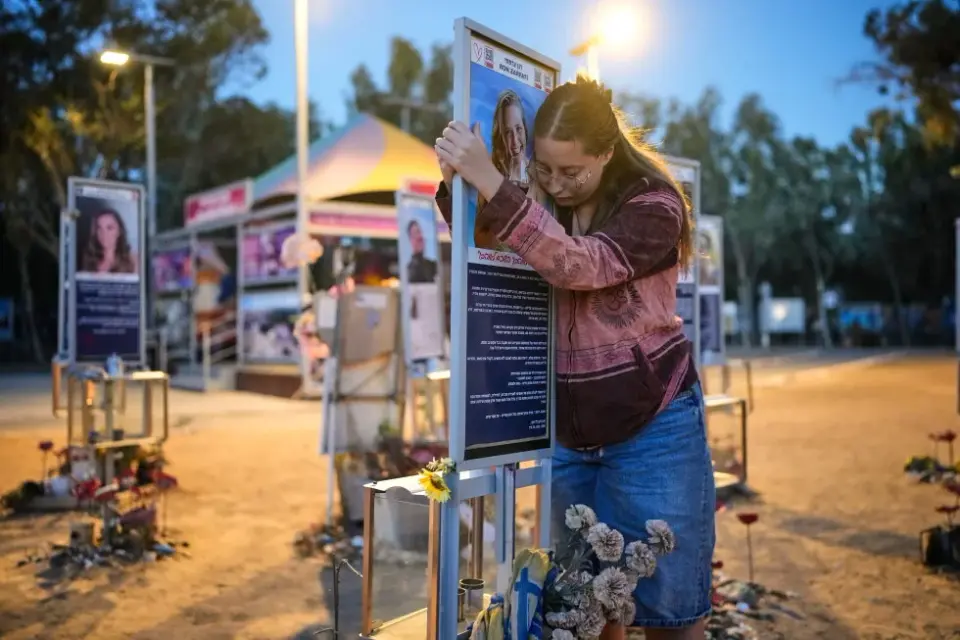
On the third anniversary of the October 7 attack, Israel holds memorials amid deep political division, while Gaza faces ongoing humanitarian crisis and media outlets reflect on unreported stories.
Key points
- Israel marks the third anniversary of the October 7 attack with memorials, but no events are planned in Gaza, where Hamas defends the attack as a catalyst for global attention.
- Over 74,000 Palestinians have been killed in Gaza since the war began, with 1,460 deaths recorded since the October 2025 ceasefire, according to the Gaza Health Ministry.
- A contentious Israeli election is scheduled for late October, with voters divided over Prime Minister Benjamin Netanyahu’s refusal to launch an official inquiry into security failures surrounding the attack.
- The Jerusalem Post editor-in-chief apologized for failing to publish stories of victims’ families, highlighting the media’s inability to cover all individual narratives during the crisis.
- Hamas stated that the conflict did not begin on October 7 and that its 'final chapters are not written yet,' while Palestinians in Gaza described three years of unprecedented destruction and displacement.
Background
The October 7 attack triggered a cascade of regional conflicts, including wars with Hamas, Hezbollah, and Iran, and led to significant territorial seizures by Israel in Syria and Lebanon. Recent months have seen heightened tensions in the West Bank and international scrutiny of pre-attack warnings, including disputed claims that the UAE alerted Netanyahu days before the attack. A ceasefire took effect in October 2025, but Israeli strikes continue, and aid restrictions have worsened the humanitarian situation in Gaza.
How outlets are covering it
AP News emphasizes the human toll in Gaza, citing 74,000 deaths and ongoing displacement, while noting Hamas’s defense of the attack. CNN focuses on the political dimension, highlighting the upcoming election and Netanyahu’s refusal to investigate security failures. The Jerusalem Post offers a media-centric perspective, with its editor apologizing for the inability to cover all victim stories, stressing the importance of preserving testimonies through initiatives like Edut 710. Outlets differ in emphasis: AP and CNN focus on geopolitical and humanitarian outcomes, while The Jerusalem Post centers on journalistic responsibility and memory.
Why it matters
The anniversary underscores the unresolved nature of the conflict, with ongoing violence in Gaza, political instability in Israel, and debates over historical accountability. The media’s struggle to document individual stories highlights the long-term challenges of preserving truth amid mass trauma and political polarization.
What to watch
Israelis are expected to vote in late October, potentially reshaping the government’s approach to the war and security policies. In Gaza, humanitarian conditions may worsen if aid restrictions continue, while Hamas may leverage the anniversary to sustain its narrative. Media organizations are likely to increase efforts to archive and publish victim testimonies to counter historical distortion.
- Israelis mourn on the anniversary of the Oct. 7 attack as Palestinians grapple with war it sparked AP News
- Israel marks three years since October 7 attack with memorials and protests CNN
- Israel marks third anniversary of October 7 terror attacks DW.com
- Much of the world sees tragedy in Gaza. Many Israelis, scarred by Oct. 7, see only a threat AP News
- 'Post' editor-in-chief reflects on the stories media missed on October 7 The Jerusalem Post
Want the full story? Read the original reporting
Read on AP News