
Ukraine’s Sargan-3000 Drone Boat Sinks Russian Vessel in First Naval Drone Duel
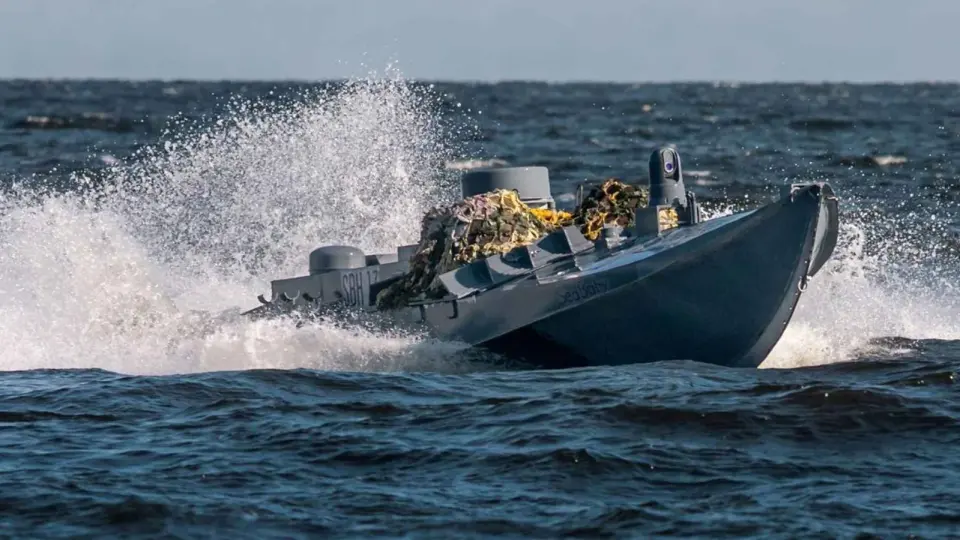
Ukraine’s Navy confirmed the first recorded combat engagement between two uncrewed surface vessels in the Black Sea. A Ukrainian Sargan-3000 drone boat, equipped with a Norwegian-made remote weapon station, intercepted and sank a Russian Orcan-type drone boat. The Ukrainian vessel used a .50-caliber machine gun to destroy the Russian boat’s antennas at a range of 3,300 feet, disabling its control before sinking it at close range. This marks a shift from traditional one-way explosive drone boats to reusable, armed hunter-killer platforms.
Key points
- The Ukrainian Navy released an 81-second video on September 12 showing the Sargan-3000 sinking a Russian drone boat, which it described as the first naval battle between unmanned vessels in history.
- The Sargan-3000, built by Nordex and introduced by President Zelensky in April 2026, is equipped with a Kongsberg Protector remote weapon station featuring a 12.7mm (.50-caliber) machine gun.
- The Russian vessel was identified by Naval News analyst H.I. Sutton as an improved Orcan (also known as Zefir), a small explosive drone boat similar to Ukraine’s Magura V3 and V5.
- The engagement likely took place in the northwestern Black Sea near Odesa, with the Russian boat potentially targeting Ukrainian ports or merchant shipping.
- The Sargan-3000’s first confirmed kill was the FSB border guard ship Izumrud near Novorossiysk in July 2026.
Background
This engagement follows a broader escalation in naval drone warfare in the Black Sea. In August 2026, Romania’s F-16s shot down a Russian explosive drone boat near the Neptun Deep gas platform, highlighting the threat to European energy infrastructure. Additionally, Ukrainian drone forces have been conducting a sustained campaign against Russia’s 'shadow fleet,' striking 285 vessels in the Sea of Azov and Black Sea since July 2026, significantly disrupting oil and gas exports. The Sargan-3000 was introduced by President Zelensky in April 2026 as a multi-purpose platform, with variants capable of carrying air defense missiles and electronic warfare equipment.
How outlets are covering it
Naval News analyst H.I. Sutton confirmed the Russian vessel as an improved Orcan type, noting its similarity to Ukrainian Magura drones and its use of a jet ski-style waterjet for agility. The War Zone emphasized that the Russian boat appeared unarmed, suggesting the engagement was not a true duel but a one-sided takedown. AutoNotion highlighted the strategic shift from one-way explosive boats to reusable armed platforms, noting that the Sargan-3000 can engage multiple targets. UNITED24 Media focused on the broader impact of Ukrainian drone campaigns on Russia’s shadow fleet, while TVP World reported on the disruption of oil exports in the Sea of Azov. All sources agree on the significance of the Sargan-3000’s capability to sink enemy vessels with a machine gun, but differ on the tactical implications and the level of threat posed by Russian drone boats.
Why it matters
The Sargan-3000’s success demonstrates a new paradigm in naval warfare, where reusable, armed drone boats can neutralize enemy vessels without risking crewed ships. This capability could force Russia to adapt its drone boat tactics, potentially arming them with weapons or improving their evasion capabilities. The engagement also highlights the growing role of remote weapon stations in naval combat, as the Kongsberg Protector system proved effective in a uncrewed platform. This could influence future naval drone designs and tactics, with both sides likely to invest in similar hunter-killer platforms.
What to watch
Russia is expected to respond by upgrading its drone boats with defensive weapons or improved evasion tactics, as noted by AutoNotion. The Ukrainian Navy may deploy more Sargan-3000 variants, including those with air defense missiles or electronic warfare equipment, to counter Russian drone boat attacks. The engagement could also lead to increased international attention on naval drone warfare, with NATO and other allies potentially investing in similar technologies. The broader impact on Russia’s shadow fleet and oil exports may continue to disrupt its war financing, as reported by TVP World and UNITED24 Media.
- A 23-foot Ukrainian drone boat with a .50-caliber machine gun on a Norwegian remote mount ran down a Russian drone boat in the Black Sea, shot its antennas off from 3,300 feet so nobody could steer it clear, then sank it at close range, the first drone boat kil autonocion.com
- The World’s First Drone-vs-Drone Naval Battle Just Happened in the Black Sea Yahoo
- World’s First Naval Drone Duel Results In Ukrainian Success navalnews.com
- Ukraine’s Armed Sea Drone Destroys Russian Drone in World’s First Naval Drone Battle UNITED24 Media
- Ukrainian drones ‘effectively halt’ Russian shadow fleet in Sea of Azov TVP World
Want the full story? Read the original reporting
Read on autonocion.com