
France deploys 70,000 officers for second protest wave amid museum closures and political tensions
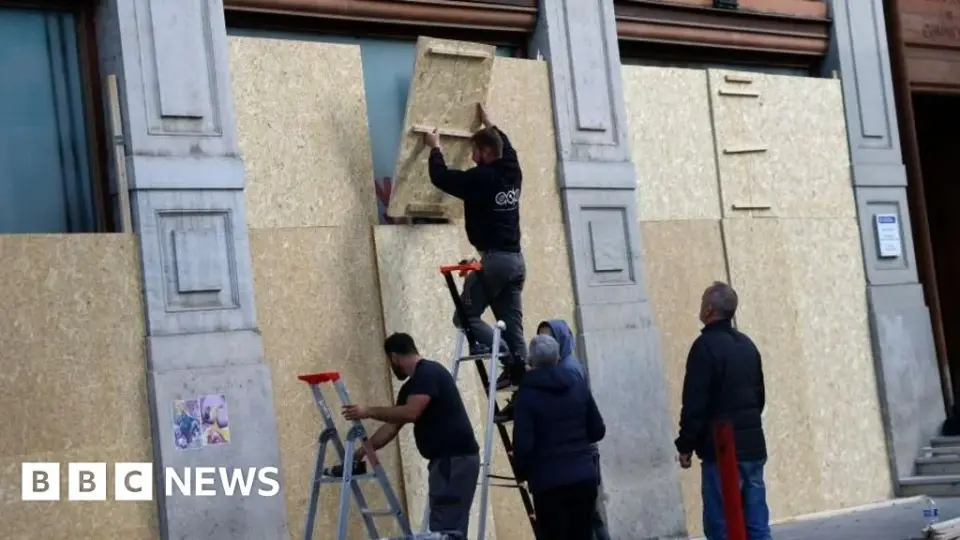
France is on high alert for a second round of nationwide protests on Saturday, one week after violent riots. Authorities are deploying 70,000 police officers and closing major museums to prevent further unrest. While Macron has banned non-union demonstrations, hundreds of thousands are expected to march in Paris and other cities. The protests, driven by cost-of-living concerns and student grievances, have escalated into a broader anti-government movement involving yellow vests and left-wing groups. Tensions are heightened by a far-right party congress in Orléans and upcoming presidential elections.
Key points
- Interior Minister Laurent Nuñez announced the deployment of 70,000 police officers, including SWAT units, helicopters, and armored vehicles, to manage Saturday's protests.
- Major Parisian institutions, including the Louvre, Orsay, and Picasso museums, will close, and Art Basel has cancelled its weekend program due to security concerns.
- Macron has restricted demonstrations to recognized trade unions, but organizers from student groups, yellow vests, and left-wing parties are planning marches anyway.
- Justice Minister Gérald Darmanin reported that 232 people have been jailed for the previous week's riots, with prosecutors seeking punitive measures for looting and violence.
- A potential flashpoint exists in Orléans, where left-wing groups plan to protest the National Rally party congress led by Marine Le Pen, who is a frontrunner in the upcoming presidential election.
Background
The current unrest follows a week of severe violence on October 17, which saw some of France's worst riots in decades. Earlier coverage highlighted that the initial protests, sparked by education budget cuts and cost-of-living pressures, quickly escalated into widespread looting and arson, including the burning of the Limoges city hall. The government faced criticism for failing to anticipate the scale of the violence, leading to curfews and a crackdown on far-left groups. This second wave of protests occurs against a backdrop of political polarization and economic anxiety, with France preparing for a potentially divisive presidential election in May 2027.
How outlets are covering it
BBC and CNN emphasize the massive security response and the government's hardline stance against violence, noting the deployment of 70,000 officers and the closure of cultural sites. AP highlights the impact on international events like Art Basel and the specific tensions in Orléans regarding the far-right party congress. While all sources agree on the scale of the security operation, they differ in emphasis: BBC focuses on the political implications for Macron and the upcoming election, AP details the logistical disruptions to cultural and business events, and CNN underscores the broader social unrest involving diverse groups like farmers and climate activists. There is a consensus that the protests have evolved from student-led demonstrations into a wider anti-government movement, but outlets vary in their framing of the government's restrictions as either necessary security measures or heavy-handed suppression.
Why it matters
The second wave of protests tests the stability of the French government and its ability to manage civil unrest ahead of a critical presidential election. The escalation from peaceful demonstrations to violent riots has exposed deep societal divisions and economic frustrations. The government's heavy-handed approach, including bans on non-union protests and punitive measures against rioters, may further alienate the public and fuel support for opposition parties. The potential for clashes in Orléans and the broader impact on cultural and economic activities highlight the fragility of the current political landscape and the risks of further instability.
What to watch
Authorities will monitor Saturday's protests closely, with a focus on preventing violence and maintaining order in key cities. The outcome of the demonstrations will likely influence public opinion and political dynamics ahead of the May 2027 presidential election. If the protests remain peaceful, it may signal a de-escalation of tensions; if they turn violent, it could lead to further crackdowns and political backlash. The government will also assess the effectiveness of its security measures and the impact of the museum closures and other restrictions on public sentiment.
- France prepares for day of protest a week after nationwide riots BBC
- France prepares for protests with big police deployment Financial Times
- France's Macron tightens curbs on protests, blaming hard left for unrest Reuters
- Louvre and other museums closing for Saturday protests as French authorities deploy 70,000 officers AP News
- France braces for another weekend of protests as authorities launch massive security operation CNN
Want the full story? Read the original reporting
Read on BBC