
Crows Process Visual Decisions Twice as Fast as Primates, Study Finds
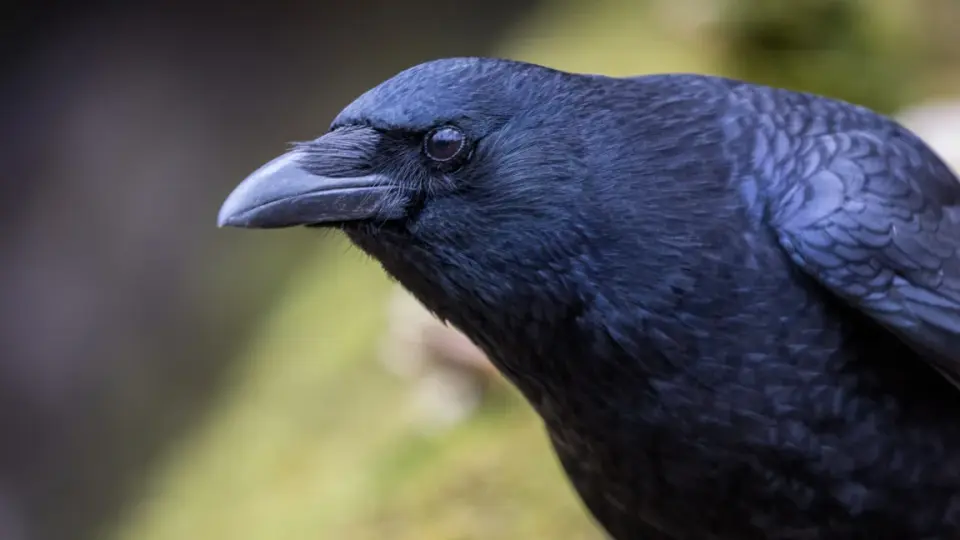
A study in Science reveals that carrion crows make visual decisions in 235 milliseconds, roughly twice as fast as primates, without sacrificing accuracy. Researchers attribute this speed to birds' compact neural structures and higher body temperatures, suggesting evolution found an alternative path to efficient computation.
Key points
- Carrion crows solved a random-dot-motion task in an average of 235 milliseconds, compared to 410-600 milliseconds for monkeys in similar studies.
- The birds maintained high accuracy, even when only 3% of dots moved coherently, indicating speed did not come at the cost of precision.
- Neural recordings from 248 neurons in the nidopallium caudolaterale showed evidence accumulation patterns similar to those in primate prefrontal cortexes.
- Researchers attribute the speed to shorter axons due to small brain size and faster chemical processes driven by higher body temperatures (up to 42°C).
- The study included only two crows and did not directly compare them to humans or monkeys in the exact same trial, limiting generalizability.
Background
Previous research established that primate brains use a 'random-dot-motion' task to study decision-making, where neurons accumulate visual evidence until a threshold is reached. While birds lack the layered neocortex found in mammals, their brains evolved distinct architectures over 360 million years ago. This study builds on earlier findings that crows possess high intelligence, such as tool use and social memory, but provides the first direct electrophysiological comparison of decision speed between birds and primates.
How outlets are covering it
Ars Technica emphasizes the physiological reasons for the speed, highlighting how flight constraints lead to smaller brains with shorter axons and higher body temperatures that accelerate chemical reactions. Live Science focuses on the evolutionary implication, noting that birds and mammals diverged over 310 million years ago, suggesting evolution independently developed similar computational solutions. UA.NEWS provides a concise summary of the methodology and results but notes the lack of direct comparison with humans in the same trial. All sources agree on the 235-millisecond average and the high accuracy of the crows, but differ in their emphasis on the biological mechanisms versus the evolutionary significance.
Why it matters
This research challenges the assumption that the mammalian neocortex is the only blueprint for sophisticated decision-making. It suggests that different brain architectures can achieve similar computational goals, potentially offering insights into efficient neural design for artificial intelligence. Understanding how birds process information so rapidly could also inform models of animal cognition and the evolutionary pressures that shape brain efficiency.
What to watch
Researchers plan to expand the study to include more birds and direct comparisons with primates in identical tasks to confirm the findings. They also aim to investigate whether the speed is specific to corvids or extends to other bird species, and to identify the specific biological processes contributing to the faster decision-making.
- Crows can evaluate visual info twice as fast as mammals Ars Technica
- Should 'bird brain' be a compliment? Here's how crows think fast NPR
- Crows have brains ‘in the fast lane’ The Transmitter
- Crows may make lightning-fast decisions, sometimes twice as fast as humans, study hints Live Science
- Study: crows made decisions about dot movement in 235 ms — Live Science UA.NEWS
Want the full story? Read the original reporting
Read on Ars Technica