
Meloni demands unified EU voice on Ukraine peace talks as fragmentation deepens
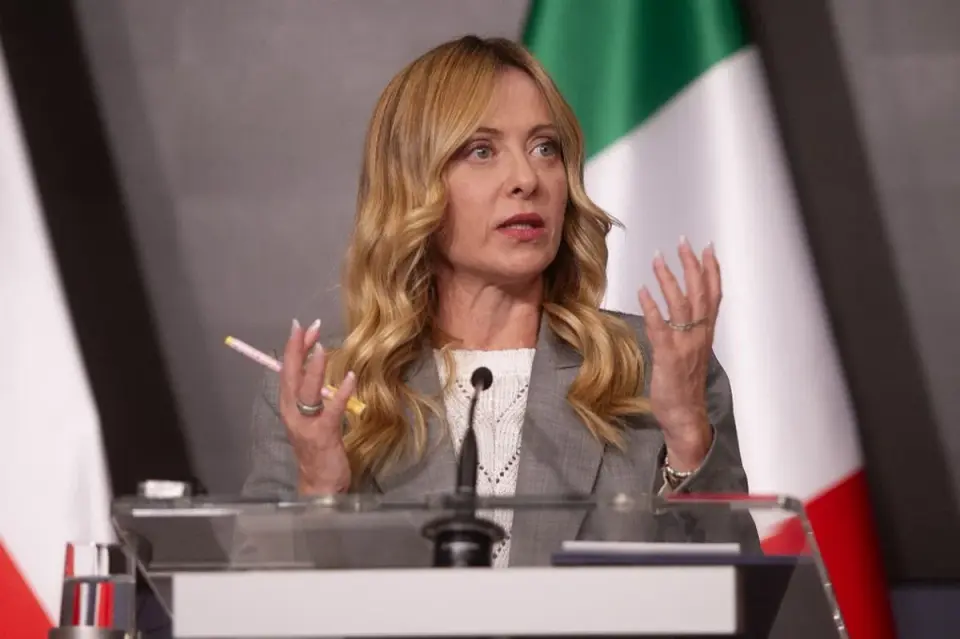
Italian Prime Minister Giorgia Meloni has formally challenged the European Union’s fragmented approach to peace negotiations with Russia. In a letter to European Council President António Costa, she demanded that the bloc agree on a single representative to speak for Europe at a December summit. Meloni argued that uncoordinated individual talks with Moscow undermine European credibility and security. While Costa agreed to raise the issue, the move highlights deep divisions within the EU, with Poland and Finland warning against excluding Eastern Europe from negotiations and opposing any resumption of Russian energy purchases.
Key points
- Meloni asked Costa to decide who has the authority to speak for the EU in negotiations to end the war in Ukraine, seeking a resolution at the December summit.
- The Italian PM declined to put herself forward for the role, insisting the decision be made on its merits to ensure a unified European message.
- Meloni criticized the lack of coordination among European leaders, noting that individual talks with Vladimir Putin have created inconsistent messaging and weakened the bloc's position.
- Polish Foreign Minister Radosław Sikorski supported Meloni, calling for 'legitimate representation' under the Lisbon Treaty and warning against excluding Eastern Europe and Scandinavia from the conversation.
- Austrian Foreign Minister Beate Meinl-Reisinger also aligned with Meloni, stating that the current EU approach lacks 'strategic coordination'.
- Meloni previously challenged US President Donald Trump over a diesel deal with Russia, warning it could finance the war and weaken sanctions.
Background
This diplomatic friction follows earlier reports of Meloni condemning the EU’s fragmented diplomacy as Trump signaled a major peace deal. Previous coverage noted that Italy had been excluded from key bilateral and trilateral discussions, such as the E3 meetings, while participating in broader groups like the E5. Meloni’s stance contrasts with her party’s historical roots in post-fascist Italy and her coalition partners’ past ties to Moscow, including Silvio Berlusconi’s friendship with Putin. In 2023, Meloni reminded audiences that Russia’s aggression began in 2014 with the seizure of Crimea, arguing that Western governments had wrongly assumed Putin would stop there. Her current push for unity comes as European leaders debate coordination in Dublin, with Poland and Finland warning against resuming Russian gas purchases or withholding Patriot missiles, highlighting deep divisions over security and energy strategy.
How outlets are covering it
Kyiv Post emphasizes Meloni’s strategic consistency, highlighting her refusal to compromise on Ukraine despite coalition pressures and her challenge to Trump’s diesel deal. The outlet frames her actions as a correction of earlier expectations that Italy would be a weak link in the West. Euronews focuses on the immediate diplomatic fallout, detailing the 'cracks' in Europe’s approach and the specific objections from Poland and Austria. Euronews notes that Meloni’s letter comes after the EU hosted talks with allies, including France, Germany, the UK, and the US, and highlights Costa’s prompt reply agreeing to organize the EU’s involvement to convey a 'clear and unified message'. While Kyiv Post portrays Meloni as a unifying force, Euronews presents her as part of a broader European debate on representation, noting that the issue will be discussed at an informal leaders' meeting in Dublin. Both sources agree on the core issue of fragmented diplomacy but differ in emphasis: Kyiv Post focuses on Meloni’s personal political courage and long-term consistency, while Euronews highlights the immediate procedural and geopolitical tensions among EU member states.
Why it matters
The dispute over who speaks for the EU in peace negotiations could determine the effectiveness of European diplomacy in ending the war in Ukraine. A unified voice is essential to prevent a lopsided deal with Russia that might compromise European security interests. Meloni’s push for coordination reflects a broader concern that fragmented diplomacy allows Moscow to exploit divisions among European leaders. The outcome of the December summit could set the precedent for how the EU handles future negotiations with Russia, potentially affecting the bloc’s credibility and the security of its eastern neighbors. Additionally, the debate over resuming Russian gas purchases and the withholding of Patriot missiles highlights the deep divisions within Europe over security and energy strategy, which could impact the war’s outcome and Europe’s long-term stability.
What to watch
The issue will be discussed at an informal leaders' meeting in Dublin next week, where EU leaders are expected to debate the need for a unified voice in peace negotiations. Costa has agreed to raise the issue with EU leaders, and the outcome of the December summit will determine who has the authority to speak for the EU in negotiations with Russia. The debate over resuming Russian gas purchases and the withholding of Patriot missiles will also likely be addressed, with Poland and Finland warning against any moves that could compromise European security. The EU’s ability to coordinate its approach will be crucial in determining the effectiveness of its diplomacy in ending the war in Ukraine.
- Why Italy’s Giorgia Meloni Is Willing to Lose Votes Over Ukraine Kyiv Post
- Giorgia Meloni hits out at EU’s ‘disjointed’ approach to Ukraine talks Financial Times
- Italy's Meloni warns Europe risks irrelevance in Ukraine peace talks Reuters
- Meloni Urges EU to Improve Coordination of Ukraine Negotiations Bloomberg.com
- Cracks emerge over Europe’s fragmented approach to Ukraine peace talks Euronews.com
Want the full story? Read the original reporting
Read on Kyiv Post