
UK and EU set Nov. 20 summit to finalize trade deals amid Brexit reversal debate
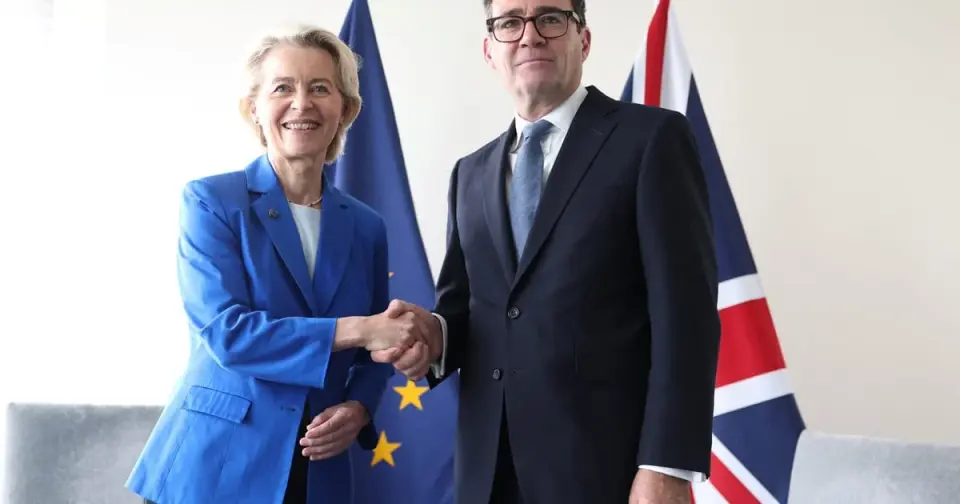
UK Prime Minister Andy Burnham confirmed a November 20 summit in Brussels to finalize agreements on agri-food trade, emissions trading, and youth mobility. While Burnham frames this as a pragmatic step to boost growth and control immigration, he has simultaneously opened the door to a broader dialogue on closer EU ties, including potential re-entry into the single market or full membership. Opposition leaders and some EU figures have reacted with skepticism, warning that the EU is a tough negotiator and that reversing Brexit is not a simple solution to Britain’s economic challenges.
Key points
- The UK-EU leaders’ summit is scheduled for November 20 in Brussels, attended by Burnham, European Council President António Costa, and Commission President Ursula von der Leyen.
- The primary agenda includes finalizing deals on agri-food trade, linking carbon emissions trading systems, and establishing a new youth mobility scheme.
- Burnham stated that these agreements aim to reverse economic damage from Brexit and could add significant value to the UK economy, while promising the public will have the final say on any future relationship changes.
- The summit was originally planned for July but was postponed following the collapse of the previous Starmer administration.
- Burnham has suggested that future options could include rejoining the single market, customs union, or the EU entirely, though Labour currently maintains red lines against these moves.
Background
This development follows a series of recent negotiations between the UK and EU, including an October 7 agreement to link carbon emissions trading systems and discussions regarding the EU’s 'Made in Europe' protectionist program. The current diplomatic push comes after previous summits in May 2025 and a shift in public opinion, with polls indicating a majority of British people now favor closer ties with the EU. The broader context includes geopolitical shifts, such as US-Russia tensions and NATO reliability concerns, which have prompted British leaders to seek stronger security and economic partnerships within Europe.
How outlets are covering it
Opinions on the summit and Burnham’s strategy are sharply divided. The Financial Times argues that the political and economic momentum for reversing Brexit is growing, noting that 59% of Britons want to rejoin the EU, though it warns of formidable obstacles like the loss of previous budget rebates and opt-outs. Conversely, Conservative leader Kemi Badenoch criticized Burnham for 'unpicking' the Brexit deal, arguing that the EU is a tough negotiator and that rejoining is not a serious solution. Al Jazeera highlighted Burnham’s pledge to make the public the 'boss' of the renegotiation process, while the BBC noted that Burnham’s comments on Russian interference in the 2016 referendum have sparked fierce debate, with critics like Nigel Farage calling him a liar. EU officials, including António Costa, have expressed a willingness to deepen cooperation, describing the UK and EU as 'like-minded partners' with intertwined security and prosperity.
Why it matters
The outcome of the November 20 summit could significantly reshape the UK’s economic and security landscape. Successful trade deals could reduce bureaucratic barriers and boost growth, while a broader dialogue on EU re-entry could alter Britain’s geopolitical alignment. The debate over Brexit’s legacy remains a central political issue, influencing public opinion and party manifestos, and could impact the UK’s ability to address challenges such as immigration, defense spending, and economic stability in a changing global environment.
What to watch
Negotiations will continue in the weeks leading up to the November 20 summit, with a focus on finalizing the three key agreements. Following the summit, Burnham has indicated that a 'serious dialogue' on long-term options for the UK-EU relationship will begin, potentially including discussions on single market or customs union re-entry. The political debate will likely intensify, with opposition parties and public opinion playing a crucial role in shaping the UK’s future relationship with the EU.
- UK and EU agree to hold Brexit ‘reset’ summit on Nov. 20 POLITICO.eu
- Burnham hopes for EU deal next month, stirs Brexit debate Reuters
- Britain, Brexit and the cat-flap option Financial Times
- UK PM Andy Burnham vows to renegotiate post-Brexit trade deal with EU Al Jazeera
- Why the Prime Minister wants to talk about Brexit again BBC
Want the full story? Read the original reporting
Read on POLITICO.eu