
Ukraine Representation Dispute Overtakes AI Agenda at Dublin EU Summit
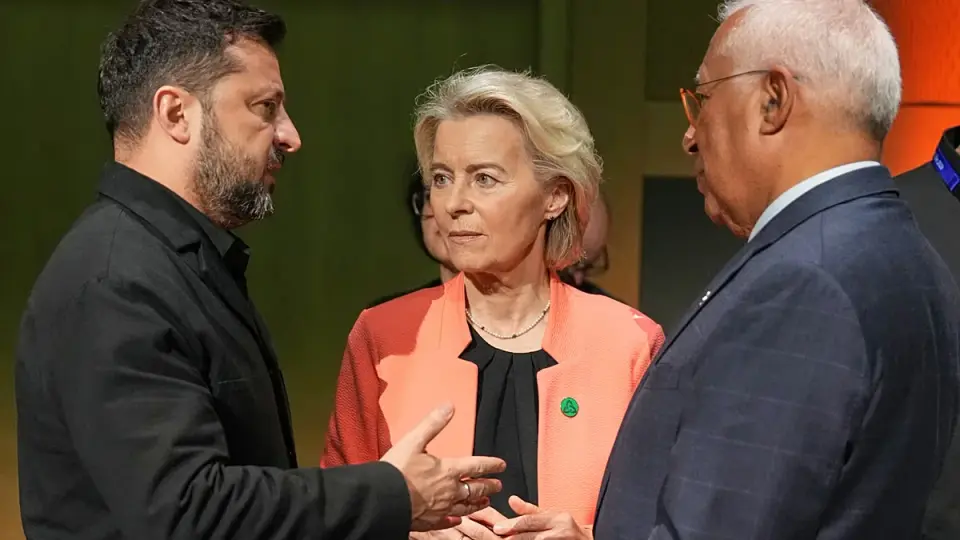
EU leaders in Dublin intended to focus on artificial intelligence, but the agenda was dominated by a dispute over who should represent Europe in Ukraine peace negotiations. While António Costa and Kaja Kallas vie for the role, German and French leaders favor the E3 format. The summit also featured warnings from AI expert Geoffrey Hinton regarding existential risks.
Key points
- The informal EU summit in Dublin was originally scheduled to focus on AI competitiveness and societal impact, but discussions on Ukraine peace talks representation took precedence.
- European Council President António Costa and Foreign Policy Chief Kaja Kallas are competing to be the EU’s representative in negotiations, with Costa citing treaty obligations and Kallas emphasizing security policy mandates.
- German Chancellor Friedrich Merz defended the E3 format (Germany, France, UK) for security guarantees, while Italian PM Giorgia Meloni criticized the lack of a clear EU mandate as undermining credibility.
- Ukrainian President Volodymyr Zelenskyy confirmed that European participation in the next round of negotiations is likely, following meetings with US envoys Jared Kushner and Steve Witkoff in Dublin.
- AI discussions included presentations by Mistral CEO Arthur Mensch on European sovereignty and Nobel laureate Geoffrey Hinton, who warned of a 10-20% risk of AI causing human extinction.
Background
Recent diplomatic efforts, including a localized ceasefire in Oleshky brokered by First Lady Melania Trump and trilateral talks in Abu Dhabi, have intensified the urgency for a unified European stance. Previous archive coverage highlighted Zelenskyy’s push for rapid progress and US mediation efforts, setting the stage for the current debate over European involvement in peace talks.
How outlets are covering it
Euronews highlights the tension between institutional representation (Costa/Kallas) and the E3 security framework, noting that the AI agenda was sidelined by geopolitical urgency. Politico emphasizes the internal EU friction, with Swedish PM Ulf Kristersson dismissing the representation debate as overstated, while Latvian PM Andris Kulbergs urged Europe to act with greater assertiveness. Both sources agree that the Ukraine issue has hijacked the AI-focused summit, but Euronews provides more detail on the specific treaty arguments, whereas Politico focuses on the broader political dynamics and the pressure on Ireland regarding tech regulation.
Why it matters
The resolution of who represents the EU in Ukraine peace talks is critical for maintaining European unity and credibility in negotiations. A fragmented approach could weaken Europe’s leverage, while a unified stance could strengthen its position. Additionally, the AI discussions aim to address Europe’s technological sovereignty and mitigate existential risks, which are increasingly relevant in a competitive global landscape.
What to watch
Leaders are expected to reach a decision on the EU’s representative by the end of the month, as urged by Zelenskyy. A special European Council on November 26-27 will focus on Ukraine financing and the EU budget, while the AI agenda will continue to shape future policy on technological sovereignty and safety.
- Ukraine envoy row hijacks EU leaders’ first AI summit Euronews.com
- EU leaders seek to tackle challenges at first ever AI summit Reuters
- AI and Ukraine to dominate EU leaders’ talks — live updates POLITICO.eu
- Europe needs Cold War-like deterrence for AI warfare, Poland says Euronews.com
- Finland, Estonia urge independent EU safety testing for AI MLex
Want the full story? Read the original reporting
Read on Euronews.com