
Lidar Scans Reveal 400 Hidden Geoglyphs, Suggesting Amazon Civilization Was Far Larger Than Thought
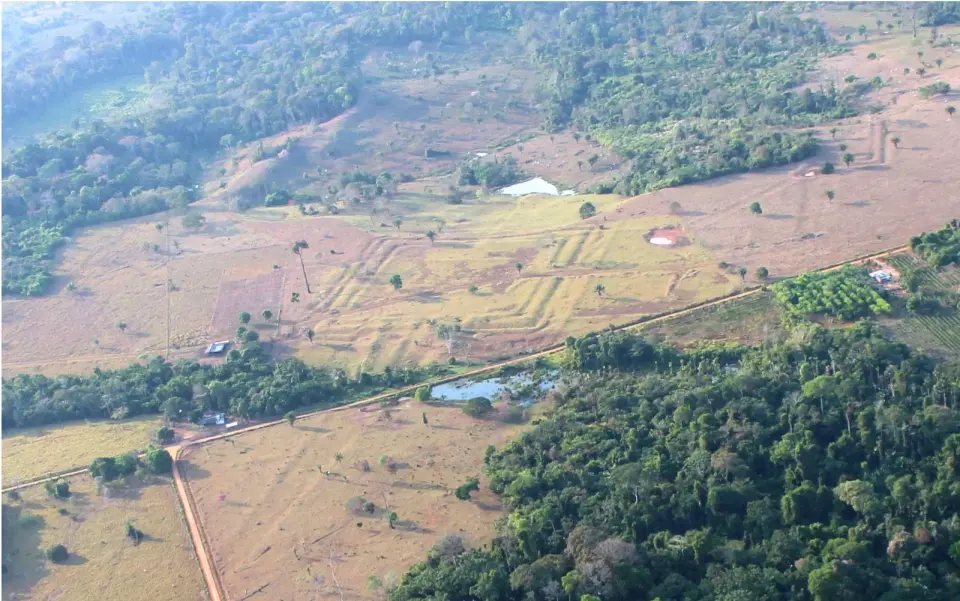
A new study published in Nature reveals that lidar surveys of the Amazon rainforest in western Brazil have identified nearly 400 previously unknown earthworks, known as geoglyphs. These structures, built by the Aquiry civilization between 600 B.C. and A.D. 850, suggest a population of 1.25 to 3 million people. The discovery challenges the notion that the Amazon was a pristine, uninhabited wilderness and indicates that precolonial populations may have been significantly larger than previously estimated.
Key points
- Lidar surveys covering 1,700 square miles in western Brazil detected nearly 400 new geoglyphs, bringing the total known count in the region to approximately 1,700.
- The geoglyphs were constructed by the Aquiry, a multicultural society estimated to have had a population of 1.25 to 3 million people between A.D. 100 and 300.
- The structures, which include deep ditches and high embankments, served as ceremonial and political centers rather than permanent residential sites.
- Researchers estimate that up to 20,000 additional earthworks may still be hidden beneath the dense rainforest canopy.
- The Aquiry civilization appears to have collapsed between A.D. 850 and 950, a period that coincides with the decline of other major precolonial civilizations like the Maya and Tiwanaku.
Background
Previous estimates of the precolonial population of Greater Amazonia ranged from 1.5 to 2 million, though some recent studies suggested figures as high as 10 million. The discovery of geoglyphs in deforested areas had already challenged the idea that the Amazon was an untouched wilderness. This new study uses lidar technology to penetrate the forest canopy, providing a more accurate assessment of the scale of human activity in the region. The findings suggest that the Amazon may have supported tens of millions of people before European colonization, significantly altering our understanding of precolonial urbanism and environmental impact.
How outlets are covering it
Archaeology Magazine and Live Science emphasize the scale of the discovery, highlighting the 400 new geoglyphs and the estimated population of 3 million. Smithsonian Magazine focuses on the implications for our understanding of the Amazon as a human-shaped landscape, quoting co-author Alceu Ranzi on the collapse of the 'pristine Amazônia' myth. WKRC provides a more general overview, noting the variety of shapes and the lack of metal tools or animals in the construction process. All sources agree on the significance of the findings but differ in their emphasis: Archaeology Magazine and Live Science focus on the archaeological data, while Smithsonian and WKRC highlight the broader implications for understanding precolonial civilizations and environmental history.
Why it matters
This discovery fundamentally changes our understanding of the precolonial Amazon, suggesting that it was not a pristine wilderness but a landscape shaped by large, complex societies. The findings have implications for understanding precolonial urbanism, environmental impact, and the potential for similar civilizations elsewhere in the Amazon. They also highlight the need for further research into the region, as the current study covers less than 3% of Amazonia. The collapse of the Aquiry civilization may also provide insights into the factors that led to the decline of other major precolonial civilizations.
What to watch
Researchers will likely continue using lidar and other remote sensing technologies to map additional geoglyphs in the Amazon. Further studies may focus on understanding the reasons for the collapse of the Aquiry civilization and its relationship to other precolonial civilizations. There is also a need for more research into the occupational sites that supported the high estimated population, as well as the environmental impact of these societies on the current Amazonian forest structure and biodiversity.
- News - Hundreds of Geoglyphs Discovered in Amazon Rainforest Archaeology Magazine
- Archaeologists Find Hundreds of Ancient Glyphs in the Amazon The New York Times
- Over 20,000 precolonial earthworks in the Southwest Amazonia Nature
- Mysterious Shapes Hidden Beneath the Amazon Canopy Reveal a Sprawling Ancient Civilization Much Bigger Than Researchers Expected smithsonianmag.com
- Massive hidden glyphs from ancient civilization discovered beneath Amazon rainforest WKRC
Want the full story? Read the original reporting
Read on Archaeology Magazine