
Satellite Radar and Ground Surveys Reveal Buried 2,600-Year-Old Structure at Egyptian City of Buto
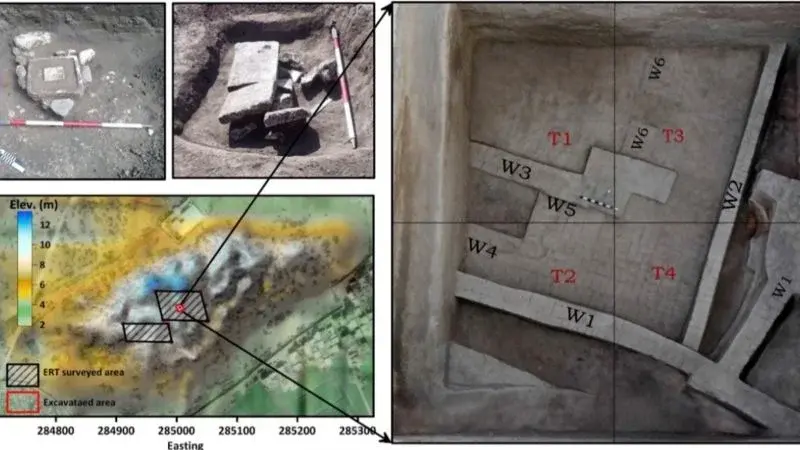
Researchers have identified a large, ancient mudbrick structure buried beneath the modern city of Buto in Egypt’s Nile Delta, hidden for nearly 2,600 years. Using satellite radar imagery and electrical resistivity tomography, the team detected the building, which dates to the 26th Dynasty (Saite period), along with evidence of later Ptolemaic and Roman settlements. The discovery includes a deliberate sand foundation layer designed to stabilize the structure against the region’s unstable soil. Published in the journal Acta Geophysica, the findings highlight the potential of non-invasive technologies to uncover archaeological details without extensive excavation.
Key points
- Researchers detected a mudbrick structure measuring approximately 82 by 66 feet (25 by 20 meters) buried 10 to 20 feet (3 to 6 meters) beneath the surface at the ancient city of Buto.
- The structure dates to Egypt’s 26th Dynasty, also known as the Saite period, which spanned the seventh and sixth centuries BC.
- The discovery was made using satellite radar imagery to identify buried features and electrical resistivity tomography (ERT) to analyze the soil and foundation layers.
- A layer of sand found 20 to 23 feet (6 to 7 meters) underground suggests ancient builders deliberately engineered a stable foundation to counteract the soft, flood-prone clay of the Nile Delta.
- Excavations guided by the survey data uncovered religious artifacts, including amulets and an altar, suggesting the structure served a religious function, possibly as a shrine or priestly residence.
- The study also detected evidence of settlements from the Ptolemaic period (305 to 30 BC) and the Roman period (30 BC to AD 395) at the same site.
Background
Buto, also known as Tell el-Fara'in, is a significant archaeological site in the northwestern Nile Delta, historically serving as a major cult center for the cobra goddess Wadjet, the patron deity of Lower Egypt. The site has been subject to intermittent excavation by international teams since the late 19th century, with recent efforts by Kafrelsheikh University combining satellite and geophysical methods since 2018. This discovery adds to a growing body of evidence regarding ancient Egyptian construction techniques in unstable environments, following other recent findings in the region such as the accidental uncovering of Ramses II statues in Gharbia province in October 2026.
Why it matters
This discovery demonstrates the effectiveness of combining satellite imagery with ground-based geophysical surveys to uncover archaeological sites without the high costs and risks of traditional excavation. It provides new insights into ancient Egyptian engineering practices, specifically how builders adapted to the challenging soil conditions of the Nile Delta. The findings suggest that many other ancient structures may remain hidden beneath modern landscapes, offering potential for future discoveries through non-invasive methods.
What to watch
Researchers plan to investigate a potential second structure buried beneath a thick layer of clay at the Buto site. Further archaeological investigations are needed to confirm the specific purpose of the sand foundation layer and to explore other unexplored areas of the site using similar non-invasive technologies.
Want the full story? Read the original reporting
Read on CNN