Tag

Nanotechnology

All articles tagged with #nanotechnology

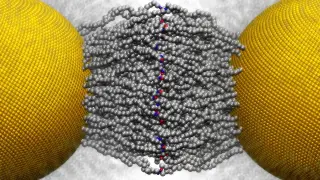
Weizmann scientists create molecular Archimedes screw that boosts conductivity 100-fold
science-and-technology3 days ago

Weizmann scientists create molecular Archimedes screw that boosts conductivity 100-fold

Researchers at the Weizmann Institute of Science have demonstrated a single-molecule rotor inspired by the ancient Archimedes screw. By suspending a helical organic molecule between gold electrodes near absolute zero, they showed that electric current can drive continuous rotation, which in turn increases electrical conductivity by up to 100 times. Published in Nature, this discovery reveals a new feedback loop between mechanical motion and electrical flow, potentially paving the way for future nanoscale switches and sensors, though practical applications remain distant due to extreme temperature requirements.

George Whitesides, Pioneer of Soft Lithography and Nanotechnology, Dies at 87
science4 days ago

George Whitesides, Pioneer of Soft Lithography and Nanotechnology, Dies at 87

George M. Whitesides, a highly influential materials chemist and nanoscientist, died on November 19 at age 87. He spent over 40 years at Harvard University, where he pioneered soft lithography and self-assembled monolayers, technologies that underpin modern microfluidics and low-cost diagnostics. With over 1,200 papers and 100 patents, he was the second-most-cited chemist in 2026. Colleagues described him as a legend whose rigorous standards and broad research interests, from organic synthesis to autonomous robots, defined an era in chemistry.

Engineered Bacterial Nanosyringes Enable Targeted Protein Delivery in Plant Cells
science6 days ago

Engineered Bacterial Nanosyringes Enable Targeted Protein Delivery in Plant Cells

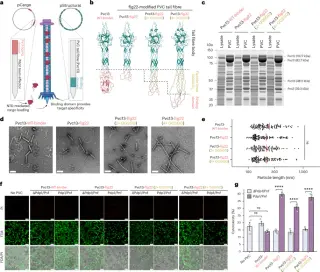
Researchers have successfully reprogrammed the Photorhabdus virulence cassette (PVC), a bacterial nanomachine, to deliver proteins into plant cells. By modifying the PVC tail fibers to recognize the plant surface receptor FLS2, the team achieved efficient intracellular delivery of cargo proteins, including Cre recombinase and the R2 genome editor. This method bypasses traditional genetic transformation hurdles, offering a precise tool for plant genetic engineering.

Osaka Team Observes Heavy Fermion States at Single-Atom Interface
science8 days ago

Osaka Team Observes Heavy Fermion States at Single-Atom Interface

Researchers at the University of Osaka have directly observed a heavy fermion state at the interface between a one-atom-thick layer of ytterbium and copper and a copper crystal substrate. This discovery reveals that electrons can behave as if they have significantly increased mass due to interactions across material boundaries, offering a new method for engineering exotic quantum properties like unconventional superconductivity.

MIT Researchers Use Flexible Ligands to Create Novel Nanoparticle Crystal Structures
science18 days ago

MIT Researchers Use Flexible Ligands to Create Novel Nanoparticle Crystal Structures

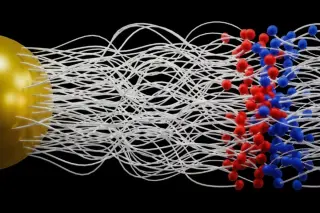
MIT scientists have overturned two decades of materials science convention by demonstrating that flexible, rather than rigid, connector molecules between nanoparticles can produce highly ordered crystal structures. Published in Nature Materials, the study shows that using floppy polymer ligands allows researchers to control the number and direction of bonds between gold nanoparticles, enabling the creation of previously unseen lattice configurations. This counterintuitive approach offers a new method for designing custom materials with specific properties, potentially improving scalability and performance in fields like photonics and medicine.

MIT researchers invert 20-year dogma to control nanoparticle assembly via flexible ligands
science-and-technology19 days ago

MIT researchers invert 20-year dogma to control nanoparticle assembly via flexible ligands

A team led by MIT researchers has demonstrated that using highly flexible molecular connectors, rather than rigid ones, allows nanoparticles to self-assemble into less dense, previously unseen crystal structures. Published in Nature Materials, the study challenges the long-standing assumption that directional bonding requires fixed geometry. By utilizing electrostatically charged, deformable polymer ligands, the team achieved control over particle coordination without bespoke surface patterning, offering a scalable route to designer materials for photonics, catalysis, and medicine.

Molecular Archimedes Screw Achieves 100-Fold Conductivity Boost
science22 days ago

Molecular Archimedes Screw Achieves 100-Fold Conductivity Boost

An international team published a study in Nature detailing a single-molecule electric motor inspired by the Archimedes screw. Suspended between gold electrodes, the spiral molecule rotates when current passes through it, a motion that can be reversed by switching voltage polarity. The rotation increases electrical conductivity by up to 100 times, as the molecule accesses high-conductivity states it avoids when stationary. This device functions as an active component in a circuit, unlike earlier surface-based models, marking a step toward controllable molecular electronics.

Researchers Build First Electrically Driven Molecular Motor Using Archimedes Screw Principle
science-and-technology23 days ago

Researchers Build First Electrically Driven Molecular Motor Using Archimedes Screw Principle

Scientists have created a single-molecule motor that spins when electric current passes through it, inspired by the ancient Archimedes screw. The device, suspended between gold electrodes, can reverse direction by switching voltage polarity. Researchers discovered that rotation increases the molecule's electrical conductivity by up to 100 times, a phenomenon explained by quantum simulations showing that rotating positions access high-conductivity states the molecule avoids when stationary. This work represents a significant step toward controllable molecular machines for electronics and microfluidics.

Sheffield researchers replicate 1,600-year-old Roman dichroic glass recipe
science-and-technology28 days ago

Sheffield researchers replicate 1,600-year-old Roman dichroic glass recipe

University of Sheffield scientists have successfully recreated the optical properties of the fourth-century Lycurgus Cup, a Roman artifact that shifts from green to red depending on lighting. By embedding gold and silver nanoparticles into a modern glass recipe, researchers produced a repeatable method for creating dichroic glass. The new material will be featured in a contemporary sculpture by artist Elliot Walker, set for display at the university's Festival of the Mind in November 2026.

Sheffield Scientists Crack 1,600-Year-Old Recipe for Roman Color-Shifting Glass
science-and-art29 days ago

Sheffield Scientists Crack 1,600-Year-Old Recipe for Roman Color-Shifting Glass

University of Sheffield researchers have successfully recreated the optical properties of the 4th-century Lycurgus Cup, a Roman artifact that shifts from green to red depending on lighting. By replicating an ancient recipe involving gold and silver nanoparticles, scientists produced a modern glass sculpture that mimics this effect. The new piece, created by artist Elliot Walker, will be displayed at the university's Festival of Mind in November before joining the Turner Museum of Glass collection.

Molecular Screw Rotates to Boost Current 100-Fold in Nature Study
science-and-technology1 month ago

Molecular Screw Rotates to Boost Current 100-Fold in Nature Study

An international team demonstrated a single-molecule motor that uses electric current to drive rotation, which in turn increases electrical conductance by up to 100 times. Published in Nature, the study validates a feedback mechanism between mechanical motion and electron flow at the atomic scale, offering a new principle for future nanoscale switches and spintronic devices, though it remains a cryogenic proof-of-concept.

science1 month ago

Helicene Molecule Achieves 100% Directional Rotation via Electric Current

A multinational research team has demonstrated a current-driven molecular machine using a helicene molecule suspended between gold electrodes. The device exhibits 100% directional rotation preference, which can be reversed by changing voltage polarity. Above a specific voltage threshold, the rotating molecule’s conductance increases significantly, a phenomenon absent in previous helical junctions. Theoretical calculations confirm that current-induced forces drive this cyclic motion, enabling a transition from stepwise to continuous rotation that accesses highly conducting configurations. This prototype represents a new class of torque-driven molecular machines with perfect rotor unidirectionality and substantial current modulation capabilities.

CU Boulder Researchers Demonstrate Long-Term Stability of Light-Activated Tattoo Ink in Human Trials
science1 month ago

CU Boulder Researchers Demonstrate Long-Term Stability of Light-Activated Tattoo Ink in Human Trials

Researchers at the University of Colorado Boulder have validated the long-term durability of their reversible tattoo technology, known as PhotoTat, through extensive human self-testing. The system uses photochromic dyes encapsulated in plexiglass spheres that become visible under ultraviolet light and disappear when exposed to visible light. While the technology was initially tested on pig and silicone skin, nanoscientist Carson Bruns has now implanted the ink in his own leg for over two years to assess stability. This development moves the technology closer to practical applications in medical procedures, such as radiotherapy markings, though broader human trials are still required before public release.

Real-time tracking reveals the step-by-step assembly of virus-like particle shells
science2 months ago

Real-time tracking reveals the step-by-step assembly of virus-like particle shells

Researchers have successfully observed the real-time self-assembly of virus-like particles (VLPs), a long-standing goal in virology. Published in Nature, the study by Asor et al. utilizes advanced techniques to track the kinetics and energetics of protein shell formation. This breakthrough allows scientists to analyze how identical protein blocks interact to form stable, rigid structures that can later disassemble to release viral genomes. The findings provide a detailed molecular view of the assembly process, moving beyond static snapshots to dynamic observation.