
Skeleton 150: Medieval Man’s 160+ Fractures Point to First Trebuchet Death
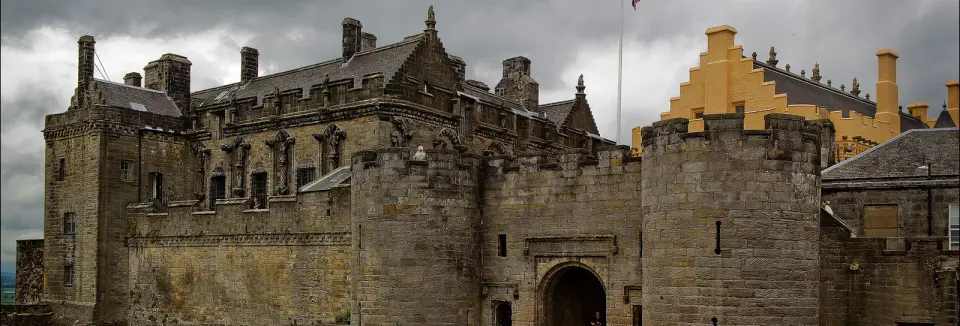
A skeleton found at Stirling Castle in 1997 may be the first confirmed victim of a trebuchet. Bioarchaeologist Jo Buckberry presented findings at the Paleopathology Association meeting in Berlin, noting the man suffered over 160 fractures consistent with high-velocity blunt force trauma. The injuries, concentrated on the skull and ribs, align with the 1304 English siege of the castle by Edward I, who deployed massive siege engines like the 'War Wolf.'
Key points
- Skeleton 150, excavated at Stirling Castle in the 1990s, shows over 160 fractures across the skull, ribs, vertebrae, and arms.
- Jo Buckberry of the University of Bradford presented the analysis at the 25th Paleopathology Association meeting in Berlin in August 2026.
- The pattern of injuries resembles modern car crashes or train strikes, indicating a high-speed, high-force impact from behind.
- The victim, a man in his 20s, died during the 1304 siege of Stirling Castle by English King Edward I.
- Edward I used the 'War Wolf,' a massive trebuchet capable of launching 300-pound projectiles, during the siege.
- The skeleton lacks typical hand-to-hand combat injuries, supporting the theory of a projectile strike rather than battlefield melee.
Background
Stirling Castle was a key stronghold in the Wars of Scottish Independence (1296–1357). By 1304, it was the last major Scottish defense against Edward I’s campaign. The 'War Wolf' was a record-breaking trebuchet, described in 19th-century accounts as smashing castle walls like an arrow through cloth. While the castle surrendered before the weapon was fully tested, Edward reportedly insisted on using it to demonstrate its power. The skeleton was one of nine found at the site in 1997, with radiocarbon dating placing it in the 14th century.
How outlets are covering it
Archaeology Magazine and The New York Times both emphasize the uniqueness of the finding as the first documented trebuchet death. Smithsonian Magazine highlights the 'War Wolf's' historical significance and the lack of combat injuries, reinforcing the projectile theory. Live Science focuses on the specific fracture count (167) and the potential link to the 'War Wolf.' All sources agree on Buckberry's presentation at the Paleopathology Association, but differ slightly in detail: Archaeology Magazine cites 160+ fractures, while Live Science specifies 167. The New York Times notes the C.T. reconstruction of the skull, showing 61 breaks, a detail not mentioned in other sources. No outlet disputes the core finding, but some, like Smithsonian, note that Buckberry has not yet published in a peer-reviewed journal, though forensic osteologist Lukas Waltenberger finds the evidence convincing.
Why it matters
This discovery provides the first physical evidence of the destructive power of medieval trebuchets, bridging a gap between historical records and archaeological reality. It offers insights into the lethality of siege warfare and the specific trauma caused by high-velocity projectiles in the 14th century. The finding also sheds light on the final stand at Stirling Castle, a pivotal moment in the Wars of Scottish Independence, and the role of advanced technology in medieval warfare.
What to watch
Buckberry is expected to publish her findings in a peer-reviewed journal. Further analysis of the skeleton, including C.T. scans and comparisons with other medieval trauma cases, may refine the understanding of trebuchet impacts. Researchers may also investigate other skeletons from Stirling Castle to identify additional victims of siege weapons.
- News - Medieval Scottish Man May Be First Confirmed Case of Death by Trebuchet Archaeology Magazine
- A 14th-Century Skeleton Had Injuries That Looked Like a Car Crash. What Killed Him? The New York Times
- A Medieval Man's Injuries Reminded One Archaeologist of Modern-Day Car Crash Victims. They Turned Out to Be the Work of an English Trebuchet Smithsonian Magazine
- Shattered 700-year-old skeleton could be earliest-known victim of popular siege weapon Yahoo
- Skeleton with 167 fractures discovered at Scottish castle may have been first victim of Edward I's 'War Wolf' trebuchet Live Science
Want the full story? Read the original reporting
Read on Archaeology Magazine