
Micro-CT Scans Reveal 400-Year-Old Shipwreck Padlock Code
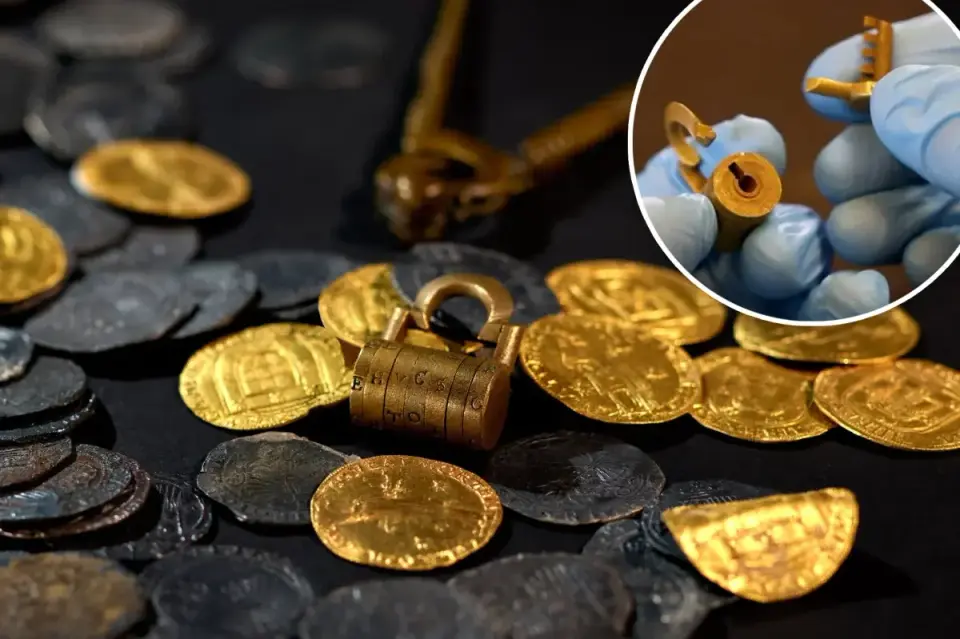
Researchers at Cardiff University and Museum Wales have successfully decoded a 16th-century brass padlock from the Ann Francis shipwreck using medical-grade micro-computed tomography. The four-letter combination, ANCE, was identified after 400 years of burial, solving a mystery that had stumped metal detectorist Peter Hughes for two decades. The lock, found near Spanish silver coins in 1999, is now on display in Swansea, though its original contents remain unknown.
Key points
- A brass combination lock from the 1583 Ann Francis shipwreck was cracked using micro-CT scanning technology typically used for medical imaging.
- The four-letter code is ANCE, determined by analyzing the internal notches of the four rotating rings, each containing six letters.
- The lock was discovered in 1999 by metal detectorist Peter Hughes on Morfa Beach in Port Talbot, alongside a hoard of gold and silver coins.
- Hughes spent approximately 20 years attempting to open the lock manually before collaborating with museum experts and university engineers.
- The artifact is now exhibited at the National Waterfront Museum in Swansea, described as being in exceptional condition for its age.
Background
This discovery follows a broader trend of using advanced imaging and material science to decode historical artifacts, such as the recent recreation of Roman color-shifting glass. The Ann Francis wreck, which sank in December 1583 after a storm off the Welsh coast, had yielded various treasures to metal detectorist Peter Hughes between 1996 and 2017. While other Elizabethan locks exist, this specific find is unique due to its direct association with a securely dated shipwreck and its preserved functionality.
How outlets are covering it
The New York Post emphasizes the dramatic nature of the discovery, comparing the effort to cracking a 'Da Vinci Code' or opening the 'Ark of the Covenant.' The BBC provides detailed context on the legal framework of treasure discovery in Wales and highlights the collaborative effort between Amgueddfa Cymru and Cardiff University. The Independent focuses on the technical application of micro-CT scanning, noting that the technology was not originally designed for such historical analysis. All sources agree on the code 'ANCE' and the significance of the find, though the Independent specifically notes the uncertainty regarding whether the code held personal meaning for the lock's owner.
Why it matters
This breakthrough demonstrates the potential of modern medical imaging technology to solve historical mysteries, bridging the gap between archaeology and engineering. It also highlights the importance of preserving and analyzing artifacts in their original context, as the lock’s condition and association with the Ann Francis provide a rare, tightly dated example of Elizabethan security mechanisms. The discovery offers new insights into maritime trade and security practices in the late 16th century.
What to watch
The cracked padlock will remain on public display at the National Waterfront Museum in Swansea. Researchers may continue to analyze the lock for further clues about its original contents, such as Spanish silver, textiles, or maritime documents, though these items have not been recovered. The success of this method may encourage similar applications of micro-CT scanning to other historical artifacts with complex mechanisms.
- ‘Like opening the Ark Of The Covenant’: Scientists crack code on treasure ship’s padlock — solving 400-year-old maritime mystery New York Post
- Code cracked for shipwreck padlock solving 400-year-old mystery BBC
- CT scans reveal four-letter code to 400-year-old lock from Welsh shipwreck Phys.org
- Combination lock from shipwreck cracked after 400 years The Telegraph
- Scientists crack code to 400-year-old padlock from shipwreck The Independent
Want the full story? Read the original reporting
Read on New York Post